


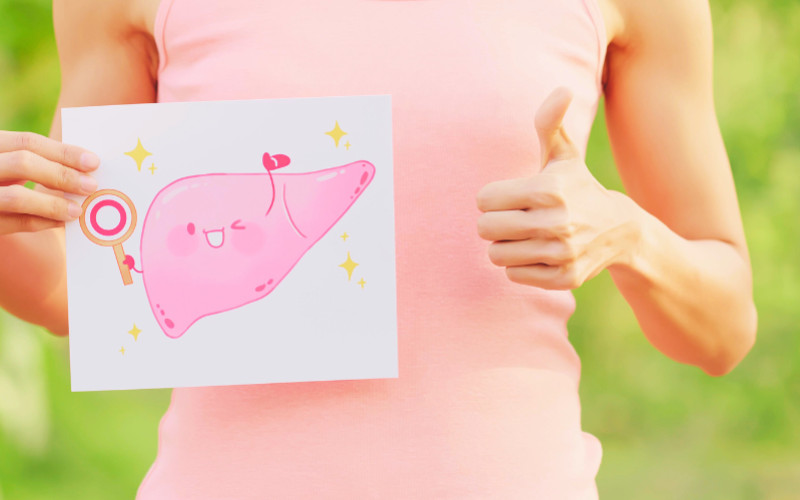
Your liver doesn't need you to "clean" it: it's the one cleaning you, all day, every day, around the clock. The famous liver detox done with olive oil and lemon juice - Andreas Moritz's "liver flush" - doesn't flush out stones: it produces little blobs of soap, as a letter published in The Lancet back in 2005 demonstrated. The real ways to support your liver are far less dramatic, but they actually work: cut down on alcohol (its number one enemy), ease off on sugar, get moving, and lean on a few bitter plants that may contribute to its comfort.
Here's an article I'd wanted to write for a long time. Because when it comes to the liver, people say all sorts of things. And by dint of promising miracle "purges", we end up forgetting the one thing that matters most: this organ is already, all by itself, the most powerful detox plant your body has. My job here, after thirty years spent in living foods and organic, isn't to sell you a protocol. It's to give you the tools to sort the wheat from the chaff.
So let's do exactly that, together. We'll look at what your liver actually does, calmly take apart the "flush" myth, see what the science really says about milk thistle and turmeric, and above all - above all - talk about the simple habits that genuinely make a difference. No dogma. No guilt. Each of us at our own pace.
Contents
- Does the liver detox itself?
- Moritz's "liver flush": what really happens?
- What the science actually says about plants
- The gentle alternative to the flush: enzymes
- The real levers: what genuinely supports the liver
- When should you worry? The red flags
- Your questions, our answers
- Scientific references
Does the liver detox itself?
Yes. Your liver detoxes itself, continuously, without you having to do a single thing to "kick off" the process. It's actually its main job. As you read these lines, it's quietly filtering your blood and neutralising part of what shouldn't be hanging around in there. No cleanse switches it on. It isn't waiting for your green light.
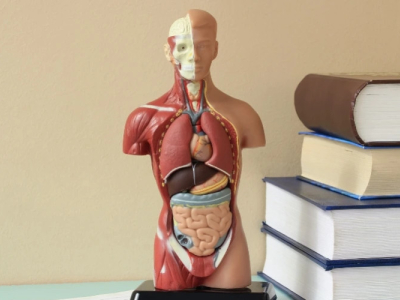
In concrete terms, this large organ of around 1.5 kg handles three big missions. First, it filters the blood arriving from the gut, loaded with everything you've eaten and drunk. Then it metabolises: it transforms nutrients, stores sugar, manufactures proteins, manages cholesterol, and breaks down medicines and alcohol. Finally, it neutralises and removes waste, sending it either towards the kidneys (via the blood), or towards the gut (via the bile).
I like to picture it as a water-treatment plant running 24 hours a day, with no lunch break. You don't see it, you don't feel it, but it never stops. And it's formidably efficient. The liver is, in fact, one of the few organs able to partly regenerate after injury. Nature did a fine job here. It's just common sense: you only have to observe it.
So the real question isn't "how do I clean my liver?". It's rather: "how do I stop overloading it, so it can get on with its work in peace?". Huge difference. The liver is one of what we call the emunctories, the organs in charge of elimination - and if the subject interests you, I've covered the emunctories and how they work in detail elsewhere.
Moritz's "liver flush": what really happens?
You've definitely come across it online. The "liver flush", or "liver and gallbladder cleanse", popularised by Andreas Moritz: you fast for part of the day, swallow some Epsom salts, then a large glass of olive oil mixed with citrus juice, and the next morning… you find little greenish balls in your stool. The story that goes with all this? "Look, those are your gallstones, you've just expelled years of toxins."
Except no. Those little green balls aren't stones.
In 2005, a letter published in the medical journal The Lancet (Sies & Brooker) analysed these so-called "stones". The verdict is clear-cut: it's soap. Literally. When olive oil (rich in fatty acids) meets citrus juice (acidic) and the digestive juices, a saponification reaction takes place - the very same chemical reaction used to make soap. The result is semi-solid clumps of fatty-acid "soaps", coloured green by the pigments in the bile. Not stones. Lumps of transformed oil.
And there's a second problem, an anatomical one this time. A real gallstone of any significant size is often more than 5 mm across. Yet the duct that carries the bile out (the common bile duct) is narrow. When a genuine stone gets stuck there, it doesn't go unnoticed: it's an acute attack, sometimes a surgical emergency. The idea that you could quietly expel dozens of "stones" in a single night, painlessly, over a glass of oil, simply doesn't hold up physiologically.
Honestly? Personally, I'm wary of dramatic purges. Not on principle, but because the spectacle (the green balls in the toilet bowl) is precisely what makes the myth so convincing. Our brains love visible, tangible proof - that's human. The trouble is that the proof here is a kitchen artefact. That doesn't mean the people who do it are naïve. It means we all want to see our efforts "come out" of our bodies.
If the idea of a big cleanse still appeals to you, know that there's a far gentler approach that respects your digestion - based on enzymes rather than oil swallowed on an empty stomach. I'll come back to it a little further down. But first, let's talk about plants, because we so often expect miracles from them.
What the science actually says about plants
Milk thistle. There's the undisputed star of the "liver" shelf. It's credited with a thousand virtues, and sometimes presented as a universal repairman. What does research actually say about it? Let's be honest, it's more nuanced than the labels would have you believe.
Silymarin, the active compound in milk thistle, has been studied seriously. A Cochrane review (Rambaldi et al., 2007), a reference in medicine, pooled the clinical trials on liver diseases linked to alcohol or to hepatitis B and C. Its conclusion, I'll give it to you exactly as it stands: in the good-quality trials, milk thistle shows no significant effect on the course of these diseases or on mortality. Good news in passing, it's well tolerated. But it isn't the miracle repairman that's sometimes sold to you.
Does that mean it's useless? Not that either. It means we have to talk about it honestly: milk thistle is traditionally used for liver comfort, some preclinical data are interesting, but solid clinical evidence is still lacking. There you go. I'd rather tell you straight than ride the hype. It's support, not a treatment.
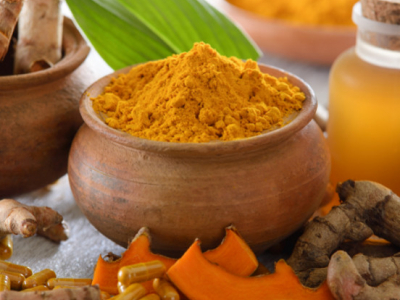
Same logic for turmeric, another star of the genre. It's a remarkable spice, one I love cooking with - I've actually laid out five ways to enjoy it in another article. It's rich in curcumin, a polyphenol that's been studied closely. But here too: interesting doesn't mean proven as a treatment. As part of a varied, balanced diet, these bitter plants (milk thistle, artichoke, black radish, dandelion) absolutely have their place. As everyday support, not as a remedy.
My view, after years of watching all this? We expect too much from a single isolated plant, and not enough from a coherent way of living. We go looking for the one trump card. Whereas the health of the liver is a whole hand of cards.
The gentle alternative to the flush: enzymes
Right. If you're drawn to the idea of an occasional "helping hand" for your digestion, there's a path that strikes me as far more sensible than swallowing a glass of oil on an empty stomach: enzymes.
To understand why, I always use the same image. Enzymes are little carpenters in blue overalls in the workshop of your digestion. The more of them there are, and the fitter they are, the better the wood - your food - gets worked, and the less waste is left on the bench. When you support this enzyme work, you don't "expel" anything: you simply help the workshop run better. Enzyme life, I'm convinced, is the beating heart of living food.
That's exactly the philosophy of the ZenCleanz FORGIVE kit we offer at Biovie. The principle, in a nutshell: rather than forcing the system with oil, you support digestion with fermented enzymes and plant-based ingredients. It's a gentle approach, designed as supportive supplementation as part of a varied, balanced diet - not as a purge, and certainly not as a treatment. I won't detail the protocol here (the product page does that very well): just hold on to the spirit of it, which is the opposite of the brutal "flush".