Fast delivery
.png)
 Fair prices


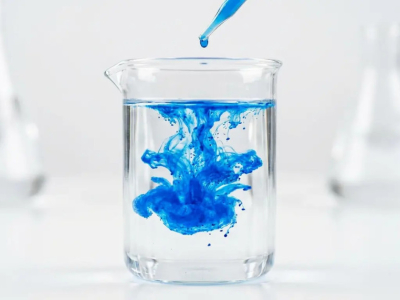

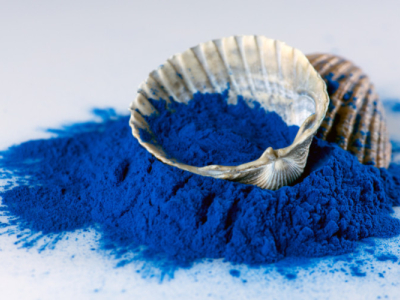
Blue spirulina is a concentrated extract of phycocyanin, the blue pigment naturally present in spirulina.Arthrospira platensisIt is not a different species of algae: it is the same green spirulina, transformed to isolate its most scientifically documented active component. The result is an electric blue powder, almost tasteless, containing between 60 and 80% active phycocyanin, compared to only 15 to 20% in the complete green spirulina. Specifically, 2,400 people in France search each month for what blue spirulina is (+19% over the quarter). This renewed interest is not a coincidence: it accompanies the rise of blue smoothie bowls on social media — but the reality of this product goes far beyond the aesthetics of an Instagram photo.
What exactly is blue spirulina ?
Blue spirulina = phycocyanin extracted from green spirulina
Here is what often causes confusion: blue spirulina is not a distinct botanical variety. There is noBlue Arthrospira in nature. What is referred to as "blue spirulina" in commerce is phycocyanin — more specifically C-phycocyanin — extracted and concentrated from the standard green spirulina.
The process is quite simple to understand. Fresh spirulina naturally contains several pigments: chlorophyll (green), carotenoids (orange), and phycocyanin (blue). When only phycocyanin is extracted through an aqueous process, you get this intensely blue powder, almost unreal. The green spirulina we know retains all its pigments, hence its dark color and pronounced taste.
As the founder of Biovie since 2007 and co-author of "Algues au quotidien" (Gallimard, 2024), I have closely followed the development of this product in the French market. What struck me was the speed at which it transitioned from food photographers' smoothie bowls to the shelves of organic grocery stores — and now, to serious questions about its nutritional properties. It is precisely this journey that deserves our attention.
Why is spirulina blue? The role of the pigment phycocyanobilin
The blue color of phycocyanin comes from a specific chromophore, the Phycocyanobilin. This chemical group absorbs the red and orange wavelengths of visible light, which gives the molecule its characteristic blue color — exactly the same principle as chlorophyll, which absorbs red and blue to appear green.
This chromophore is not just a decorative pigment. It is the site of antioxidant activity documented by several research teams since the 1980s. Phycocyanin as a whole — the protein that surrounds this chromophore — is classified among the pigment proteins, called biliproteins, found in cyanobacteria like spirulina as well as in certain red algae.
It is this scientific basis that distinguishes blue spirulina from a simple novelty food coloring. To learn more about the molecule itself, you can consult our article dedicated to the properties of phycocyanin.
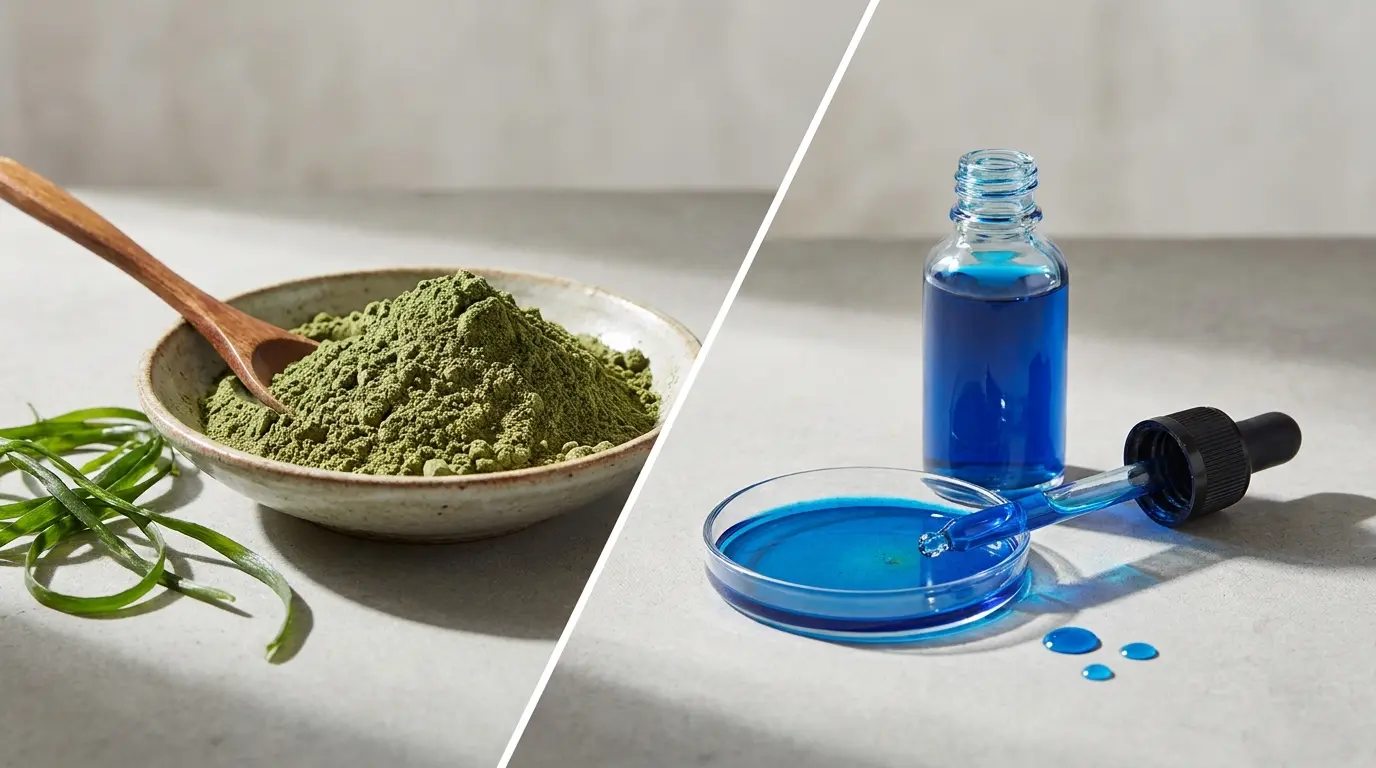
Blue spirulina or green spirulina: what are the concrete differences ?
Comparative nutritional composition
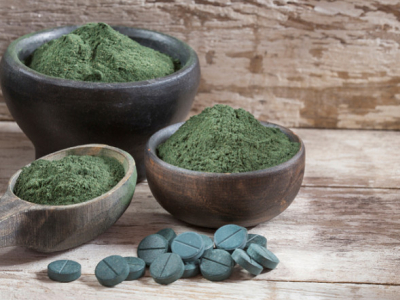
The two products do not have the same nutritional profile at all. Green spirulina is a complete food: 60 to 70% protein on a dry matter basis, highly bioavailable iron, B vitamins, chlorophyll, essential fatty acids. It is a full-fledged nutritional source, which is integrated into a varied and balanced diet for its contributions in micronutrients.
Blue spirulina, on the other hand, is a concentrated extract focused on a single active ingredient. It contains practically no proteins, no iron, no B vitamins — however, it has 60 to 80% active phycocyanin. It's like comparing a whole nut to an oil extract: both have their benefits, but for different uses.
| Criterion | Green spirulina (powder) | Blue spirulina (phycocyanin extract) |
|---|---|---|
| Phycocyanin content | 15–20% | 60–80% |
| Proteins | 60–70% (dry matter) | Line |
| Iron | Yes (highly bioavailable) | No |
| B vitamins | Yes | No |
| Taste | Pronunciation (algae) | Almost neutral |
| Color | Dark green | Electric blue |
| Indicative daily dose | 3 to 5 g/day | 1 to 3 g/day |
| Culinary use of coloring | Limited | Excellent |
Taste, color, and use: what changes in practice
Honestly, that's often where everything is decided. Many people — I hear it regularly in feedback from our clients — have tried green spirulina, and they didn't like the taste. That strong algae taste that dominates any preparation. (We even dedicated an entire article to 12 tips to mask the taste of spirulina — and it is widely read, which says something.)
Blue spirulina powder is radically different. It is almost tasteless. Half a teaspoon in a smoothie — about 1.5 g — and you get that bright blue color without altering the taste of your preparation. For those who are averse to the taste of algae, it's an entry into the world of microalgae without the obligatory taste hurdle.
Which one to choose according to your goal ?
The answer really depends on what you are looking for. It's not one against the other — they are complementary.
- You are looking for complete daily nutrition. — protein, iron, B vitamins intake — then the green spirulina is the base. It is what Aurélie and I have been consuming every day for years, at a rate of 3 to 5 g in a morning smoothie.
- You are aiming for a targeted antioxidant intake., or you want a natural food coloring for your recipes, or you simply dislike the taste of seaweed — then the blue spirulina better meets your needs.
- Ideally? Both. Green spirulina provides the complete nutritional matrix, while blue spirulina concentrates the antioxidant active ingredient. They complement each other without competing.
➡ Do you prefer whole green spirulina? Discover our Tips for choosing a high-quality organic spirulina.
What are the benefits of blue spirulina ?
A powerful natural antioxidant
Phycocyanin shows on the ORAC index — an indicator of antioxidant capacity — a power approximately 20 times greater than that of vitamin C. This is a piece of data that often appears in scientific literature, and it deserves to be contextualized.
Free radicals are unstable molecules naturally produced by our metabolism — and in excess due to stress, pollution, and intense physical exertion. An antioxidant works by neutralizing them before they can damage cells. Phycocyanin, due to its very structure (this chromophore phycocyanobilin), easily binds to these free radicals and effectively neutralizes them.
Romay C. et al. published in 2003 in the journal Current Protein & Peptide Science a literature review confirming the antioxidant and anti-inflammatory properties of C-phycocyanin (Romay C. et al., 2003). Encouraging results — although most in vitro studies still need to be confirmed by larger-scale clinical trials. I'm telling you this honestly because it's important to distinguish what is documented from what is still exploratory.
Can it help against fatigue and support immunity ?
This is the question that comes up most often. And the answer is nuanced — which is, in my opinion, the sign of a serious product.
Phycocyanin does not contain the nutrients directly linked to reducing fatigue (iron, vitamins B12, B6) — these are provided by complete green spirulina. As part of a varied and balanced diet, Spirulina can help reduce fatigue. via its iron content — but this concerns green spirulina, not the blue extract.
For immunity: phycocyanin is the subject of active research regarding its effects on immune cells. Liu Q. et al. (2016) published in Médecine Complémentaire et Alternative Fondée sur des Preuves a systematic review on the medical applications of spirulina, identifying promising avenues. Preliminary studies suggest a modulation of the immune response — but we remain in the exploratory domain. What can be stated with certainty: blue spirulina is not a medication, and it does not replace a balanced diet or medical supervision. To learn more about spirulina and immunity, our article spirulina and the immune system Detail the available studies.
Blue spirulina and sports: recovery and oxygenation
It is an active area of research. Several sports teams and physical trainers are interested in the antioxidant properties of phycocyanin in the context of post-exercise recovery.
Intense physical effort generates a significant amount of free radicals — this is one of the mechanisms behind muscle soreness and fatigue. The hypothesis is that targeted antioxidants can help reduce this oxidative stress. Specifically: 1 to 2 grams of blue spirulina in a recovery smoothie after training is an approach that several amateur and professional athletes are exploring. Clinical studies specific to this context are still limited — once again, we should be cautious about the conclusions.
How to use blue spirulina daily ?
In the kitchen: smoothie bowls, lattes, and natural coloring
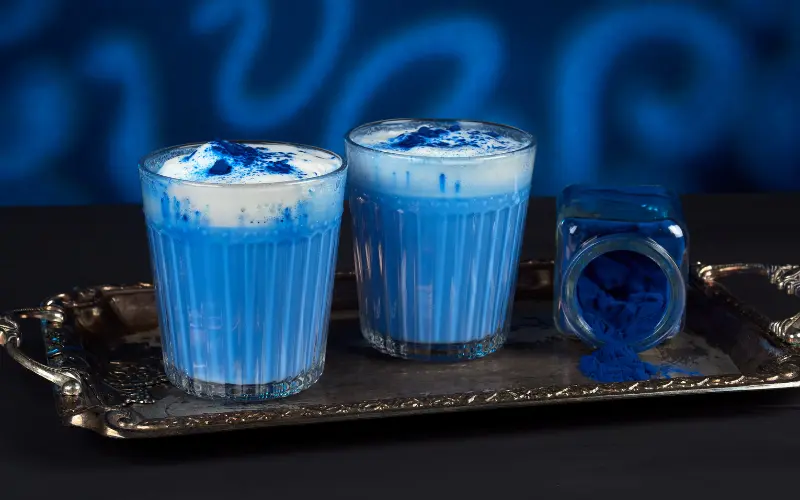
This is where blue spirulina powder truly shines. It is a 100% natural food coloring with impressive effectiveness. Half a teaspoon is enough to transform an ordinary smoothie into a bright blue concoction. And — its true culinary advantage — it does not alter the taste.
Some practical uses:
- Smoothie bowl : 1 g in a blender with banana, mango, and plant-based milk → electric blue, unchanged fruity taste
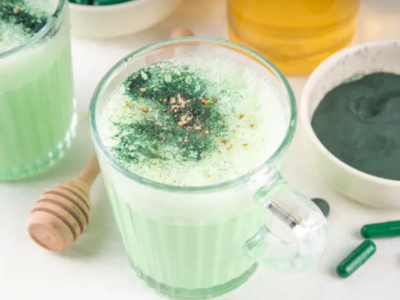
- Blue latte (Butterfly pea latte revisited): 0.5 g in hot plant-based milk with a hint of vanilla → spectacular color, reasonable use
- Homemade ice creams and sorbets : 1 to 2 g to color without additional flavor
- Pastry glazes : to incorporate into a ganache or a white glaze to achieve a natural pastel blue
Attention to the heat: Phycocyanin degrades above 60°C. Avoid incorporating the powder into very hot preparations if you want to preserve the activity of the molecule — and the color, for that matter, which turns green and then disappears at high temperatures.
What is the recommended daily dose of blue spirulina ?
The concentration of phycocyanin is significantly higher than that of green spirulina. Therefore, the doses are lower.
- To start: 0.5 g (a knife tip) the first week, to assess your personal tolerance
- Common dose: 1 to 3 g per day, in a varied and balanced diet
- Culinary use only: very small quantities (0.3 to 0.5 g) are sufficient for the coloring effect, without any nutritional purpose
Specifically, 1 g of blue powder fits in a level teaspoon, approximately. It's very little — this is precisely what explains the economic interest of the product despite a higher unit price than green spirulina: much less of it is used.
Precautions: Who should avoid blue spirulina ?
Phycocyanin is generally well tolerated. A few common-sense precautions:
- People on immunosuppressive or anticoagulant treatment: consult your doctor before any supplementation, as a precaution
- Pregnant or breastfeeding women: caution is advised in the absence of specific clinical data on these populations
- Allergy to algae: Even though blue spirulina is an extract, caution is still advised.
- Phenylketonuria: as with any product containing amino acids, check with your doctor
The main risk with blue spirulina does not come from the molecule itself — it comes from the quality of the product. Poorly produced or insufficiently controlled phycocyanin may contain heavy metals or microcystins (toxins produced by certain cyanobacteria). This is why demanding a certificate of analysis from an independent laboratory is, for me, the non-negotiable condition before purchasing.
How to choose the right blue spirulina ?
Powder or liquid: which form should be preferred ?
On the market, blue spirulina is available in two main forms: powder and liquid. (There are also tablet forms from certain brands — but this form has its own stability and absorbance constraints, which we will not discuss here.)
The powder is the most versatile form:
- Dual use: health + food coloring
- Precise dosage by spoon (in grams)
- Good stability at room temperature, protected from light and moisture.
- Quantity/price ratio often advantageous
The liquid (concentrated aqueous extracts) have the advantage of containing phycocyanin already in solution, potentially making it more directly assimilable — but its stability is much lower, and it generally needs to be stored in the refrigerator once opened and consumed quickly.
For most daily uses, powder remains our recommendation at Biovie. It is the form we have selected for its versatility and practicality.
What quality criteria should be checked before buying ?
Here are the criteria I systematically examine after eighteen years of selecting superfoods at Biovie:
- The E6 index (purity index): A good phycocyanin extract shows an E6 greater than 0.7. Below that, the purity is insufficient. This is the first question to ask any supplier.
- The certificate of analysis from an independent laboratory: absence of heavy metals (lead, mercury, cadmium, arsenic) and microcystins — mandatory, without exception
- Complete traceability: know the country of origin, the cultivation conditions, and the extraction process. At Biovie, we provide this information upon request.
- The announced phycocyanin content: verifiable via the certificate of analysis. Beware of products that do not mention their actual content
Moreover, to understand what distinguishes high-quality spirulina from low-grade spirulina beyond just the blue extract, our article on the organic quality spirulina Detail the selection criteria step by step.
And if you discover green spirulina at the same time and want to know more about it Chlorella — the other flagship microalgae of Biovie — is a very useful complementary read.
FAQ — Frequently Asked Questions about Blue Spirulina
What exactly is blue spirulina ?
Blue spirulina is a concentrated extract of phycocyanin, the naturally occurring blue antioxidant pigment found in spirulina.Arthrospira platensisIt is not a different species: it is a concentrate of the most powerful active ingredient of green spirulina, obtained through aqueous extraction. Its phycocyanin content reaches 60 to 80%, compared to 15 to 20% in whole green spirulina.
What is the difference between blue spirulina and green spirulina ?
Green spirulina is the complete microalgae: rich in proteins (60–70%), highly bioavailable iron, B vitamins, and chlorophyll. Blue spirulina is a concentrated extract of phycocyanin (60–80%), almost tasteless, mainly used for its antioxidant properties and as a natural food coloring. One provides complete nutrition, the other a targeted active ingredient. Both are complementary.
Does blue spirulina have a taste ?
No — that is precisely its main practical advantage. Unlike green spirulina with its pronounced algae taste, blue spirulina powder is almost neutral. It colors preparations in bright blue without altering their flavor, making it particularly popular in smoothie bowls, lattes, and baking recipes.
What daily dose of blue spirulina is recommended ?
In powder form: start with 0.5 g in the first week to assess your tolerance, then progress to 1 to 3 g per day as part of a varied and balanced diet. Since the blue powder is very concentrated, much lower doses than green spirulina (3 to 5 g/day) are sufficient. A level teaspoon is approximately 1 g.
Is blue spirulina dangerous ?
Phycocyanin is generally very well tolerated. The main risk comes from the quality of the product and not from the molecule itself: demand a certificate of analysis from an independent laboratory confirming the absence of heavy metals and microcystins. People undergoing medical treatment, pregnant or breastfeeding women should consult their doctor before supplementation.
Can blue spirulina be used in cooking ?
Yes, it is one of its great assets. It colors smoothies, ice creams, pastries, and lattes in natural blue without altering the taste. Avoid heating it beyond 60°C: phycocyanin is sensitive to heat and loses its color—and its activity—at high temperatures.
Blue spirulina or green spirulina: which one to choose ?
If you are looking for complete daily nutrition (proteins, iron, B vitamins) → green spirulina. If you are aiming for targeted antioxidant intake or culinary use, and the taste of green spirulina holds you back → blue spirulina. Ideally, both complement each other: green for the nutritional matrix, blue for the concentrated active ingredient.
In practice
Here, this presentation of blue spirulina is, of course, not exhaustive — it's a topic on which research is progressing quickly, and we will continue to update this article as new publications emerge.
What I take away after all these years of working with microalgae: blue spirulina is not an Instagram gimmick. It is a serious extract, well-documented for its antioxidant properties, accessible even to those who are averse to the taste of algae, and it naturally fits into a vibrant and balanced diet. To try it is to adopt it—provided you choose a quality product and do not attribute virtues to it that it does not possess.
References
- I'm sorry, but it seems like the text you provided is incomplete. Could you please provide more context or additional text for translation?C-phycocyanin: a biliprotein with antioxidant, anti-inflammatory, and neuroprotective effects." Current Protein & Peptide Science, 4(3), 207–216. (Literature Review)
- Liu, Q., et al. (2016). "Application médicale de la spiruline : sécurité et efficacité." Médecine Complémentaire et Alternative Fondée sur des Preuves. (Systematic review)
- ANSES — Reviews related to spirulina-based dietary supplements. National Agency for Food, Environmental and Occupational Health Safety.
Update: April 2026. Article approved by Éric Viard, founder of Biovie and engineer ISTOM, co-author of " Seaweed in everyday life "(Gallimard, 2024) —" Best cookbook in the world, Gourmand Cookbook Awards 2025, and Best cookbook in France, National Academy of Cuisine 2025.
Warning: The information presented in this article is provided for informational purposes only and does not constitute medical advice. Consult a qualified healthcare professional before making any changes to your diet or supplementation. As part of a varied and balanced diet and a healthy lifestyle.