Fast delivery
.png)
 Fair prices


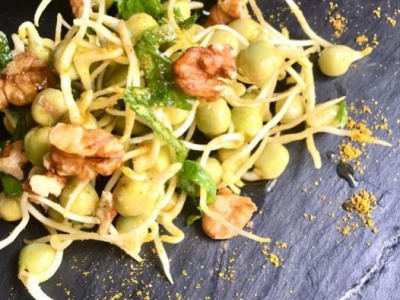

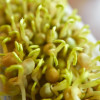
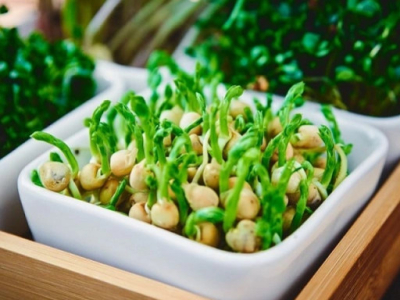
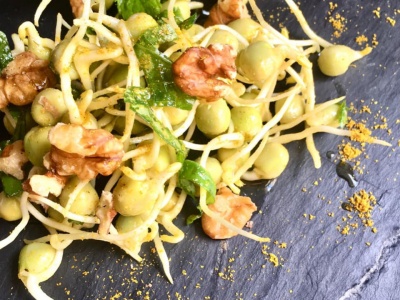
The green pea has an advantage that few seeds can claim: it germinates in just 2 to 3 days. Crunchy, sweet, slightly sugary, it fits just as well in a salad as in a raw wrap or a bowl of sprouted grains. For those new to raw food, it's often the first seed that definitively convinces them — the harvest is so quick and the result so tasty.
In this guide, Eric Viard, founder of Biovie and tropical agronomist, explains everything you need to know about the sprouted green peas : its nutritional benefits validated by science, the step-by-step germination protocol, and a fresh salad recipe to make in 5 minutes.
Why does the green pea sprout so quickly ?
The green peaPisum sativum) belongs to the legume family. Its seed is large, filled with starch and nutritional reserves, which explains its exceptional germination energy. As soon as it is soaked, the seed absorbs water, reactivates its dormant enzymes, and begins its transformation within a few hours.
Compared to other sprouted seeds — like alfalfa (5-7 days) or fenugreek (4-5 days) — the green pea is one of the fastest seeds to sprout. It is also one of the most tolerant: it can withstand a slightly longer soaking without the risk of mold, making it an excellent seed for beginners.
To obtain beautiful sprouts, be sure to use certified organic seeds intended for germination — untreated and uncooked.
The nutritional benefits of sprouted green peas
Germination does more than just grow a small green shoot. It triggers a true biochemical revolution within the seed: phytates (which block mineral absorption) are reduced, proteins are partially predigested, and the content of certain vitamins increases significantly. According to a Study published in PMC (2025) on the effects of germination on five varieties of peas, The nutritional profile improves measurably within the first 48 hours of germination.
An exceptional vitamin profile
Sprouted green peas are rich in:
- Vitamin C : about 15 mg per 100 g — contributes to the protection of cells against oxidative stress
- Folate (vitamin B9) : approximately 91 µg per 100 g, or 22% of the recommended daily intake — essential during pregnancy and for cell renewal
- Vitamin K1 : important for coagulation and bone health
- B vitamins (B1, B5, B6): support for energy metabolism and the nervous system
- Vitamins A and E : fat-soluble antioxidants, cellular protection
Quality plant-based proteins
The sprouted green pea contains between 8 to 9 g of protein per 100 g, with an interesting amino acid profile for a legume. Germination improves their bioavailability by activating proteases, making these proteins more digestible than in the dry seed. It is a particularly relevant source of plant-based proteins for people following a vegetarian or vegan diet.
Cardiovascular ally and blood sugar regulator
Thanks to its content in Polyphenols and flavonoids — notably lignans and coumestrol, studied for their anti-inflammatory properties — sprouted green peas contribute to the protection of the cardiovascular system. Its soluble fibers slow down the absorption of sugars and contribute to the regulation of blood sugar levels, as well as the reduction of LDL (the "bad" cholesterol).
Support for digestion
Germination activates the digestive enzymes naturally present in the seed: amylases, proteases, lipases. These enzymes facilitate digestion and relieve the colon. The insoluble fibers of sprouted green peas regulate intestinal transit. For people sensitive to non-sprouted legumes (flatulence), sprouted green peas are generally much better tolerated.
Lutein and zeaxanthin for eye health
Green pea shoots are an interesting source of carotenoids, particularly lutein and zeaxanthin, which help protect the retina from blue light and prevent age-related macular degeneration.
To learn more about the benefits of germination, consult our comprehensive guide: What are the benefits of sprouted seeds ?
How to Sprout Green Peas at Home (Step-by-Step Guide)
The germination of green peas does not require any sophisticated equipment. A simple glass jar is enough to get started. Here is the protocol we recommend at Biovie.
The necessary equipment
- Organic green pea seeds intended for germination (untreated, uncooked)
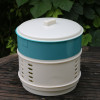
- A glass jar with a mesh or muslin, or a tiered sprouter
- Filtered or spring water
- A place sheltered from direct light and at room temperature (ideally 18-22°C)
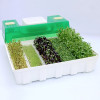
For daily use and larger batches, the EasyGreen sprouter automates watering and ensures uniform germination — it is the tool recommended by Eric Viard for sprouting seeds and legumes at home, 7 days a week. Discover how to choose the best sprouter for your sprouts.
Unsure about which seeds to choose? Check out our guide: choose your sprouted seeds wisely.
The stages of germination (2 to 3 days)
- Initial rinse : Rinse your green pea seeds thoroughly with warm water to remove impurities.
- Soaking (8 to 12 hours) : Place the seeds in a jar, cover with cold water (about twice their volume). Let them soak overnight. Do not exceed 12 hours of soaking.
- Drainage : Drain the water, rinse thoroughly, then place the jar tilted at 45° (upside down) to allow excess water to drain.
- Rinse twice a day : Morning and evening, rinse the seeds with cold water for 2 to 3 minutes, then place the jar back at an angle.
- Harvest (48 to 72 hours) The sprouts are ready when they reach 1 to 3 cm. Taste them! They should be crunchy, mild, and slightly sweet.
- Conservation : Rinse one last time, drain well, then store in an airtight container in the refrigerator. Consume within 4 to 5 days.
Our foolproof tip for rinsing sprouted seeds without damaging them is available in a dedicated article.
"I order my sprouted seeds from Biovie and I am very satisfied with them. I also ordered the Easygreen Sol, which works very well and is very useful to me." — Jérôme, Biovie customer ★★★★★
From sprouts to microgreens: two stages of tasting
The green pea can be harvested at two very different times, for two distinct taste experiences:
- Pea sprouts (2-3 days) : short, firm, slightly crunchy. Sweet and fresh flavor. Ideal in salads, wraps, or bowls. This is the stage richest in active enzymes.
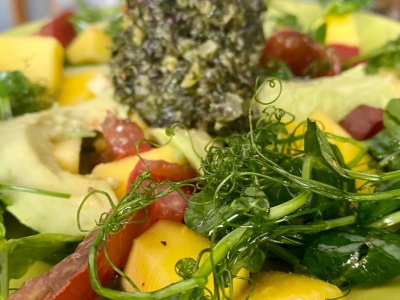
- Pea shoots (8 to 14 days) : elongated stems with leaves, more tender texture. Herbaceous and slightly sweet flavor. Perfect for dish decoration, as microgreens, or in green smoothies. At this stage, they are particularly rich in chlorophyll and carotenoids.
To obtain beautiful young sprouts, growing in trays with substrate (soil or damp cotton) is recommended rather than using a jar. The EasyGreen Sol sprouter is particularly suitable for this type of cultivation.
Recipe for fresh and crunchy sprouted green pea salad
For 2 people — Preparation: 5 minutes
Ingredients:
- 100 g of sprouted green peas (2-3 days of germination)
- 1 grated carrot
- 1 handful of arugula or lamb's lettuce
- 1 diced avocado
- The juice of half a lemon
- 2 tablespoons of extra virgin olive oil
- 1 pinch of unrefined sea salt
- A few sesame seeds or hulled hemp seeds (optional)
Preparation:
- Rinse and thoroughly drain your sprouted peas.
- In a large bowl, mix the arugula, grated carrot, and diced avocado.
- Add the sprouted peas.
- Season with lemon juice, olive oil, and salt.
- Sprinkle with sesame seeds or hulled hemp seeds.
- Enjoy immediately to savor the crunchiness of the sprouts.
This salad is eaten raw to preserve all the enzymes and vitamins of the sprouted green pea. It can be enriched with arugula sprouts, sunflower sprouts or other sprouted seeds according to your taste.
Also discover our sprouted arugula seeds to spice up your salads..
"For about 12 years, I have been buying my sprouting seeds from Biovie. Stored in the cellar in sealed buckets, they remain active for 2 years." — Véronique Dupont, Biovie customer ★★★★★
How to incorporate sprouted peas into your daily routine ?
Beyond salad, the sprouted green pea easily integrates into many preparations:
- Raw wraps : sprinkle your patties with sprouted peas for added crunch and protein
- Bowls and Buddha bowls : pair them with sprouted grains, seasonal vegetables, and a tahini sauce
- Green smoothies : add a handful of pea shoots to your green juices for a boost of chlorophyll and protein
- Warm soups : add them off the heat into a hot soup (no more than 40°C) to preserve the enzymes
- Snack : eaten as they are with a pinch of sea salt, sprouted peas are a healthy alternative to chips or crackers.
Sprouted green peas: precautions to know
The sprouted green pea is perfectly edible and healthy for the vast majority of people. Some research focuses on "toxic sprouted peas": there is no proven toxicity of raw, sprouted organic green peas. This confusion sometimes arises from the lectins present in raw, unsprouted legumes; sprouting precisely reduces these compounds.
Some practical precautions are nevertheless necessary:
- Impeccable hygiene : rinse the seeds twice a day. Moist sprouted seeds can promote bacterial growth (Salmonella, E. coli) if hygiene is insufficient.
- Certified organic seeds dedicated to germination : never use seeds treated with pesticides or sold for planting
- Immunocompromised individuals : the consumption of raw sprouted seeds is generally not recommended — consult your doctor
- Digestion : Some people sensitive to legumes may experience bloating. Start with small amounts.
Frequently Asked Questions About Sprouted Green Peas
Is it healthy to eat sprouted peas ?
Yes, the sprouted green pea is a particularly beneficial food. It is rich in fiber, plant proteins, vitamins (A, B, C, E, K), and polyphenols. Sprouting improves the bioavailability of nutrients compared to the dry seed, facilitating their absorption by the body. It contributes to cardiovascular health, blood sugar regulation, and proper digestive function.
How long does it take for green peas to germinate ?
The green pea sprouts in just 2 to 3 days, making it one of the fastest seeds to grow at home. The process includes an initial soaking for 8 to 12 hours, followed by two daily rinses (morning and evening) for 48 to 72 hours. The young pea shoots (longer and leafy) require 8 to 14 days of cultivation.
Is the sprouted green pea toxic or dangerous ?
No, sprouted green peas from certified organic seeds are not toxic. This confusion sometimes arises from the lectins present in raw, non-sprouted legumes, but sprouting actually reduces these compounds. The main precaution is to use organic seeds specifically intended for sprouting (untreated) and to follow a strict hygienic rinsing protocol twice a day.
How to eat green pea sprouts ?
Green pea sprouts are preferably consumed raw to preserve all their enzymes and vitamins. They are delicious in green salads, wraps, bowls, and smoothies. Add them off the heat in warm soups to preserve their nutritional properties. As a snack, they can be enjoyed as they are with a pinch of salt.
What is the difference between pea sprouts and pea shoots ?
Pea sprouts (2-3 days) are short, firm, and crunchy, very rich in active enzymes. Young pea shoots (8-14 days) are longer with developed leaves, richer in chlorophyll and carotenoids. Both stages are edible and delicious: sprouts in salads, shoots as dish decoration or microgreens.
Can any green peas bought at the grocery store be germinated ?
No. Peas sold in grocery stores (frozen or canned) cannot germinate because they have been heat-treated. For good results, use exclusively certified organic seeds dedicated to germination, tested and guaranteed for this purpose, such as the organic green pea seeds offered by Biovie.
In practice: the opinion of Eric Viard, tropical agronomist engineer
"Among all the sprouting seeds I have recommended for over 30 years, the green pea holds a special place: it is ideal for beginners, impresses with its speed, and its sprouts have a sweetness that even children enjoy. It is often the seed that convinces those who were still hesitant to incorporate sprouted seeds into their daily routine." — Eric Viard, founder of Biovie.
Update: April 2026. Article approved by Éric Viard, founder of Biovie and engineer ISTOM, co-author of " Seaweed in everyday life "(Gallimard, 2024) —" Best cookbook in the world, Gourmand Cookbook Awards 2025, and Best cookbook in France, National Academy of Cuisine 2025.
Warning: The information presented in this article is provided for informational purposes only and does not constitute medical advice. Consult a qualified healthcare professional before making any significant changes to your diet or supplementation. As part of a varied and balanced diet and a healthy lifestyle.
Find all our organic ingredients for raw food on https://www.biovie.fr/en/