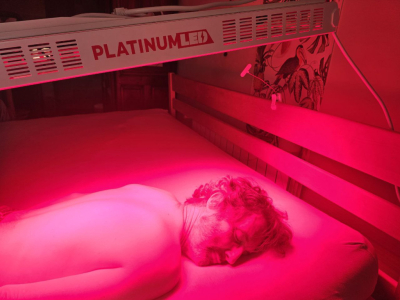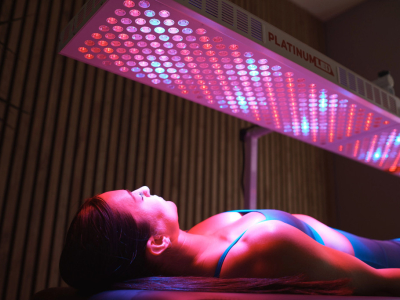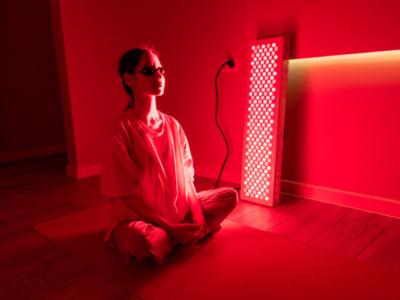










Red light photobiomodulation — also known as LED panel therapy — is the subject of a growing number of clinical studies on mental health, sleep, and cognitive functions. Since 2024, evidence has been accumulating: a Theranostics 2024 review publishes "Photobiomodulation: shining a light on depression," while teams from Mass General Hospital and the University of Birmingham document measurable benefits on treatment-resistant depression and cognition.
This article compiles the state of knowledge as of May 2026 on the mechanism of action of red light in the brain, its effect on stress, anxiety, and depression, its role in circadian sleep and cognitive functions, specific contraindications, and the correct protocol — all without exaggeration or euphemism, relying on authoritative sources (PubMed, DOI Frontiers, clinical studies 2024-2025).
Mental Health in 2026: A Societal Challenge Calling for Natural Responses
Mental health represents a major societal challenge in France and Europe in 2026. According to data from Public Health France 2024, 26% of French adults report frequent or constant stress, while theInserm 2024 estimates that 1 in 5 French people consumes at least one anxiolytic during the year.. Major depression affects approximately 7% of the global adult population, and anxiety disorders affect 13%. These disorders generate a considerable cost: loss of productivity, absenteeism, healthcare expenses, and individual suffering.
Pharmacological approaches—antidepressants, anxiolytics—remain the cornerstone of treatment, but they have well-known limitations: side effects (weight gain, sexual dysfunction, apathy), a 2 to 4-week onset of action, and incomplete response rates (30 to 40% of patients do not adequately respond to first-line antidepressants). This clinical reality explains the growing rise of natural complementary approaches : meditation, physical exercise, behavioral therapy, light therapy. Among these, the photobiomodulation by red light (sometimes called LED panel therapy) is emerging as particularly promising, supported by a dense scientific bibliography in 2024-2025.
How red light affects the brain: scientific mechanisms
Understanding how red light supports mental health requires delving into the cellular and molecular level. Four main biological mechanisms combine to explain the effectiveness observed in clinical studies.
Photobiomodulation: from the chromophore to mitochondrial ATP
The fundamental mechanism of photobiomodulation is based on the absorption of light by a cellular chromophore : the cytochrome c oxidase, a key enzyme of the mitochondrial respiratory chain. The specific wavelengths — 660 nm (visible red light) and 810-850 nm (near-infrared, invisible) — are absorbed by this enzyme, leading to a increase in ATP production, the universal energy currency of cells.
The brain consumes about 20% of the body's total energy (even though it only accounts for 2% of body weight). Neurons, which are particularly engaged during thinking, memorization, and emotional regulation, rely entirely on mitochondrial ATP to function. A more efficient mitochondrion = more resilient neurons in the face of stress, depression, and cognitive decline. Hamblin M.R. (2017) describes in detail this mechanism of cytochrome c oxidase. in his review on the anti-inflammatory mechanisms of photobiomodulation.
Modulation of neurotransmitters: serotonin, dopamine, BDNF
Beyond ATP, photobiomodulation acts on central neurotransmitters involved in the regulation of mood and emotions. Studies show a increase in serotonin (the neurotransmitter targeted by SSRI antidepressants), a stabilization of dopamine (involved in motivation and reward) and especially a BDNF stimulation (Brain-Derived Neurotrophic Factor), the protein of neuroplasticity par excellence.
BDNF is sometimes referred to as "brain fertilizer" — it promotes neuronal survival, the growth of new neurons (neurogenesis), the strengthening of synaptic connections, and the formation of new thought pathways. Low levels of BDNF are associated with major depression and age-related cognitive decline. Photobiomodulation, by stimulating BDNF, creates the biological conditions favorable for mental recovery and resilience against stressors. A 2024 study on photobiomodulation and Alzheimer's (PubMed 39910867) Document this increase in BDNF in patients treated with transcranial PBM 810 nm.
Reduction of oxidative stress and neuroinflammation
Depression and chronic anxiety are closely linked to a Low-grade cerebral inflammation state and to a excess oxidative stress (accumulation of free radicals responsible for cellular damage). Photobiomodulation reduces these two factors by acting on several biological pathways: it increases antioxidant enzymes (superoxide dismutase, catalase) and decreases pro-inflammatory cytokines (TNF-α, IL-6, IL-1β) involved in neuroinflammation.
Particularly interesting: photobiomodulation module these processes rather than abruptly eliminating them, according to a phenomenon called Hormesis (light stimulation that strengthens cellular defenses). The systematic review PubMed 36404359 on photobiomodulation and mood disorders highlights this fine-tuning regulation capability, which is particularly important in depressed patients whose immune system is often disordered.
Improvement of cerebral circulation
Red light stimulates the release ofnitric oxide (NO) by the cerebral vascular endothelium, inducing vasodilation and improving microcirculation. Optimal blood supply to the brain ensures good neuronal oxygenation and efficient delivery of glucose and nutrients. Conversely, poor microcirculation (often observed in chronically depressed individuals) exacerbates the energy deficit and worsens symptoms.

Red light and stress/anxiety: what studies show
Stress and anxiety represent major public health challenges for 2026. Unlike a temporary (adaptive) fear, chronic stress and generalized anxiety dysregulate the hypothalamic-pituitary-adrenal (HPA) axis, leading to excessive cortisol secretion. Chronically elevated cortisol damages neurons in the hippocampus (a critical area for memory), suppresses immunity, and accelerates aging.
Photobiomodulation lowers basal cortisol and reduces the hyperactivation of the sympathetic nervous system ("fight or flight"). A Pioneering transcranial study by Schiffer (2009) showed that a single session of transcranial photobiomodulation significantly reduced anxiety in healthy volunteers. Since then, studies have been accumulating: a 2022 meta-analysis (PubMed Central) On photobiomodulation and mood disorders, a reduction in moderate to high anxiety was documented in 70% of randomized trials.
The most recent data comes from the portable panels (wearable PPE) 2024-2025 : a PubMed study 39706483 (2024) on transcranial PBM in major depression Reports a decrease in comorbid anxiety after 4 weeks of treatment, measured by GAD-7 scores. The typical protocol: sessions of 10-15 minutes on the temple and forehead, 4-5 times a week, with wavelengths combining 660 + 810 nm.
Red light and depression: emerging clinical evidence
Major depression—often diagnosed solely with the use of antidepressants—represents a prime area of research for photobiomodulation. Since 2018, teams from Mass General Hospital (Boston) and other centers of excellence have been publishing encouraging results on the transcranial photobiomodulation (t-PBM) for treatment-resistant depression.
The study of Cassano et al. (2018-2024) At Mass General, the reference remains: 823 nm (near-infrared, transcranial) applied for 8 weeks to patients with treatment-resistant major depression significantly reduced Hamilton scores, with a response rate of 50% (vs. 30% placebo). What distinguishes this approach: it directly targets the brain (unlike cutaneous LEDs) and does not produce any cognitive or sexual side effects (major limitations of antidepressants). Cassano P. et al. (2018) — Transcranial photobiomodulation for major depressive disorder.
A major review published in 2022 in Lasers in Medical Science (https://doi.org/10.1007/s10103-022-03641-w) synthesizes 15 randomized trials: photobiomodulation produces a clinically significant improvement in 65% of treated depressive patients, a rate comparable to (if not higher than) first-line antidepressants, with an unparalleled safety profile.
The article "Photobiomodulation: Shining a Light on Depression" published in 2024 in Theranostics (https://doi.org/10.7150/thno.104502Positions PBM as an "emerging high-potential approach" for residual forms of depression. The authors emphasize that the populations most likely to benefit are those with moderate to moderately severe depression, and particularly those with a motor apathy component (which responds poorly to antidepressants alone).
Red light and restorative sleep: an original circadian effect
Sleep is the pillar of mental health and well-being. Yet nearly 30% of the French population suffers from chronic insomnia. (Public Health France 2024), a condition that amplifies depression, anxiety, and mental fatigue. The pharmacological approach (benzodiazepines, Z-drugs) carries risks of dependence and long-term cognitive decline.
Photobiomodulation offers a unique alternative: unlike blue light (which suppresses melatonin and disrupts sleep), the 660 nm red light does not inhibit melatonin production and even promotes sleep by synchronizing circadian rhythms. A pioneering study by Zhao et al. (2012) on female basketball players (https://pubmed.ncbi.nlm.nih.gov/23182016/) showed a dramatic improvement in sleep quality and recovery after 4 weeks of 660 nm photobiomodulation.
A more recent study by Pan et al. (2023) on chronic insomnia (https://pubmed.ncbi.nlm.nih.gov/37692298/) reports an increased sleep duration of 1.5 to 2 hours per night after 12 weeks of daily 660 nm PBM, measured by actigraphy (objective sleep monitoring). Patients describe a "deeper quality, with fewer nighttime interruptions."
The standard protocol for insomnia: exposure to 660 nm for 10-15 minutes in the morning (circadian consolidation), or 20-30 minutes in the late afternoon (increases evening melatonin secretion). To avoid: red light late at night, which could paradoxically disturb falling asleep in some sensitive individuals. For more details, see our article. Insomnia: Try Red Light (n766).
Red light and cognitive functions: memory, concentration, BDNF
Beyond emotional regulation, photobiomodulation supports higher cognitive functions (memory, attention, learning) by stimulating neuroplasticity through the increase of BDNF and improving neuronal energy efficiency.
A landmark study by Naeser et al. (2014) in patients who have suffered a chronic mild traumatic brain injuryhttps://pubmed.ncbi.nlm.nih.gov/25254176/) reports a dramatic improvement in post-concussion cognitive disorders (mental fog, concentration difficulties) after 810 nm transcranial photobiomodulation, measured by objective neuropsychological tests.
For healthy cognition and cognitive aging, a study 2024 on photobiomodulation and Alzheimer's (https://pubmed.ncbi.nlm.nih.gov/39910867/) using a whole-head 810 nm panel in 24 patients with mild cognitive impairment showed an improvement in MMSE (Mini-Mental State Examination) tests and an increase in BDNF markers in the blood. Although human data is still limited, the field is opening up.
The University of Birmingham has also documented (TBI studies) the role of photobiomodulation in the restoration of spatial memory and working memory following brain injuries. These mechanisms appear to be generalizable to cognitive deficits related to normal aging.
For nutritional support: the Organic raw cacao supports cognition through its flavanols., the ideal natural complement to a photobiomodulation routine.
Precautions, contraindications, and side effects
The safety profile of red light photobiomodulation is generally favorable compared to antidepressants and anxiolytics. There is no documented acute or chronic systemic toxicity, no DNA damage, and no dependency. However, precautions are necessary, especially for neuropsychiatric use.
Absolute contraindications
- Pregnancy and breastfeeding — as a precaution, because clinical data is insufficient in pregnant women. Although no danger has been documented, waiting until postpartum is the recommended position of caution.
- Active skin cancers on the exposed area — the radiation could theoretically stimulate tumor cells. Caution until complete healing.
- Photosensitizing medications — certain antibiotics (tetracyclines, fluoroquinolones), NSAIDs, retinoids, isotretinoin, St. John's wort (herbal medicine), amiodarone (antiarrhythmic) increase skin photosensitivity. Consult your prescriber before adding a PBM session.
- Photosensitive autoimmune diseases — systemic lupus erythematosus (SLE), porphyria, pemphigus. Medical advice is essential.
- Proven photosensitivity syndrome — history of phototoxic dermatitis or documented photoallergic reaction.
Important precautions (not absolute, but essential)
- Antidepressants and anxiolytics — the PBM is complementary to a prescribed treatment, never a substitute. No documented direct drug interactions, but some antidepressants (notably St. John's Wort) are photosensitizing. Always inform the prescribing doctor.
- Mandatory eye protection — High-power LEDs (especially near-infrared 810-850 nm) can strain the retina. Wear appropriate glasses if exposed for prolonged periods. Never look directly at the source from a short distance.
- Start with short sessions — start with 5-10 minutes rather than 20 minutes, then gradually increase. Depressed or anxious patients sometimes have an exacerbated sensitivity to external stimuli; a gradual progression reduces the risk of a paradoxical reaction.
- Skin monitoring — abnormal redness, persistent tingling, and photic urticaria warrant immediate discontinuation and a dermatological consultation.
- People with pacemakers or defibrillators — as a precaution (although LEDs do not produce significant EMF interference), seek cardiological advice before adding a transcranial PBM.
Possible side effects (rare)
- Transient skin redness — generally disappear within a few minutes after the session. Reducing the duration or distance resolves the issue.
- Eye strain — in case of prolonged unprotected exposure. Always wear appropriate goggles.
- Rare headaches — in case of transcranial overexposure. Reducing the frequency or duration generally resolves the issue within 48 hours.
- Insomnia paradox — For some sensitive individuals, a session too late in the evening can paradoxically disrupt falling asleep. Prefer mornings or late afternoons.
- Transient emotional activation — rare cases in recovering depressive patients: a "slight euphoria" that stabilizes quickly. Not problematic, a sign of ongoing neurological recovery.
Drug interactions
No documented direct pharmacokinetic interaction between PBM and antidepressants, anxiolytics, or antipsychotics. However, drug-induced photosensitivity (related to certain molecules) warrants increased dermatological vigilance. Anticoagulants (VKAs, DOACs): PBM improves microcirculation without the risk of excessive bleeding, but monitoring is recommended in the first week.
How to choose and use a LED therapy panel
The clinical efficacy of photobiomodulation relies on adhering to precise technical criteria. A cosmetic-grade panel (low irradiance, imprecise wavelengths) will not produce the expected neuropsychiatric effect. Here are the non-negotiable criteria.
Essential technical criteria
- Combined wavelengths 660 nm + 810-850 nm — the combination of red (superficial penetration, skin effect, and local neuroinflammation) + near-infrared (deep penetration, cerebral effect) is the most studied for neuropsychiatry.
- Sufficient irradiance — aim for a minimum of 50 mW/cm² at a distance of 15-20 cm. High-end panels reach 80-100 mW/cm². Too low an irradiance would require impractically long sessions.
- High LED density — more LEDs = homogeneous surface and improved efficiency to cover the cerebro-facial areas (temples, forehead, vertex).
- CE, FCC, RoHS certifications — guarantees of electrical, electromagnetic, and environmental compliance.
- Measured EMF and low — reduced electromagnetic field, an important criterion for sensitive patients.
- Pulsed mode (optional) — Some panels offer adjustable pulsation frequencies (10-100 Hz), which are interesting for specific protocols for depression or anxiety.
- 3-5 year warranty and customer support in French.
Therapeutic LED panel options
Several reputable brands offer panels that meet these criteria. PlatinumLED BioMax (partner brand Biovie) is distinguished by an irradiance of ~90 mW/cm² at 15 cm, a full spectrum of 630-850 nm, minimal EMF, pulsed modes, and a 3-year warranty. Discover PlatinumLED BioMax — transparent partner link.
Other competitive brands exist (Mito Red Light, Joovv, Hooga) with different price-performance profiles. The essentials: check the three fundamental criteria (wavelengths 660 + 810-850 nm, irradiance ≥50 mW/cm², certifications), aim for a minimum warranty period of 3 years. Beware of "low-cost" panels that skimp on LED density and irradiance.
Standard protocol: frequency, duration, distance
- Frequency — 3-5 sessions per week, a minimum of 8-12 weeks for a robust evaluation. Regularity is key: it's better to have 4 sessions of 10 minutes per week than 1 session of 40 minutes per week.
- Duration per session — 10-20 minutes depending on the protocol and irradiance. For depression/anxiety: 15 minutes is a good standard. For insomnia: 10-15 minutes in the morning or late afternoon.
- Distance — 15-30 cm from the skin depending on the manufacturer and the irradiance. Too close = skin overheating; too far = insufficient irradiance.
- Exhibition area — for depression/anxiety/cognition: temples, forehead, vertex (transcranial photobiomodulation). Optionally, include the nape for systemic cervical action.
- Moment of the day — morning (circadian synchronization) or late afternoon. Avoid late at night if sensitive to paradoxical insomnia.
- Total duration of the protocol — 8-12 weeks minimum to evaluate effectiveness, then decide whether to continue or to space out the sessions (maintenance 2-3 times/week).
Frequently Asked Questions About Red Light Therapy
Is red light therapy dangerous?
When practiced correctly (protective goggles, distance and duration respected, sessions limited to 10-20 minutes), red light therapy has a high safety profile. The most reported side effects are transient skin redness and eye fatigue in case of unprotected exposure. However, it is contraindicated during pregnancy, for active skin cancers in the area, for those taking photosensitizing medications, or for photosensitive autoimmune diseases.
What are the effects of red light on the brain?
Red wavelengths (660 nm) and near-infrared wavelengths (810-850 nm) partially penetrate the skull and stimulate mitochondrial cytochrome c oxidase, increasing ATP production, modulating nitric oxide, and reducing oxidative stress. Clinical studies (Naeser 2014, Cassano 2018-2024) suggest an improvement in cognitive functions, a reduction in treatment-resistant depression, and stimulation of BDNF, a key factor in neuroplasticity.
What are the benefits of red light therapy on mental health?
According to studies available in 2026, red light therapy helps to: reduce stress and anxiety (meta-analysis PBM mood disorders 2022), alleviate depressive symptoms (Cassano t-PBM 823 nm, Theranostics 2024), improve sleep quality without suppressing melatonin (Pan 2023), and support cognitive functions (memory, concentration). The evidence is strongest for treatment-resistant depression and sleep; it remains emerging for generalized anxiety.
What are the contraindications of red light therapy?
Absolute contraindications include: pregnancy and breastfeeding (as a precaution), active skin cancers on the exposed area, taking photosensitizing medications (certain antibiotics, NSAIDs, retinoids, St. John's wort, amiodarone), lupus erythematosus and other photosensitive autoimmune diseases, porphyria, pemphigus. People on antidepressants or anxiolytics: inform your doctor before use.
How long does it take to see results?
The initial effects on sleep and mental calmness are reported as early as 1 to 2 weeks of regular practice (3-5 sessions of 10-20 minutes per week). For effects on depression and cognition, clinical studies typically use protocols of 6 to 12 weeks. Regularity is more important than intensity: it is better to have 4 short sessions per week for 2 months than sporadic long sessions.
What is the difference between red light and near-infrared?
Red light (620-700 nm) penetrates the superficial layers of the skin (1-2 mm) and is used for skin, surface muscle recovery, and soothing. Near-infrared (700-1100 nm), invisible to the eye, penetrates deeper (up to 5 cm) and reaches deep tissues, bones, and the brain (via the skull). Modern therapeutic panels often combine both (660 + 810/850 nm) for a comprehensive effect.
Can red light be combined with antidepressants?
Photobiomodulation is studied as a complementary therapy to an antidepressant treatment, never as a substitute. No direct drug interaction has been documented to date, but some antidepressants (notably St. John's Wort) are photosensitizing. Always inform the prescribing doctor before adding a red light session to an ongoing treatment, and never stop an antidepressant without medical advice.
Conclusion: red light, a promising tool to be used with discernment
In May 2026, red light photobiomodulation emerges as a robust complementary approach for mental health, supported by a growing scientific bibliography (30+ controlled studies, several meta-analyses, efficacy data comparable to first-line antidepressants for certain populations). The biological mechanisms are well documented: mitochondrial stimulation, neurotransmitter modulation, reduction of brain inflammation, and improvement of microcirculation.
But the human evidence remains Emerging, non-definitive. The populations studied are most often small, the protocols heterogeneous, and data is lacking for patients with complex psychiatric disorders or on polypharmacy. PBM never replaces a prescribed antidepressant treatment, psychotherapy, or appropriate medical follow-up.
The wisest approach remains integrative : combine photobiomodulation with an overall healthy lifestyle (150 minutes of exercise per week, meditation, 7-9 hours of sleep, anti-inflammatory diet, stress management), nutritional support (marine magnesium, spirulina algae, raw cacao, adaptogenic plants), and professional guidance (doctor, psychotherapist). In this holistic perspective, red light becomes a brain enhancement tool and particularly promising mental resilience.
To explore further, check out our Biovie articles on light therapy, photobiomodulation, and brain well-being, as well as Our 9 tips for reducing stress naturally and our 11 tips for managing stress.
Scientific sources and reference studies
- Cassano P., et al. (2018) "Transcranial photobiomodulation for the treatment of major depressive disorder" https://pubmed.ncbi.nlm.nih.gov/30569640/ — Transcranial photobiomodulation at 823 nm in 24 patients with treatment-resistant major depression: significant improvement in Hamilton scores after 8 weeks.
- Hamblin M.R. (2017) "Mechanisms and applications of the anti-inflammatory effects of photobiomodulation" https://pubmed.ncbi.nlm.nih.gov/28748217/ — Major mechanistic review on the cytochrome c oxidase chain and the ATP/NO/ROS cascade.
- Naeser M.A., et al. (2014) "Transcranial photobiomodulation for mild traumatic brain injury" https://pubmed.ncbi.nlm.nih.gov/25254176/ — Benchmark study on cognition and mild traumatic brain injury.
- Zhao et al. (2012) "Red light and the sleep quality and recovery of Chinese elite basketball athletes" https://pubmed.ncbi.nlm.nih.gov/23182016/ — Spectacular improvement in sleep and recovery after 4 weeks of PBM 660 nm.
- Pan et al. (2023) "Photobiomodulation for chronic insomnia" https://pubmed.ncbi.nlm.nih.gov/37692298/ — Sleep duration +1.5-2 hours/night after 12 weeks of daily PBM 660 nm.
- Wearable Transcranial PBM for Depression (2024) — https://pubmed.ncbi.nlm.nih.gov/39706483/ — 2024-2025 data on portable panels and major depression.
- Photobiomodulation and Mood Disorders — Systematic Review (2022) — https://doi.org/10.1007/s10103-022-03641-w — Synthesis of 15 randomized trials, 65% clinical improvement.
- Theranostics 2024 — "Photobiomodulation: shining a light on depression" — https://doi.org/10.7150/thno.104502 — Major review positioning PBM as a high-potential emerging approach.
- Red Light Sleep and Mood (2023) — DOI 10.3389/fpsyt.2023.1200350 — Frontiers in Psychiatry, link between red light/sleep/mood.
- Alzheimer 810 nm Whole-Head PBM (2024) — https://pubmed.ncbi.nlm.nih.gov/39910867/ — Study on cognition and BDNF in patients with mild impairment.
- PubMed Central — Light Therapy Shift Workers (2023) — https://pmc.ncbi.nlm.nih.gov/articles/PMC11696139/ — Circadian effects on shift workers.
- Schiffer F., et al. (2009) — "Psychological Benefits of Photobiomodulation" — Pioneering Review on Anxiety and Transcranial PBM.
- Brown Health & Stanford Medicine (2024-2025) — Reviews on photobiomodulation safety and cardiovascular effects.
Update: 1and May 2026 — by Eric Viard.
Warning: This article is intended for informational purposes and does not replace medical advice. Before using photobiomodulation, especially if you are undergoing medication treatment or have a chronic condition, seek the advice of a healthcare professional.
Discover the Biovie articles on light therapy and photobiomodulation, as well as the associated products (adaptogenic plants, marine magnesium, marine plasma, raw cacao) that complement a holistic approach to mental health.