

The Epsom salt — hydrated magnesium sulfate, formula MgSO₄·7H₂O — is a natural mineral that relieves muscle pain, promotes relaxation, and is used in relaxing baths, gardening, and cosmetic care. The magnesium it contains is involved in more than 300 enzymatic reactions in the body, according to theANSES — which explains the extent of its applications in daily life.
Its name comes from the town of Epsom in England, where these crystals were discovered in mineral springs in the 17th century. Since then, they have never really left bathrooms or vegetable gardens. At Biovie, we offer a Ecocert certified and vegan Epsom salt — because for a product that is applied directly to the skin, the quality of the source really matters.
Whether it's to take care of your natural beauty, support your natural health or even nourish your garden plants, here is a complete overview of what this discreet mineral can do for you.
What is Epsom salt ?
The history of the Epsom salt dates back to the 17th century, when it was discovered in the mineral springs of the town of Epsom, England. From that time, this magnesium salt was used as a natural remedy for its beneficial properties on the muscle pain and digestive problems. Over the centuries, it conquered European bathrooms before finding its place in gardening and domestic cleaning.
Its chemical formula, MgSO₄·7H₂O, says it all: it is magnesium sulfate heptahydrate — seven water molecules bound to each unit of magnesium sulfate. This structure gives it remarkable solubility in water, an essential condition for effective transdermal absorption in a bath.
Two key elements make up this salt:
- The magnesium (Mg) : an essential mineral that contributes to the normal functioning of muscles, the nervous system, and balanced blood pressure — and that participates in protein synthesis.
- The sulfur (S) : important for the health of the skin, of the hair and nails, and involved in the body's natural elimination functions.
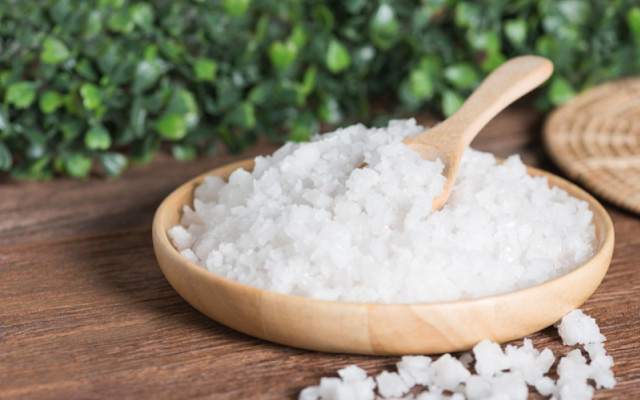
In his physical appearance, the Epsom salt is presented in the form of White crystals, soluble in water, similar to table salt. It has a bitter taste that makes it unsuitable for regular culinary use — it is not edible salt.
.webp)
The benefits of Epsom salt: what science says
Honestly, we hear a lot about Epsom salt — between those who attribute miraculous virtues to it and those who dismiss it as "an old wives' tale." The reality is more nuanced and more interesting. The magnesium contained in Epsom salt contributes, according to the NIH (National Institutes of Health, 2023), to normal muscle function and the functioning of the nervous system. It is a solid, documented foundation on which most traditional uses are based.
1. Relief from muscle pain and aches
This is the most well-known use — and the most justified. Magnesium contributes to normal muscle function: it helps regulate contractions and soothe tensions after exertion. That's why many athletes use it. Epsom salt in a bath after intense sessions.
Concretely: dissolve your Epsom salt In a hot bath, soak for 15 to 20 minutes. Magnesium and sulfate ions pass through the skin barrier. Magnesium levels increase, promoting muscle relaxation and helping to reduce the sensation of inflammation. It is also a natural ally against cramps and muscle soreness of the everyday.
2. Improvement of sleep quality
Research published in Magnesium Research suggest that a magnesium deficiency is associated with sleep disorders (Nielsen et al., PubMed, 2010Take a bath at Epsom salt before sleeping promotes transdermal absorption of magnesium, which can help reduce cortisol levels (the stress hormone) and create a state of physical relaxation conducive to a more restorative sleep.
3. Support for the natural elimination functions
In the bath, the Epsom salt promotes better blood circulation and relaxes the muscles. Sulfate ions contribute to the support of natural elimination functions of the body — which makes it an ally of choice in the context of a seasonal detox, combined with a suitable diet. It is not a "detox cure" in the medical sense — but it is a real support for overall well-being.
4. Skincare
In the field of natural cosmetics, the Epsom salt is appreciated as an exfoliant due to its slightly abrasive crystals. They help remove dead skin cells and reveal smoother, more radiant skin. Its soothing properties can also help relieve itching and redness associated with conditions like eczema or psoriasis — to be used as a complement to medical treatment, not as a replacement.
5. Stress reduction
Magnesium contributes to the normal functioning of the nervous system and supports normal psychological function. In practice, baths of Epsom salt help to soothe the mind and body — a simple 20-minute gesture that can change the tone of a stressful evening. The 9 Tips for reducing stress naturally that we have shared on the blog also include this type of ritual.
Epsom salt and hair: care, effects, and recipes
Less known than its uses in baths, but increasingly popular in natural hair care routines. Thanks to its sulfur and magnesium content, the Epsom salt acts like a scalp exfoliant and helps regulate excess sebum. This is particularly beneficial for fine, flat, or oily-prone hair.
How to use it for hair ?
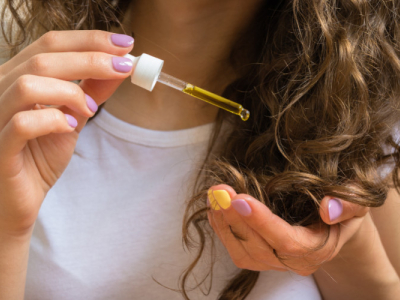
- In the shampoo: mix 1 tablespoon of Epsom salt into your usual dose of shampoo. Apply to the scalp, gently massage for 2 minutes, rinse thoroughly. Helps to remove residues and add volume.
- Exfoliating mask: Mix 1 tablespoon of Epsom salt with 1 tablespoon of warmed coconut oil. Apply to the scalp, leave on for 10 minutes, then rinse. Do this no more than once a week to avoid drying out.
Others homemade hair mask recipes can complete this natural hair care routine.
⚠️ Caution: Epsom salt is not recommended for very dry, heavily colored, or chemically treated hair. Always perform a test on a small strand before a widespread application.
Applications of Epsom salt in daily life
The Epsom salt easily integrates into many routines to improve well-being and facilitate certain tasks. It is a multifunctional product — this is even one of the reasons why it is among the essentials of our natural first aid kit.
Relaxing Epsom salt bath
It is the ultimate application. A 15 to 20-minute bath to relieve muscle pain, relax the body after an intense day, or simply create a moment of ritual well-being. The relaxing effect can also help reduce tension and promote good circulation.
Ingredients:
- 100 g of Epsom salt
- Lukewarm water (not scalding)
- (Optional) A few drops of organic essential oil — lavender, eucalyptus, or peppermint
Instructions:
- Fill your bathtub with warm, comfortable water.
- Dissolve the Epsom salt in the water.
- Add essential oils if desired — a few drops are enough.
- Soak for 15 to 20 minutes. Breathe deeply.
- Rinse with clear water and moisturize the skin with an oil or lotion.
"Epsom salt, great for many uses!" — Ediland, Biovie customer ⭐⭐⭐⭐⭐ (Trustpilot)
Epsom salt foot care
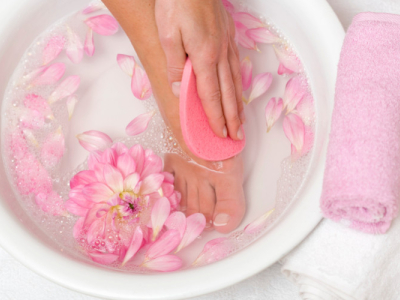
A foot bath at the Epsom salt is an excellent way to relieve the feet tired and to reduce odors. A simple gesture to take care of your legs naturally.
Ingredients:
- 10 g of Epsom salt
- Basin of warm water
Instructions:
- Dissolve 10 g of Epsom salt in a basin of warm water.
- Soak your feet for 20 to 30 minutes.
- Dry and apply a moisturizer.
.webp)
Natural exfoliant
The Epsom salt is excellent natural exfoliant for the skin — to eliminate dead cells, improve texture, and prepare your skin before sun exposure or a treatment.
Ingredients:
- 10 g of Epsom salt
- 1/4 cup of olive oil or coconut oil
- (Optional) A few drops of essential oil
Instructions:
- Mix the Epsom salt with the chosen oil. Add essential oils if desired.
- In the shower, apply to wet skin in gentle circular motions.
- Rinse well with warm water.
- Apply a moisturizer after exfoliation.
Uses of Epsom salt in gardening
The Epsom salt has become a valuable supplement for gardeners. Thanks to its magnesium and sulfur content, it acts as a natural fertilizer — and certain plants, particularly tomatoes, peppers, and roses, respond particularly well to it. Magnesium is essential for the production of chlorophyll : without it, the leaves turn yellow between the veins — a classic sign of deficiency.
1. Improvement of plant growth
Magnesium plays a crucial role in photosynthesis by helping plants produce more chlorophyll. This results in more vigorous growth and greener leaves. Sulfur, on the other hand, is necessary for the synthesis of amino acids and proteins essential for plant development.
Beware of overdose. Excessive use can lead to nutritional imbalances. Recommended dosage: 1 to 2 tablespoons diluted in 1 liter of water, once or twice a month. Having the soil analyzed before application is a good practice.
2. Increase in fruit and vegetable production
In case of magnesium deficiency (yellowing of leaves, slowed growth, less abundant fruits), an application of Epsom salt can quickly correct the situation. The plants absorb it efficiently and regain their vigor in a few days.
3. Prevention of Magnesium Deficiency
Magnesium is also the "transporter" of nutrients within plants—it moves phosphorus to where it is needed. Roses, tomatoes, and peppers are the most sensitive to deficiencies. With regular and thoughtful application of Epsom salt, we effectively correct these deficits.
Uses of Epsom salt in household cleaning
The Epsom salt is also a valuable ally in household cleaning. Its slightly abrasive crystals make several household tasks easier:
- Clean the tiles and grout in the bathroom and kitchen to make them shine.
- Remove stubborn stains from clothes and break down fats and oils.
- Soften hard water to improve detergent efficiency.
- Naturally deodorize the house.
- Remove food residues from kitchen appliances (microwave, refrigerator, dishwasher): wipe with an Epsom salt solution, then rinse.
- Clean mineral deposits on dishes.
- Clean burnt pots and pans: sprinkle with Epsom salt, add hot water, let soak for 15 minutes, scrub, and rinse.
Epsom salt for weight loss: true or false ?
This question comes up often — so let's answer it frankly.
No, Epsom salt does not directly cause weight loss. It has no fat-burning properties or appetite-suppressing effects. Any promise of weight loss related to this product alone would be scientifically unfounded — and that is not how we operate at Biovie.
On the other hand, it can indirectly contribute to a better balance of the body:
- The hot bath promotes slight sweating and can relieve the stress-related swelling
- Improving sleep and reducing cortisol are conducive to better hormonal balance in the long term.
- Muscle relaxation facilitates the resumption or maintenance of regular physical activity.
Some people combine Epsom salt and baking soda in their bath—a popular combination for an enhanced sensory "well-being" effect. While safe for a healthy person, it does not constitute a weight loss treatment.
The Epsom salt is above all a well-being ally, to integrate into a healthy lifestyle. Not a miracle solution. This honesty is the only line I have defended since Biovie has existed.
Precautions and contraindications of Epsom salt
Epsom salt poses no danger for external use in a healthy person when used according to usual recommendations. The risks mainly appear in cases of overdose or ingestion without medical advice. Here are the three situations that require particular attention:
- Kidney failure : an excess of magnesium can worsen the situation
- Pregnancy or breastfeeding : consult a doctor before any use
- Cardiovascular diseases or hypertension : the hot bath can affect blood pressure
Before starting any use of the Epsom salt, It is recommended to consult a healthcare professional if you have pre-existing medical conditions or if you are taking medications. This salt may have dehydrating effects: make sure to hydrate well before and after each bath.
Other contraindications to be aware of:
- People with diabetes need to be cautious — bathing can affect circulation and magnesium levels in the blood.
- Use on children should be monitored, following pediatric advice.
- In case of known skin allergies: stop immediately if irritation, itching, or redness occurs.
Epsom salt is not recommended for oral use, except with explicit medical prescription. Uncontrolled internal consumption can lead to diarrhea, abdominal cramps, and electrolyte imbalances.
In summary: used externally, with common sense and respecting the contraindications, the Epsom salt is a safe and versatile product.
FAQ — Epsom Salt: Benefits, Uses, and Precautions
What is Epsom salt ?
Epsom salt, or magnesium sulfate (MgSO₄·7H₂O), is a natural mineral discovered in the 17th century in the Epsom springs in England. Due to its magnesium content—which contributes to the normal functioning of muscles and the nervous system—and sulfur, which is beneficial for the skin and hair, it has been used in baths, cosmetics, and gardening for centuries. As part of a varied and balanced diet and a healthy lifestyle.
What are the health benefits of Epsom salt ?
Epsom salt contributes to muscle comfort, quality of relaxation, and skin care. In a bath, it promotes physical relaxation and can help reduce tension accumulated after exertion. The magnesium it contains contributes to the normal functioning of the nervous system (NIH, 2023), and a magnesium deficiency is associated with sleep disorders (Nielsen et al., PubMed, 2010).
How to use Epsom salt in a bath ?
Dissolve about 100 g of Epsom salt in a bathtub of warm water (comfortable, not hot). Soak for 15 to 20 minutes while breathing deeply, then rinse with clear water and moisturize the skin. One to two baths per week is a reasonable frequency.
Is Epsom salt good for the skin ?
Yes. Epsom salt is used as a natural exfoliant to remove dead skin cells and soften the skin. Its slightly abrasive crystals reveal smoother and more radiant skin. Its soothing properties can also help relieve itching and redness associated with certain skin conditions like eczema or psoriasis — as a complement to medical treatment.
Can Epsom salt be used for feet ?
A foot bath at the Epsom salt is ideal for relaxing tired feet and reducing odors. Dissolve 10 g in a basin of warm water and soak your feet for 20 to 30 minutes. Simple, effective, economical.
How to use Epsom salt in the garden ?
In gardening, the Epsom salt provides magnesium and sulfur to plants. It promotes growth and corrects magnesium deficiencies (yellowing of leaves between the veins). Recommended dosage: 1 to 2 tablespoons per liter of water, once or twice a month. Do not overdose.
Can Epsom salt be used for household cleaning ?
Yes. Its slightly abrasive crystals make it a natural ally for cleaning tiles and grout, degreasing burnt pans, removing stubborn stains from clothes, and even deodorizing the house.
Are there any precautions to take with Epsom salt ?
For external use in a healthy person, it does not present any particular danger. It is not recommended for people with kidney failure, hypertension, diabetes, pregnant or breastfeeding women. Its ingestion without medical advice should be absolutely avoided.
What is the difference between coarse salt and Epsom salt ?
Table salt is sodium chloride (NaCl) — used in cooking. Epsom salt is magnesium sulfate (MgSO₄·7H₂O) — used in baths, cosmetics, and gardening. Their physical appearance (white crystals) is similar, but their compositions and uses are completely different. Epsom salt has a bitter taste that makes it unsuitable for regular food consumption.
Is Epsom salt good for hair ?
Yes, under certain conditions. The Epsom salt can exfoliate the scalp and regulate excess sebum. Mixed with shampoo (1 tablespoon per dose) or used as a mask with a vegetable oil, it adds volume and helps remove residues. Not recommended for very dry, colored, or chemically treated hair — always perform a test on a small strand.
How many times a week can one take an Epsom salt bath ?
One to two baths per week is a reasonable frequency for most healthy individuals. It is recommended to drink enough water before and after each bath. Beyond that, some people may experience slight skin dehydration. If in doubt, consult a healthcare professional.
References
- National Institutes of Health — Office of Dietary Supplements. (2023).Magnesium — Health Professional Fact Sheet". NIH, Bethesda, MD.
- Nielsen, F.H., Johnson, L.K., Zeng, H. (2010). "Magnesium supplementation improves indicators of low magnesium status and metabolic outcomes in adults who are overweight or obese". Magnesium Research, 23(4), 158-168. (étude clinique)
- ANSES — National Agency for Food, Environmental and Occupational Health Safety.Reference guide for magnesium nutritional intake"Maisons-Alfort, France."
Update: March 2026. Article approved by Éric Viard, founder of Biovie and engineer ISTOM, co-author of " Seaweed in everyday life "(Gallimard, 2024) —" Best cookbook in the world, Gourmand Cookbook Awards 2025, and Best cookbook in France, National Academy of Cuisine 2025.
Warning: The information presented in this article is provided for informational purposes only and does not constitute medical advice. Consult a qualified healthcare professional before making any changes to your diet or supplementation. As part of a varied and balanced diet and a healthy lifestyle.