



Why revisit tacos in a raw version ?
There are dishes that belong to everyone. Tacos are one of them. They evoke something simple, generous, almost instinctive. They are often eaten with hands, in a moment of sharing, without thinking.
And yet, behind this apparent simplicity, they are often associated with heavy, cooked food that is sometimes difficult to digest.
What this raw version offers is not a "light" or restrictive alternative. It's another entry point. A way to keep the pleasure, the indulgence, the joyful side of the taco... while profoundly changing the way the body receives it.
We do not remove something.
We transform.
And that's where living cuisine becomes interesting: it doesn't try to imitate, it offers a different experience.
Dehydrated wraps: a base that changes everything
A texture between raw and traditional cooking
The first surprise, when discovering these tacos, is the texture. One expects something fragile, almost "strictly raw." In reality, you get a flexible, slightly elastic flatbread that really resembles a tortilla.
It is the work of dehydration that allows this.
Rather than cooking, we simply remove the water slowly at a low temperature. This concentrates the flavors while preserving the living structure of the food.
The result is subtle:
nor completely believed in the sensation...
nor really cooked.
An in-between that opens up a lot of possibilities.
A simple, yet strategic base
This type of wrap often relies on a mixture of vegetables and natural binders like flax seeds or the Psyllium. These elements allow for creating an outfit, without flour or baking.
What is interesting here is that the base can evolve according to the seasons, according to desire, according to the energy of the moment. A milder version with carrot, a more neutral one with zucchini, or a more pronounced one with tomato.
We are beginning to understand that it is not a fixed recipe, but rather a structure that we can inhabit.
What this recipe changes in the body
This type of dish acts differently. Not in a spectacular way, but more subtly, more gradually.
First, there is this sensation of more stable energy. You don't experience the spike and crash that certain flours or processed foods can cause. The body seems to be fueled more consistently.
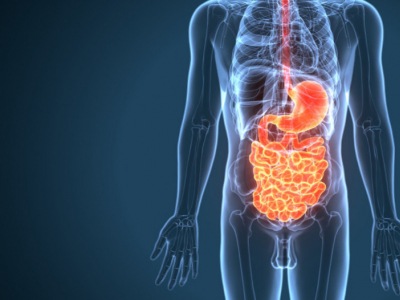
Then, there is the digestion. It is often lighter, faster. Not because the dish is less nourishing, but because it is more in line with what the body knows how to handle naturally.
And then there is something less measurable, but very present: a feeling of clarity. As if the diet was supporting rather than weighing down.
Vegan Raw Tacos Recipe
Ingredients (for 4 wraps)
For the dehydrated wraps:
- 2 zucchinis
- 1 carrot
- 2 tablespoons of ground flaxseeds
- 1 tablespoon of psyllium
- Salt, spices of your choice
For the topping:
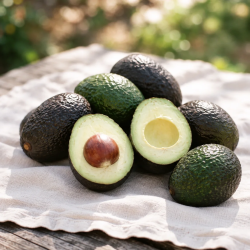
- 1 lawyer
- 1 tomato
- ½ bell pepper
- green salad
- fresh herbs (cilantro, parsley…)
For the sauce:
- 2 tablespoons of sesame paste
- lemon juice
- water
- salt
Preparation of wraps
The preparation begins with a simple step: blend the vegetables with the seeds and psyllium. You get a flexible, slightly thick paste, which is then spread thinly on a dehydrator sheet.
This moment is important. The thickness will determine the final texture. Too thin, the wrap becomes fragile. Too thick, it loses flexibility.
Dehydration is then done slowly, usually between six and eight hours. Midway through, the preparation can be turned to ensure even drying.
What we are looking for is not a dry result.
It is a living, flexible, almost "breathing" texture.
Preparation of the filling
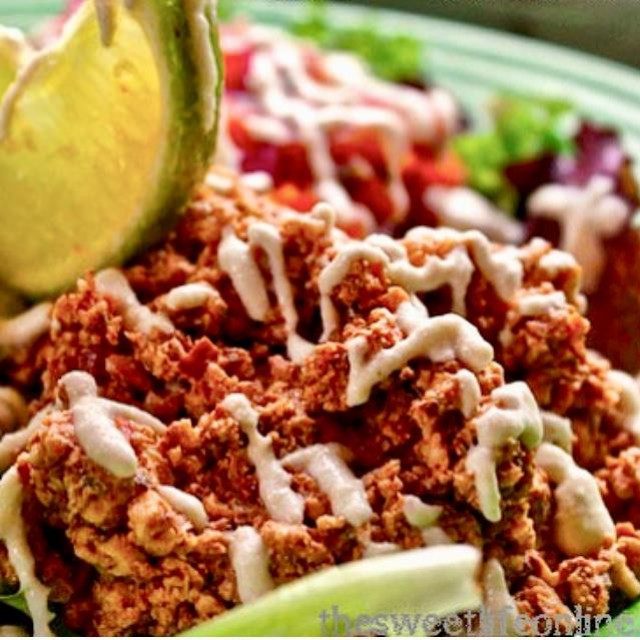
The garnish focuses on freshness. The vegetables are finely chopped to maintain crunchiness and lightness. The avocado adds creaminess and a roundness.
The sauce, on the other hand, ties everything together. Made with sesame paste and lemon, it adds depth and density that anchors the dish.
Everything is about balance. Nothing should dominate.
Assembly of tacos
The assembly is almost intuitive. You place the filling in the center, add the sauce, and then gently close it.
It's a simple gesture, but it requires a bit of attention. The wrap remains alive, it doesn't have the rigidity of an industrial tortilla.
And that is precisely what makes all the difference.
A recipe that adapts to you
This type of cuisine does not require being reproduced exactly. On the contrary, it invites adaptation.
Some days, we will crave something spicier, more intense. Other times, we will seek out something gentle, something simple.
You can add spices, play with textures, incorporate creamier or crunchier elements.
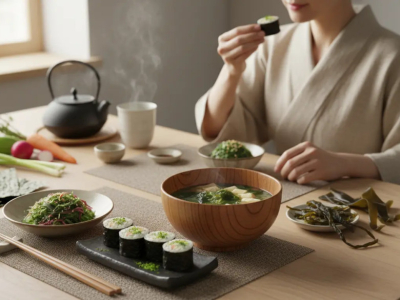
And above all, we can integrate some algae.
This is where the recipe takes on an even more interesting dimension. The algae bring a unique depth of flavor, a natural umami taste, as well as a mineral richness that is hard to find elsewhere.
They enhance the dish without making it more complex.
When and how to incorporate this type of recipe
Let's be honest: this isn't necessarily an everyday recipe for everyone.
It requires a bit of anticipation, especially with dehydration. But that's precisely what makes it a unique recipe.
It finds its place in moments when we want to take our time. A shared meal, a discovery, a transition towards a more vibrant diet.
And for those who want to simplify, it is entirely possible to adapt. Use lettuce leaves instead of wraps, prepare patties in advance, or even reinvent the filling on its own.
What matters is not the form.
That's the intention.
What makes the difference (and what can change everything)
With this type of recipe, the details matter.
A wrap that is too dry can ruin the experience. A filling that is too heavy can throw everything off balance. A seasoning that is too light can make the dish bland.
But on the contrary, when everything aligns - texture, taste, balance - you get something surprising.
Not spectacular.
But deeply just.