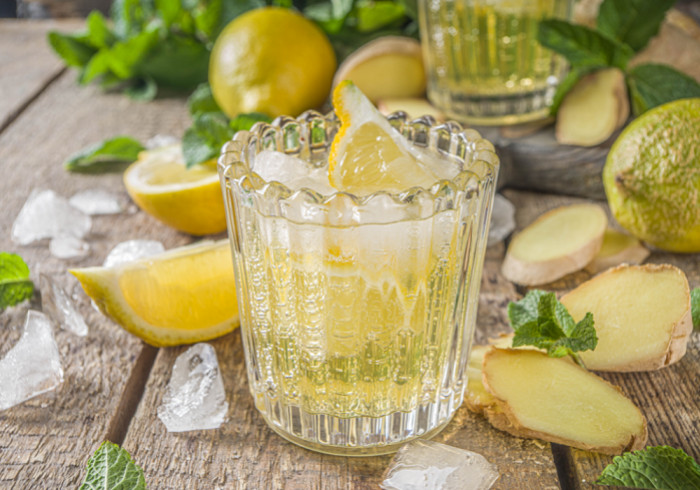
Ginger lemon water is a homemade drink that combines ginger (Zingiber officinale), traditionally used to support digestion, with lemon, which provides about 46 mg of vitamin C per 100 ml of freshly squeezed juice according to the ANSES Ciqual table. Easy to make in 30 minutes, this ginger lemon drink is a pleasant way to stay well hydrated every day, as part of a varied and balanced diet.
At home, ginger lemon water does not start with an infusion, but with an ice cube tray. I juice my fresh ginger and turn it into ice cubes; I squeeze my lemons and make separate ice cubes with them. The idea came from people close to Irène Grosjean who live on a Greek island, where ginger is not always available: when they found some, they stocked up on it in this form. I thought it was an excellent idea and we adopted it at home. In this article, I share this method with you, the classic infusion recipe, what we really know about its benefits, the variations, and the precautions to know before making it a habit.
Ginger lemon water recipe (serves 4)
It's child's play. Here is our ginger lemon water recipe for 4 people - the one we have been making at home for years:
Ingredients:
- 20-30 g of organic dried ginger slices
- 2 organic lemons
- 1.5 litres of water
- 2 tablespoons of honey (optional, to soften the taste - also discover the benefits of honey)
Instructions:
- In a pot, bring 1.5 litres of water to the boil.
- Add the dried ginger pieces to the boiling water.
- Turn the heat down to the minimum and let the ginger simmer for about 15 to 20 minutes. The longer you let it simmer, the stronger the infusion will taste.
- Meanwhile, wash the lemons thoroughly under hot water and cut them into thin slices. Keep the peel, which flavours the infusion.
- Remove the pot from the heat and let the ginger infusion cool slightly.
- If you want to sweeten it slightly, add the honey at this stage and stir well so that it dissolves.
- Add the lemon slices to the cooled infusion.
- Leave the mixture to rest for about 1 to 2 hours at room temperature so the flavours can blend.
- Strain to remove the ginger pieces and lemon slices.
- Pour the ginger lemon water into a carafe or an airtight bottle and place it in the fridge until serving.
- Serve well chilled in glasses with ice cubes for a refreshing drink full of flavour.
Feel free to adjust the quantities to your taste. In practice, if you like a more intense taste, go up to 30 g of ginger and let it infuse for 20 minutes rather than 15. For a 1-litre carafe, simply divide the quantities by 1.5.
Share this article
Cold, hot or lemon-free: how to adapt the recipe?
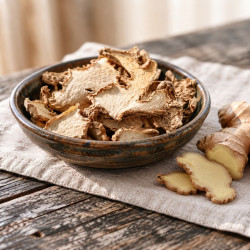
As you have seen, making ginger lemon water is really simple. If you want a slightly less acidic drink, make ginger water without lemon by simply leaving out the 2 organic lemons from the recipe. Plain ginger water keeps all the character of ginger, a plant traditionally used to support digestion.
For a cold lemon ginger water version, infuse the ginger slices directly in cold water - the active compounds are better preserved without heating. You just need to allow more time: a whole night in the fridge. The taste will be subtler and less spicy. Ideal if you find the hot infusion a little too intense.
For a hot lemon ginger water version, serve straight after straining without letting it cool - perfect in autumn and winter. (In winter, that is also what I do, with my ice cubes: see below.)
My method: ginger and lemon ice cubes
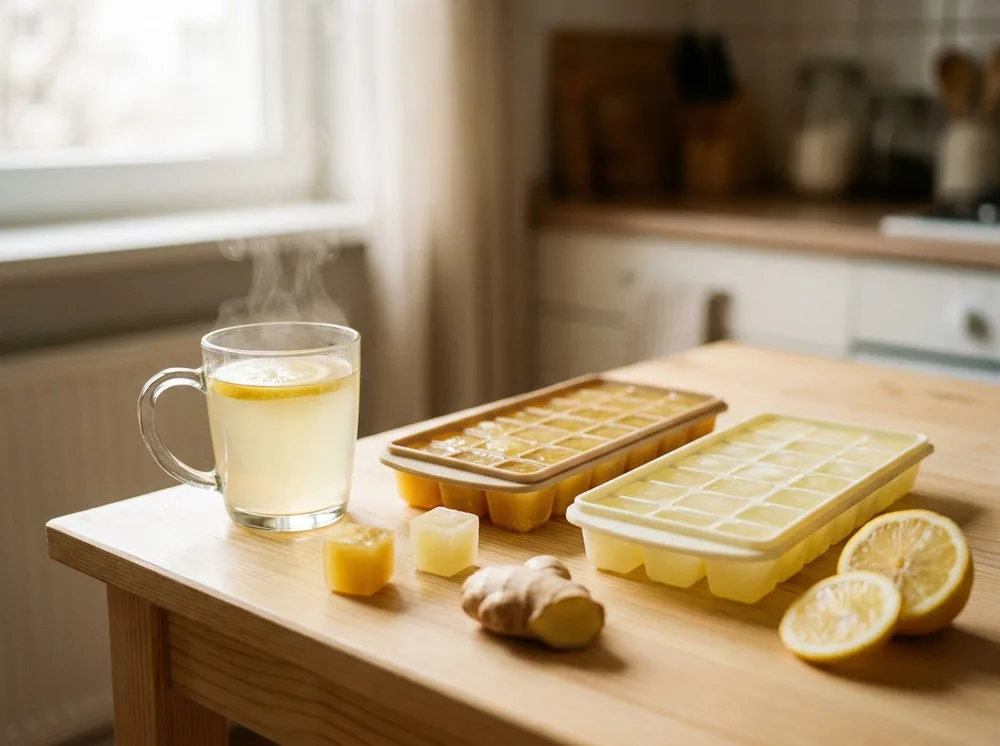
I don't really have a recipe, and that is the whole point: I don't mix anything in advance.
- Juice the fresh ginger in a juicer (we use a Hurom juicer) and pour the juice into an ice cube tray.
- Squeeze the lemons and fill another tray.
- Once frozen, pop out the ice cubes and store them in boxes in the freezer, then start another batch.
When serving, you dose as you like: one ginger cube, one or two lemon cubes. In summer, I use them for a cold drink; in winter, for a hot drink, often with honey or a few mint leaves from the garden. It is a comforting drink, which I tend to have mid-morning or at the end of the day.
We have added turmeric ice cubes. A word of warning, though: turmeric strongly stains the juicer, and the colour takes a long time to fade. If you want to keep your appliance spotless, avoid it.
The advantage of this method is that you always have freshly squeezed ginger and lemon on hand, without heating, as part of a varied and balanced diet and a healthy lifestyle.
What are the benefits of ginger lemon water?
The pairing of ginger and lemon is first and foremost a matter of taste. Ginger is the subject of a monograph by the EMA (European Medicines Agency), which describes its traditional use for mild digestive complaints. Lemon, for its part, provides about 46 mg of vitamin C per 100 ml of freshly squeezed juice, according to data from the ANSES Ciqual table. And vitamin C contributes to the normal function of the immune system. Two well-documented ingredients.
Here are 6 good reasons to adopt this ginger lemon drink, as part of a varied and balanced diet:
- A digestive tradition: Ginger is traditionally used to support digestion, and a hot, fragrant drink at the end of a meal remains a pleasant moment. Lemon adds its tangy note. To find out more, see our guide to supporting better digestion.
- An alternative to sugary drinks: Without honey, this flavoured water is a pleasant replacement for sodas and sweetened juices, and makes you want to drink more throughout the day. To find out more, discover our complete guide to digestive well-being.
- Vitamin C from lemon: Lemon juice provides vitamin C, which contributes to the normal function of the immune system and to the protection of cells from oxidative stress.
- Properties of gingerols: Gingerols, the active compounds in ginger, are the subject of research, notably on joint and muscle pain, although no effect can be attributed to a simple drink. They are what give ginger its spicy kick.
- Hydration: Lemon ginger water is a tasty way to drink enough throughout the day. It is the ideal drink when you wake up - or during that 3 pm slump you know so well.
- Vitamin C and skin: The vitamin C in lemon juice contributes to normal collagen formation for the normal function of the skin.
To find out the best time of day to drink it, read our article "Can you drink ginger in the evening?"
Ginger water and weight: what you need to know
Ginger water for weight management often appears in wellness routines - and the question deserves an honest answer. Regularly drinking this beverage can be a positive addition to a balanced diet and regular physical activity. But let's be clear: it is not a magic formula. What we can say, however, is that a drink with no added sugar is a good replacement for sodas and sweetened juices, which matters when you are paying attention to your weight.
My honest opinion: after years of making it for Aurélie and me, this drink pleasantly accompanies a transition towards a lighter diet, but it replaces neither a rebalanced plate nor movement. If nothing else changes in your habits, don't count on a glass of lemon water to make the difference.
You will sometimes read that ginger lemon water acts on leptin. This hormone, produced by fat cells, plays a role in regulating appetite and fat storage by sending a satiety signal to the brain. But no study shows that a glass of ginger lemon water changes leptin levels or reduces snacking cravings.
Drinking ginger lemon water daily, as part of a balanced diet and regular physical activity, has its rightful place in your habits. To find out more, read our article living food and weight management.
8 tasty ginger water variations
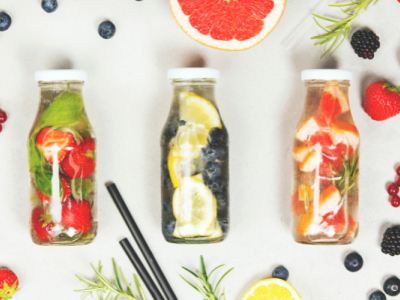
Besides ginger lemon water, there are many creative combinations to explore. Here are a few of the ones we have tried and adopted - also discover all our flavoured water recipes:
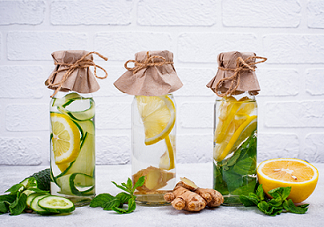
Ginger water with mint: A few fresh mint leaves for an invigorating, lively flavour. Ultra-refreshing in summer.
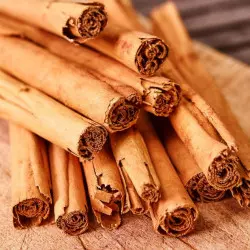
Ginger water with cinnamon: A pinch of ground cinnamon adds a warm, spicy touch - perfect for winter evenings. Also discover the 6 benefits of cinnamon for your health.
Ginger water with cucumber: Cucumber slices for a light and very hydrating flavour. My favourite combination for hot days.
Ginger water with orange: Orange brings a fruity sweetness that harmoniously complements the spicy note of ginger. A milder taste, ideal for those who find lemon too acidic.
Ginger water with berries: Berries (raspberries, blueberries, redcurrants) add a delicate fruity note. Beautiful to look at, balanced on the palate.
Ginger water with honey: Honey softens the drink while preserving the characteristic properties of ginger. A good option if you find the pure infusion a little too intense.
Ginger water with star anise: Add one star anise for a subtle, soothing aniseed flavour. Surprising, but really pleasant.
Ginger water with turmeric: Mix ginger with turmeric for a colourful drink with a more earthy taste. The combination creates a complex flavour profile - and it is honestly one of my favourites since I started experimenting with it.
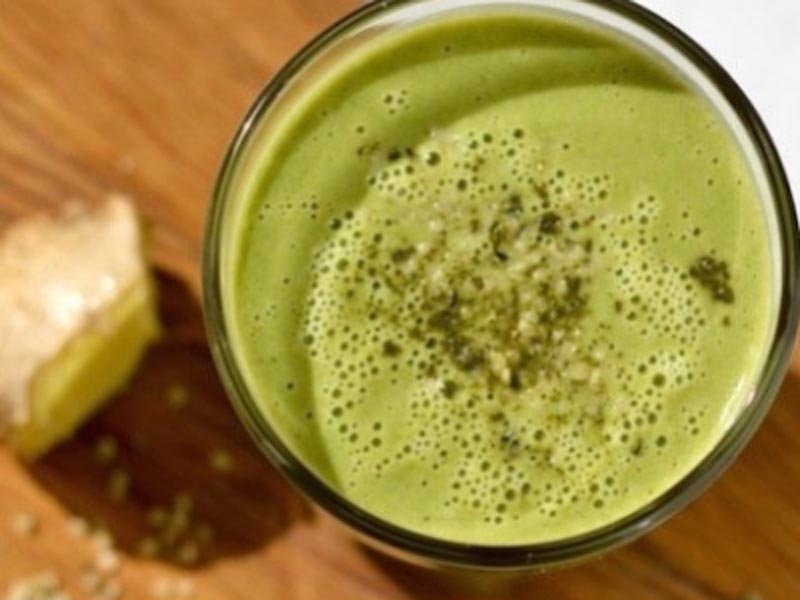
Lemon water with ginger and barley grass: For an invigorating drink full of flavour, add fresh lemon juice and barley grass to your ginger infusion.
What type of ginger should you use?
To make ginger lemon water, the best choice is still dried ginger slices. This format keeps its aromas longer than fresh ginger, is easy to store and can be measured precisely. At Biovie, our organic dried ginger slices are certified organic - which means you can leave the peel in the infusion without the risk of infusing chemical treatment residues. It is a detail that matters when you make a daily drink. You will also find it in our Oils & Spices range, alongside other spices such as cinnamon or turmeric.
For my ice cubes, I of course use fresh ginger. But I don't always have some at home: that is why we have added low-temperature dried ginger to our range, in slices and as a powder, as well as turmeric dried in the same way. They take over when you can't find fresh roots.
For the infusion, on the other hand, ginger powder is best avoided. It gives a grainy texture in the mouth and clouds the water in an unpleasant way. It is better used in cooking.
You can also use fresh ginger (Zingiber officinale roscoe), the root of a plant native to India or Malaysia, widely used in traditional Ayurvedic medicine for thousands of years. To prepare ginger water, finely grate the rhizome or cut it into small pieces. Remove the outer skin before use if it is not organic. Also see our 4 tips for keeping your ginger fresh for longer.
The full range Plant-based oils and spices
11 products
Precautions and contraindications: is ginger for everyone?
Ginger is well tolerated at usual food doses - the recipe I shared with you above clearly falls within these doses. No serious adverse effects are known at this level of consumption. A few precautions are nevertheless necessary in certain situations:
- Anticoagulant treatment (warfarin, etc.): ginger may enhance their effect. Consult your doctor before consuming it regularly.
- Diabetes medication: ginger may influence blood sugar levels; monitoring is recommended.
- High blood pressure treatment: interactions with these treatments are possible; talk to your doctor about it.
- Pregnancy: moderate consumption as part of a culinary recipe is generally safe, but at high doses (food supplements), it is advisable to talk to your doctor.
- Gallstones: ask a health professional for advice before regular consumption.
Ginger can sometimes be a bit strong: if you find it too spicy, start with half an ice cube or a shorter infusion. In my view, it is still a much better drink than a coffee.
Apart from these cases, drinking ginger lemon water as part of a varied and balanced diet poses no problem for most healthy people. Sources: EMA (Zingiber officinale monograph) - ANSES Ciqual table.
Frequently asked questions about ginger lemon water
What are the benefits of ginger lemon water?
Ginger lemon water is a hydrating, fragrant drink. Ginger is traditionally used to support digestion, and lemon juice provides vitamin C, which contributes to the normal function of the immune system. As part of a varied and balanced diet and a healthy lifestyle.
Is it good to drink ginger lemon water every day?
Yes, reasonable daily consumption is well tolerated by most healthy people. A 25 cl glass in the morning or during the day is a good habit, combined with a balanced diet. If you are taking medication, ask your doctor for advice.
When is ginger not recommended?
Ginger is not recommended, or should be consumed with caution, if you are on anticoagulant treatment, taking medication for diabetes or high blood pressure, or have gallstones. During pregnancy, food doses are generally safe, but high-dose supplements should be avoided without prior medical advice.
Does ginger lemon water have an effect on weight?
Not on its own: no study shows that it reduces body weight or acts on leptin. With no added sugar, it is a good replacement for sugary drinks and can accompany a balanced diet and regular physical activity.
Does this ginger lemon water have a special effect on the liver or kidneys?
It is often given flattering marketing labels, but no such effect has been demonstrated: the liver and kidneys do their own work, without needing any particular drink. At Biovie, we simply present it as a hydrating and tasty drink.
What is the best time to drink ginger lemon water?
It can be drunk in the morning on an empty stomach, or in the afternoon during the energy slump. In its hot version, it is enjoyed in the evening in moderation. Read our dedicated article to find out more about the best time to drink ginger.
How do I make the recipe for a 1-litre carafe rather than 1.5 litres?
Keep the same proportions, simply reduced: about 15 to 20 g of dried ginger, one and a half lemons and 1 litre of water, with the same infusion and resting times. It is our recipe for 4 people, divided by 1.5.
References
- European Medicines Agency (EMA). "Assessment report on Zingiber officinale Roscoe, rhizoma". EMA/HMPC Committee on Herbal Medicinal Products. Recognised traditional use for mild nausea and digestive complaints. (Monograph, traditional data)
- French Agency for Food, Environmental and Occupational Health & Safety (ANSES). "Ciqual food composition table". Entry: lemon, freshly squeezed juice. Vitamin C content: ~46 mg/100 ml. (Reference nutritional data)
Further reading
- The ginger and lemon shot
- Organic ginger: why raw quality makes all the difference
- Raw almond and ginger seasoning: a vegan recipe
Recipes with this product
- Daikon noodle salad with ginger and lime sauce
- Homemade raw tahini and ginger coriander salad dressing
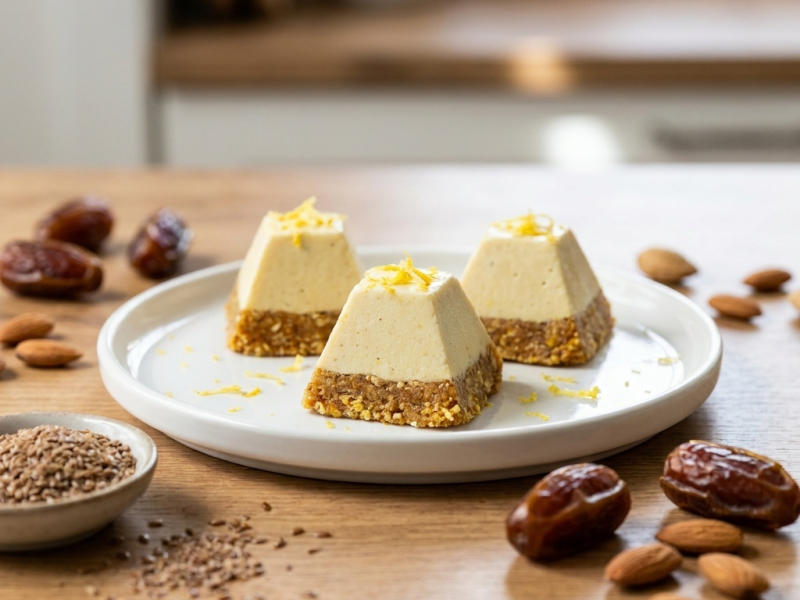
- Raw pyramid cakes with lemon and fresh ginger
- Raw goji, ginger and pecan bites, in 5 minutes
- Grapefruit-carrot sorbet and raw ginger cookies
- Raw almond-ginger truffles rolled in coconut
Updated: October 2026. Article reviewed by Éric Viard, founder of Biovie and ISTOM engineer, co-author of « Algues au quotidien » (Gallimard, 2024) - Best Cookbook in the World, Gourmand Cookbook Awards 2025, and Best Cookbook in France, Académie Nationale de Cuisine 2025.
Disclaimer: The information in this article is provided for information purposes only and does not constitute medical advice. Consult a qualified health professional before making any changes to your diet or supplementation. As part of a varied and balanced diet and a healthy lifestyle.