Fast delivery
.png)
 Fair prices


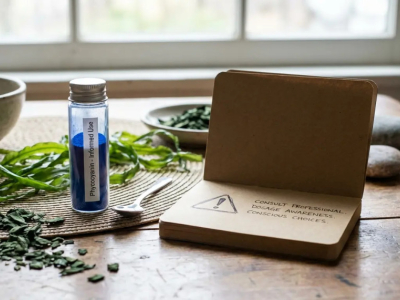

Phycocyanin poses no proven danger to the vast majority of healthy individuals, provided that a quality product is chosen and the recommended doses are followed. Only four specific situations require caution or a formal contraindication. This is what current scientific data tells us — and what I would have liked to read, clearly and straightforwardly, when we started working with spirulina about a dozen years ago.
At Biovie, we have been working with spirulina farms in France and internationally since 2007. What I am going to share with you here is the result of my field experience combined with official data from health authorities: ANSES, FDA, and EFSA. No commercial talk, no downplaying of real risks — just an honest answer to a legitimate question.
Phycocyanin or spirulina: a distinction that changes everything
This may be the most important point of this article, and the one that most sites do not address correctly. When you search for "phycocyanin danger" on Google, you often come across articles that confuse phycocyanin with spirulina — or at best, treat them as synonyms. In reality, they are two very different things, and this confusion creates a lot of unnecessary concern.
Why the risks of spirulina do not all apply to phycocyanin
Spirulina is a complete cyanobacterium — a superfood, indeed, but a complex nutritional matrix that contains many components. Among these are: iron (28.5 mg/100g, a high concentration), phenylalanine (an amino acid problematic for some profiles), vitamin K (which can interact with anticoagulants), and purines (precursors of uric acid).
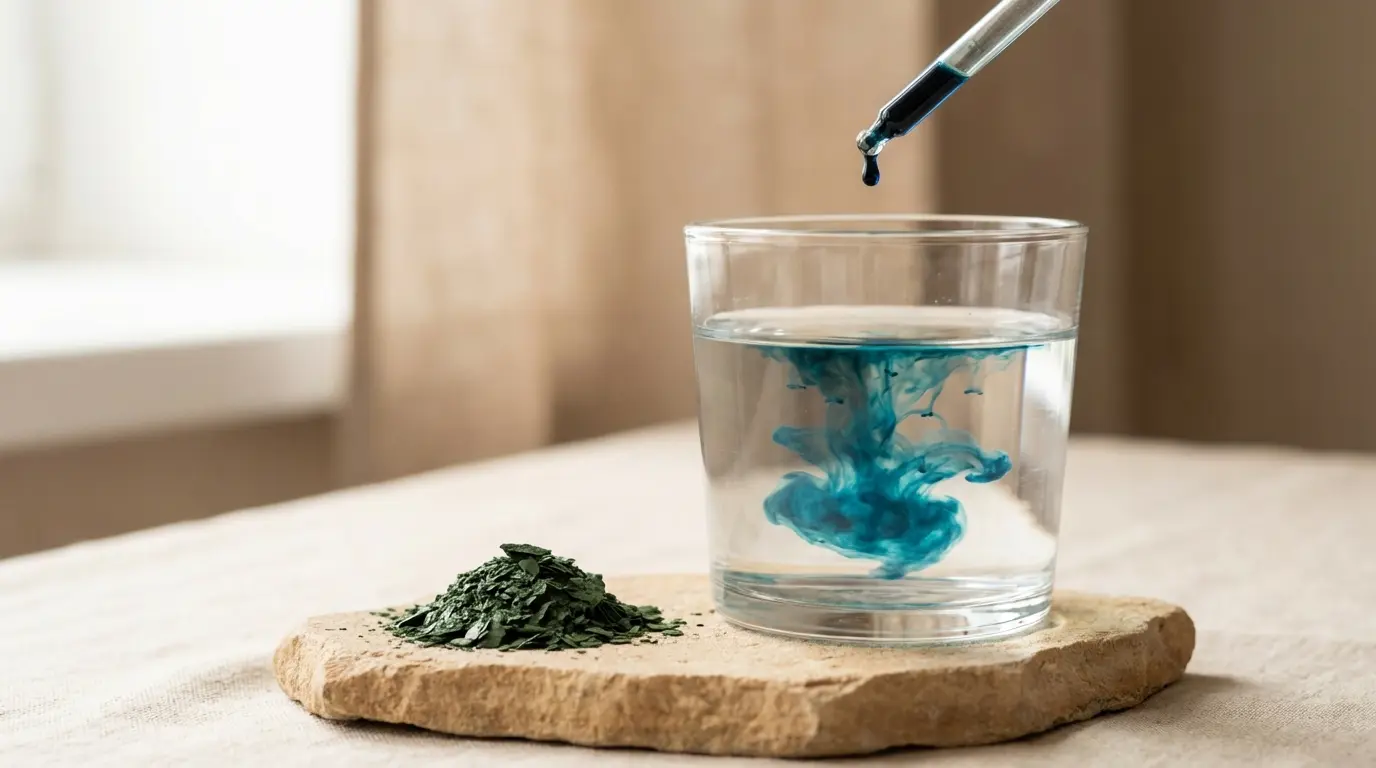
Phycocyanin is the blue pigment extracted from spirulina—a purified extract that represents 15 to 20% of the dry weight of the algae. When this extract is obtained through an aqueous process without solvents, it is rid of almost all of its risky components. Specifically, purified liquid phycocyanin contains only 0.8 mg of iron per 100g, compared to 28.5 mg for whole spirulina. This is a difference by a factor of 35. That is why certain precautions applicable to spirulina powder or tablets simply do not apply to purified liquid phycocyanin.
Two forms on the market, two different safety profiles
On the market, you will find two main forms of phycocyanin:
- Liquid phycocyanin (purified extract) : obtained through aqueous extraction, it is concentrated in active pigment and free from potentially problematic components of the whole spirulina.
- Phycocyanin in powder or capsule form : in most cases, it is actually a dried spirulina extract containing phycocyanin — not a purified extract.
This distinction is fundamental when discussing contraindications to phycocyanin. I ask you to keep it in mind throughout this article, as it changes many things.
What the health authorities officially say
Rather than giving you my opinion, let's start with the facts established by global regulatory bodies. They are the ones who set the safety limits, and their conclusions are quite clear.
The ANSES (French Agency for Food, Environmental and Occupational Health & Safety) established, in its referral 2014-SA-0096, the NOAEL (No Observed Adverse Effect Level) dose of phycocyanin by oral route at 5 grams per kilogram of body weight. For a person weighing 70 kg, this represents 350 grams of pure phycocyanin. The standard daily dose of a treatment (about 15 mg) represents 0.2 mg/kg — that is 1,750 times below the threshold set by ANSES. I leave it to you to assess the safety margin.
In the United States, the FDA (Food and Drug Administration) has granted spirulina and phycocyanin the status FAT — "Generally Recognized As Safe", or "généralement considéré comme sûr". It is one of the most stringent safety recognitions in the American regulatory system.
In Europe, the EFSA (European Food Safety Authority) acknowledges that spirulina can help protect cells against oxidative stress (reference ID 2583 from the European register of claims). A varied and balanced diet remains, of course, the foundation of any health benefit.*
The conclusion of the three main global health agencies is therefore convergent: phycocyanin is recognized as safe at usual doses. This is not a manufacturer's opinion — it is the result of independent scientific evaluations.
At Biovie, we only offer phycocyanins derived from Ecocert-certified spirulinas, with microbiological and heavy metal analyses available upon request.
*A varied and balanced diet and a healthy lifestyle are important.
The 4 true contraindications (and those that are not)
This is the section you are probably waiting for, and I will be precise. Here is what the scientific data actually identifies — without exaggerating the risks, but without minimizing them either.
Hemochromatosis — the only formal contraindication
Hemochromatosis is a genetic disorder characterized by an excess of iron in the blood and organs. Phycocyanin helps improve the fixation and absorption of iron in the body* — this is precisely one of its benefits for people who are iron deficient. However, for individuals suffering from hemochromatosis, this effect is counterproductive: it may worsen the existing overload.
It is the only formal contraindication for phycocyanin. However, an important nuance: purified liquid phycocyanin contains only 0.8 mg of iron per 100g, compared to 28.5 mg for whole spirulina. The impact on iron load is therefore very different depending on the form chosen. In any case, a medical consultation is essential before starting any supplementation if you are affected by hemochromatosis.
*The beneficial effect is obtained at the recommended dose indicated on the product packaging. A varied and balanced diet and a healthy lifestyle are important.
Phenylketonuria and gout — precautions related to whole spirulina
Phenylketonuria is a rare metabolic disorder in which the body cannot properly metabolize phenylalanine, an amino acid. Whole spirulina contains significant amounts of it — therefore, powdered or capsule phycocyanin (often an extract of spirulina) is not recommended. For purified liquid phycocyanin, which does not contain phenylalanine, the situation is different — but caution and medical advice are still recommended.
Gout (and more generally hyperuricemia) is another situation requiring vigilance. Spirulina is rich in nucleic acids, which are converted into uric acid during digestion. For people prone to gout attacks, caution applies more to whole spirulina than to purified liquid phycocyanin. Our article on the plant-based iron and algae provides useful insights into the specific nutritional interactions of microalgae.
Pregnancy and breastfeeding — the default precaution
Here is one of the most frequently asked questions. The honest answer is as follows: no specific study has demonstrated any danger of phycocyanin during pregnancy or breastfeeding. However, no study has established the absence of risk for these specific profiles either.
In the absence of sufficient data, the default precaution is necessary — this is the rule in pharmacology for any supplementation in pregnant or breastfeeding women. Phycocyanin helps the body use iron more efficiently and may help reduce fatigue*, making it theoretically an interesting supplement for pregnant women — but this "in principle" is not enough to justify a recommendation without medical supervision.
My concrete recommendation: consult your doctor or midwife before starting a treatment. It is not an absolute contraindication, it is a common-sense precaution.
*The beneficial effect on fatigue is achieved at the recommended dose indicated on the product packaging. A varied and balanced diet and a healthy lifestyle are important.
Children under 6 years old and active autoimmune diseases
For children under 6 years old, metabolism is still developing, and the available studies do not allow for defining an appropriate dose for this age group. Therefore, prior medical supervision is recommended, even though no specific danger has been identified.
For people with active autoimmune diseases and on immunosuppressive treatment, the question deserves consideration. Phycocyanin is said to be immunomodulatory — that is to say, it can contribute to the balance of the immune system*, not that it blindly stimulates it in the strict sense. No specific risk has been identified in the literature, but careful monitoring is required in the case of active medication treatment. Medical advice is recommended.
*The effect contributes to the normal functioning of the immune system. A varied and balanced diet and a healthy lifestyle are important.
Summary: Who can take phycocyanin ?
- Healthy adult → can consume without special precautions
- Athletic → particularly suitable for aiding recovery*
- Pregnant or breastfeeding women → consult your doctor or midwife as a precaution, as few studies are available for this category of the population.
- Hemochromatosis → it is imperative to consult a doctor — iron absorption is increased
- Phenylketonuria → avoid powdered/capsule phycocyanin; consult for the liquid form
- Active autoimmune disease under immunosuppressants → consult a doctor for monitoring
- Child under 6 years old → medical supervision recommended
- Severe atopic terrain → start with small doses and monitor reactions
*The beneficial effect is achieved with regular intake at the recommended doses.
The risk of allergy: a very rare reality to put into perspective
I often hear this objection: "I read that there have been cases of severe allergy to phycocyanin." That's true. And it's important to mention it honestly. But the context is just as important.
In the entire body of global scientific literature, two documented cases of anaphylaxis are reported in connection with phycocyanin:
- Petrus et al. (2010): a 13-year-old boy with an extremely severe multi-allergic condition (pre-existing multiple allergies, asthma, severe eczema) developed hives and an asthma episode after consuming spirulina. The identified allergen was phycocyanin C.
- Thuy-My Le et al.: a 17-year-old boy with an extreme atopic background (severe atopic dermatitis, asthma, allergic rhinitis) developed angioedema.
Two cases, in extremely specific atopic profiles. For the general population, the allergic risk to phycocyanin is almost nonexistent.
And here is what is paradoxical: phycocyanin is itself being studied for its properties that may help modulate the body's allergic response*. Research, including studies by Remirez et al., shows that phycocyanin can help reduce the release of histamine — the main mediator of allergic reactions.
A common misconception to debunk: "I am allergic to seafood or seaweed, so I cannot take phycocyanin."It is a common but unfounded confusion. The spirulina from which phycocyanin is extracted is cultivated in freshwater, in closed basins — there is no cross-reactivity with marine proteins from seafood or seaweed. Our guide on the" Algae and microalgae: benefits and uses goes into detail about these fundamental differences.
The reasonable precaution: if you have a very severe atopic condition (multiple allergies, asthma, significant eczema), start with a minimal dose and monitor your tolerance during the first 24 hours.
*Contribution to the reduction of oxidative stress according to EU regulation 432/2012.
The real danger of phycocyanin — it comes from the product, not the molecule
We have made an observation that hardly has any exceptions: incidents related to phycocyanin are almost systematically linked to quality issues with the source spirulina, never with the molecule itself.
This is the real danger of phycocyanin. Not phycocyanin itself — but poorly produced phycocyanin.
Specifically, the quality risks are as follows:
- Heavy metal contamination (lead, mercury, arsenic, cadmium): non-organic spirulina cultivated in uncontrolled open ponds, in regions with insufficient environmental regulations, can concentrate heavy metals present in the water and air. This is risk number one, and it is real — a study by UFC-Que Choisir had already highlighted this in 2018.
- Bacterial contamination and cyanotoxins : if the cultivation conditions are not controlled (temperature, pH, presence of other microorganisms), toxin-producing bacteria or cyanobacteria may develop.
- Chemical solvents during extraction : Some industrial processes use solvents to extract and concentrate phycocyanin. These residues can contaminate the final extract.
To choose a truly safe phycocyanin, here are the 5 criteria that I personally use in our selection at Biovie:
- Certified organic spirulina source (Ecocert or Organic Farming) — it is the non-negotiable minimum
- Aqueous extraction without chemical solvents — it is the purest process, the one we use
- Laboratory analyses available — heavy metals and microbiology; if the supplier cannot provide them upon request, change suppliers.
- Complete traceability from the spirulina producer to the bottle you receive
We work and have worked notably with UMAMIZ (Hérault, greenhouse culture, Ecocert certified) and ETIKA SPIRULINA (North of France) — two farms whose production conditions and control processes we are familiar with. To learn more about how to recognize quality spirulina, our article on how to choose a quality organic spirulina will provide you with all the necessary guidelines.
"The products are of remarkable quality, well-sourced, and often unavailable elsewhere. I met the founder during an immersion and was impressed by the depth of his knowledge."
— Prisca T., nutrition therapist (Trustpilot Review 5/5)
"Perfect for ordering quality spirulina and algae. I completely trust Biovie! Thank you for being there to help us take care of our health!"
— Magali O. (Trustpilot Review 5/5)
.webp)
Dosage, frequency, and practical precautions for starting
Now that the security questions have been clearly addressed, here is the practical information to get started under the best conditions.
The standard dose of pure phycocyanin is 20 to 50 mg per day. For beginners, I always recommend the principle of gradual progression:
- Week 1 : a reduced dose in the morning (about half of the recommended dose)
- Weeks 2 and 3 : gradual increase to the full dose according to your tolerance
- Starting from week 4 : full daily dose
The optimal time is in the morning, on an empty stomach or before a workout session — the bioavailability is better and the effects on energy and recovery are more pronounced at the start of the day.
For storage: in the refrigerator, away from light. A good product upon opening is immediately recognized by its intense blue color, almost turquoise, and its transparency. A dull, gray, or brownish color, or excessive cloudiness, are signs of insufficient quality or degradation.
Honestly, phycocyanin is one of the supplements that Aurélie and I have been using daily for many years. Its safety profile is one of the best documented among microalgae extracts, and our field experience confirms what studies show. If you are curious about how spirulina can support your body during periods of fatigue, our article on spirulina and chronic fatigue will provide you with very useful additional insight.
*The effect contributes to normal recovery after intense physical exercise. The beneficial effect is achieved with daily consumption at the recommended doses.
Conclusion: Quality, the first defense against risk
In summary, here is what the scientific data and our field experience allow us to conclude:
Phycocyanin is recognized as safe by the three main global health agencies (ANSES, FDA, EFSA) when consumed in usual doses. It has very few true contraindications — primarily hemochromatosis — and certain precautions for specific profiles. The risk of allergy exists but remains exceptional, limited to individuals with an extremely severe atopic background.
The real danger, the one you need to keep in mind when choosing your product, is the quality of the spirulina source and the extraction process. Well-produced, certified, traceable phycocyanin extracted without solvents is a particularly safe supplement. Low-cost phycocyanin, without certification, derived from spirulina grown in uncontrolled ponds on the other side of the world, is potentially risky—not because of the molecule itself, but because of what it carries with it. To learn more about how to recognize reliable organic labels, our article on how not to be fooled by fake labels is an essential read.
Here, this distinction between intrinsic risk (minimal) and quality risk (real) is the essence of what I wanted to share with you here. For any questions specific to your health profile, be sure to consult your doctor or healthcare professional — it's always the right approach for any supplementation.
If you want to discover what phycocyanin can concretely bring to your daily life, check out our complete guide on the benefits of chlorella and our articles on seaweed and the thyroid — two directly complementary subjects if you are interested in microalgae.
Frequently Asked Questions about Phycocyanin and its Safety
What are the contraindications of phycocyanin ?
Phycocyanin has few formal contraindications. Hemochromatosis (iron overload) is the main one, as phycocyanin helps improve iron absorption*. As a precaution, pregnant or breastfeeding women, individuals with phenylketonuria or gout, and children under 6 years old should consult their doctor before starting a course. *The beneficial effect is achieved with consumption at the recommended doses.
Is phycocyanin good for health ?
Yes, phycocyanin is recognized for its properties that can contribute to cellular protection against oxidative stress*. Its ORAC index is 70,000 units/g, which is 7 times higher than that of blueberries. It can contribute to sports recovery and support the normal functioning of the immune system* — provided that a certified quality product is chosen. *A varied and balanced diet and a healthy lifestyle are important.
Can phycocyanin be taken every day ?
Yes, daily consumption is possible and often recommended for optimal effects. The usual dose is 20 to 50 mg/day of pure phycocyanin. Start with a low dose and gradually increase. The ANSES sets the maximum dose without observed harmful effects at 5 g/kg of body weight — which is 350 g for a person weighing 70 kg. The margin compared to usual doses is 1,750 times.
Is phycocyanin compatible with anticoagulants ?
Purified liquid phycocyanin does not contain vitamin K—unlike whole spirulina—and does not interact with conventional anticoagulants. A study by Jensen et al. (2016) confirmed that a high dose of 2.3 g/day did not result in any changes in blood tests or platelet activity. In case of doubt with a specific treatment, medical advice is still recommended.
What are the possible side effects of phycocyanin ?
At the recommended dose, phycocyanin does not cause side effects in the vast majority of consumers. In rare cases, slight digestive discomfort may occur during the first few days — it generally disappears when starting with small doses. Cases of severe allergy have been documented, but they exclusively concern individuals with pre-existing extreme atopic conditions (2 cases recorded in the global literature).
What is the difference between phycocyanin and spirulina ?
Spirulina is the complete microalgae; phycocyanin is the blue pigment it contains, representing 15 to 20% of its dry weight. Spirulina also contains iron, phenylalanine, and vitamin K, which require specific precautions. Purified liquid phycocyanin is free of these components, giving it a generally broader safety profile than whole spirulina.
How to choose a phycocyanin without risk ?
Opt for phycocyanin derived from spirulina that is certified organic (Ecocert or AB), produced in France or Europe, and extracted using an aqueous process without chemical solvents, with heavy metal and microbiological analyses available upon request. Transparency regarding the origin and extraction process is the primary safety criterion.
Update: March 2026. Article approved by Éric Viard, founder of Biovie and engineer ISTOM, co-author of " Seaweed in everyday life "(Gallimard, 2024) —" Best cookbook in the world, Gourmand Cookbook Awards 2025, and Best cookbook in France, National Academy of Cuisine 2025.