Fast delivery
.png) Rating 4.8/5
Rating 4.8/5
 Fair prices
| | |
| Fast delivery | Rating 4.8/5 | Fair prices |


 0
0 Organic Chia Seeds
Fair Harvest and Processing in Bolivia
400g or 200g Sachet
🌱 Organic chia seeds come from Salvia hispanica, a small sage native to Central America, now primarily cultivated in Mexico, Argentina, Bolivia, Colombia, and Peru. Concretely, it is a small oval seed - white or black depending on the variety, with the color having no impact on its nutritional qualities - belonging to the Lamiaceae family, the same as common sage or rosemary. Its botanical name "Salvia hispanica" was given in the 18th century by the Swedish botanist Carl Linnaeus. Honestly, what has always struck me about this plant is its hardiness: as an annual plant, it tolerates drought very well, grows up to over 50 cm, and produces pretty little purple flowers spaced along upright stems.
The Mayans, and later the Aztecs, cultivated chia as one of their staple foods, alongside corn and wheat. Here's an anecdote that says it all: Chia means "strength" in Mayan !
🌱 Chia seeds are among the most nutritious and energetic superfoods in the world. Their peculiarity? Their outer layer, rich in soluble fibers, transforms into a gel upon contact with water. The seeds then form a mucilage - a viscous liquid that coats each seed. It is precisely for this reason that the Aztecs could walk an entire day with chia as their only food - and it is why they are highly valued by endurance athletes today.
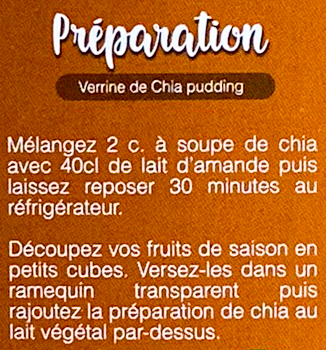
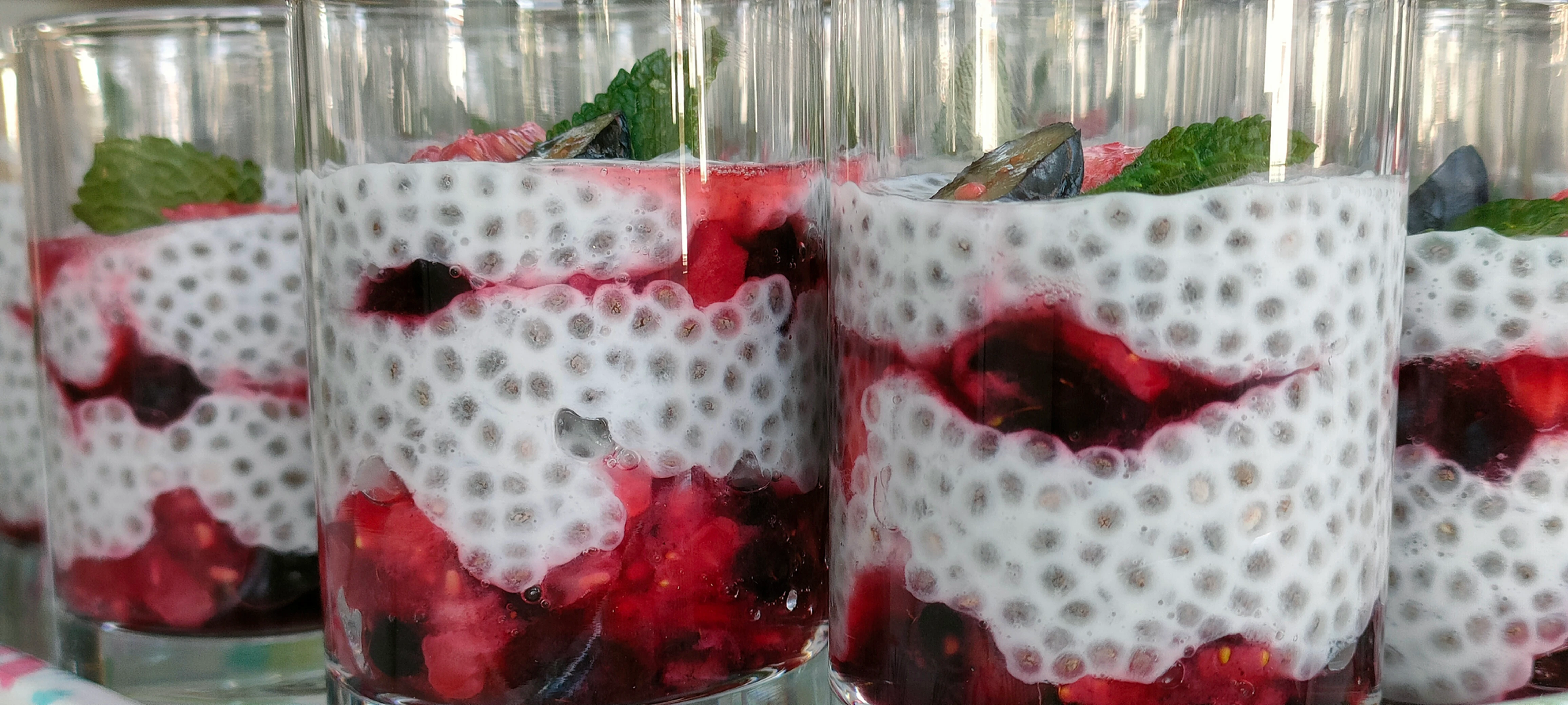
🌱 How to consume chia seeds ?
To consume them as chia pudding, you will find tips on our blog. on how to make plant-based milk, as well as a Chia Strawberry Pudding Recipe ! !
 |  |
🌱 Where do our chia seeds come from?
The chia seeds we offer in our store come from Bolivia, specifically from the Copaibo forest area - a region declared a nature reserve since 2011. Our supplier, Natural'Andes, has developed an entire agroforestry sector there, a practice that combines crops and forest cover. Thanks to this sector, the inhabitants now sustainably live off chia cultivation while preserving their ecosystem. Personally, what touches me about this project is the philosophy behind it: not just organic, not just fair trade, but a true alliance between an ancestral culture, a terroir, and small producers. This is exactly what we have been striving to promote at Biovie since 2007.
Find more information on this topic in this video:
🌱 Chia seeds are one of the richest plant sources of omega-3 fatty acids., in the form of alpha-linolenic acid or ALA (15 to 17%), and in omega-6 in the form of gamma-linolenic acid or GLA (5 to 8%).
With 3 to 4 times more omega-3 than omega-6, they provide a favorable ratio as part of a varied and balanced diet. Unlike flax seeds, the presence of natural antioxidants in chia seeds allows them to be stored for several years without losing their nutritional properties or undergoing alteration—a real practical advantage when buying in a 400 g format.Chia is rich in fiber (about 30%), most of which is soluble. It also contains insoluble fibers. These fibers add bulk to the diet and naturally integrate into a balanced diet.
*Calcium contributes to the maintenance of normal bones. Phosphorus contributes to normal energy metabolism. The beneficial effect is obtained as part of a varied and balanced diet and a healthy lifestyle.
🌱 For more information, check out our blog post: Eight ideas to enjoy the benefits of chia seeds
NATURAL ANDES
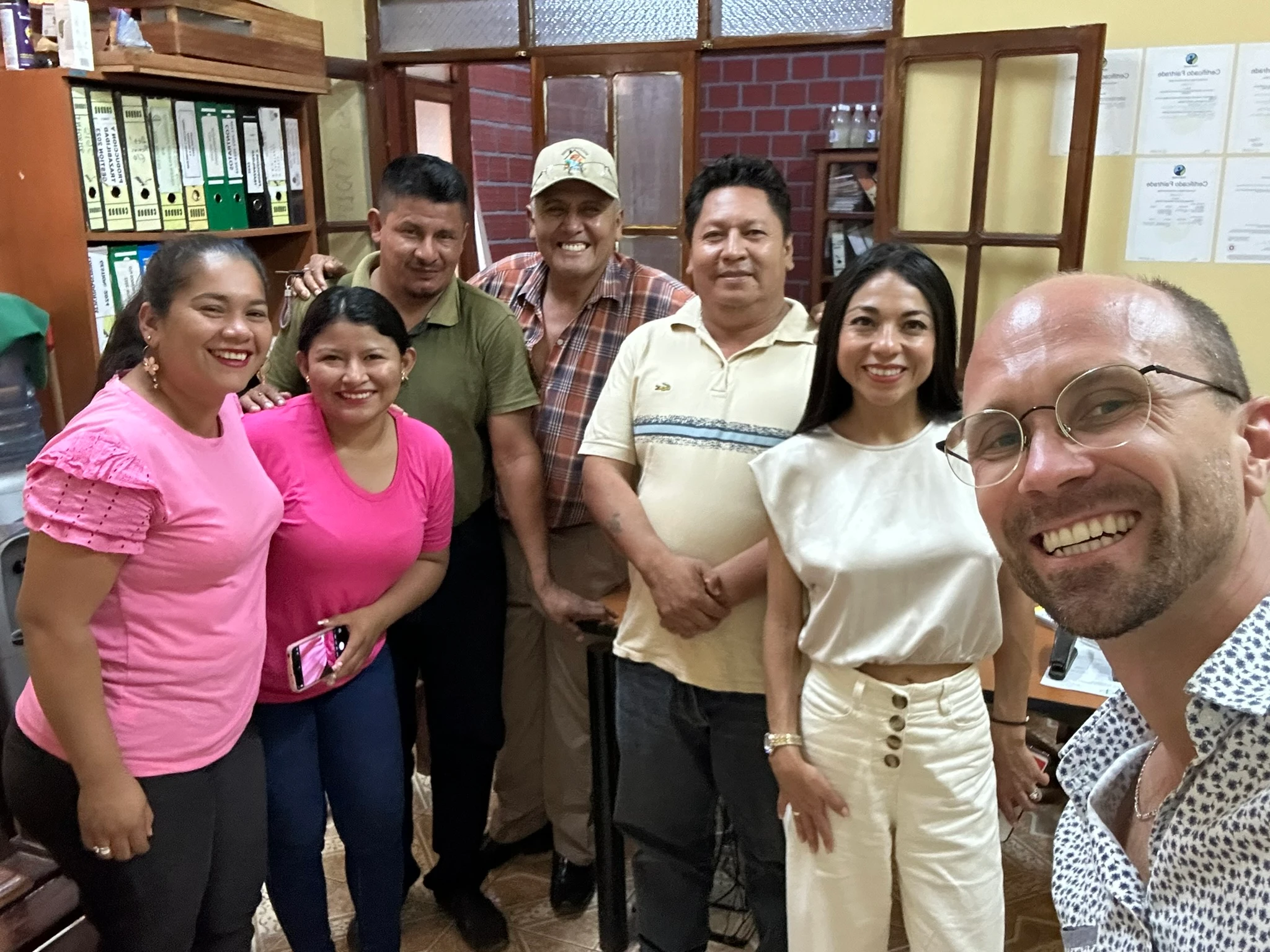
This project originated from Maxime Chiquet's encounter with the people of Bolivia, with whom he lived for over 5 years. During his travels, he met small producers who still work in an artisanal manner and respect traditions. Their story moved him, particularly the fact that they are no longer valued in favor of productions that are becoming industrialized.
Then from the meeting with Jhomaira Vera, his wife, with whom he decided to establish Natural Andes with the aim of valuing Life, the Earth, and Humanity. Their commitment is based on preserving the values of Humanity that respects its land, the Pachamama (Mother Earth). Authentic Bolivian culture is respectful of the Earth, but industrialization threatens the nobility of sustainable ancestral practices, which preserve the future and the economic security of producers.
Their raison d'être: authenticity. Their action: 100% endemic organic products sourced from supply chains that leave a positive impact on their production region.
Beyond organic and fair trade, their commitment to producers is established at three levels:
- Sustainability of production activities.
- Economic security for the local population.
- More homogeneous distribution of wealth.
The search for Authentic Terroir: it's about preserving Humanity and its Land.
You can find an article about it on the Natural Andes website. the logistics of their sector as well as the Calendar of their harvests in Bolivia.
- Ingredients : 100% Chia seeds (Salvia Hispana), from organic farming
- Packaging: Formats 400 g or 200 g, packaged in a protective atmosphere, contained in recyclable cardboard and made in Bolivia
- Conservation : In a dry and cool place, preferably in an airtight container.
- DDM: 12/31/2026
- Recommended daily intake : 15 g per day.
Average nutritional declaration for 100 g
| Nutritional declaration | for 100 g (% RI*) |
| Energy | 1880 kJ / 454 kcal (22.4%) |
| Fats | 30.7 g (43%) |
| "of which saturated fatty acids" | 3.3 g (16.5%) |
| Carbohydrates | 7.7 g (2.9%) |
| "including sugars" | 2.3 g (2.6%) |
| Dietary fibers | 34.4 g |
| Proteins | 19.5 g (39%) |
| Salt | 0.04 g (0.7%) |
*AR = Reference Intake for an average adult (8,400 kJ / 2,000 kcal), in accordance with Article 32 of Regulation (EU) No 1169/2011.
Vitamins and minerals per 100 g
| Vitamins & minerals | per 100 g (% NRV*) |
| Thiamine (B1) | 0.62 mg (56.4%) |
| Niacin (B3) | 8.83 mg (55%) |
| Folic acid (B9) | 49 µg (24.5%) |
| Calcium | 631 mg (79%) |
| Potassium | 407 mg (20%) |
| Phosphorus | 860 mg (123%) |
| Magnesium | 335 mg (89%) |
| Iron | 7.7 mg (55%) |
| Zinc | 4.6 mg (46%) |
| Copper | 0.92 mg (92%) |
| Manganese | 2.72 mg (136%) |
*NRV = Nutrient Reference Values in accordance with Regulation (EU) No 1169/2011.
Update: April 2026. Product sheet approved by Éric Viard, founder of Biovie and engineer ISTOM, co-author of Seaweed in everyday life (Gallimard, 2024) -Best cookbook in the world, Gourmand Cookbook Awards 2025, and Best cookbook in France, National Academy of Cuisine 2025.
Warning: The information presented on this product sheet is provided for informational purposes and does not constitute medical advice. Consult a qualified healthcare professional before making any changes to your diet or supplementation, especially if you are undergoing medical treatment, are pregnant, or breastfeeding. As part of a varied and balanced diet and a healthy lifestyle.
Ces produits pourraient vous intéresser