Fast delivery
.png)
 Fair prices



Summary
Can you really drink tap water in France without risk in 2026? The short answer: yes, in 98% of cases, the quality of French tap water is microbiologically compliant and safe to consume. But — and it's an important "but" — 13% of French municipalities exceed chemical standards, notably due to emerging pollutants like PFAS, those infamous "forever chemicals" that are increasingly talked about. This information comes from the Ministry of Health 2025 and the Eaufrance 2024 report, not an alarmist rumor. And with the new European directive 2026 that now requires the analysis of 20 types of PFAS in drinking water, we are entering an era of unprecedented transparency.
Concretely, this article provides you with the keys to understanding the quality of tap water by city, and especially how to act if necessary. Because at Biovie, we don't just diagnose, we offer solutions.
2026 Ranking: The 10 Cities with the Best Tap Water
Frankly, when looking at the tap water quality data by municipality, some cities clearly stand out. What often comes up is that cities located in mountainous areas, supplied by protected natural springs, benefit from exceptional distribution water that is very minimally treated.
Here are the cities that stand out in this tap water ranking in France in 2026:
- Grenoble (Auvergne-Rhône-Alpes) — alpine spring water, excellent compliance, no PFAS detected
- Annecy (Auvergne-Rhône-Alpes) — fed by the purest lake in Europe, minimal treatment
- Chambéry (Auvergne-Rhône-Alpes) — protected aquifers, very low nitrate levels
- Pau (New Aquitaine) — Pyrenees water, remarkable quality
- Brest (Brittany) — protected catchments, low agricultural pressure on aquifers
- Clermont-Ferrand (Auvergne-Rhône-Alpes) — naturally filtered volcanic water
- Évian-les-Bains (Auvergne-Rhône-Alpes) — an exceptional mountainous source
- Bayonne (New Aquitaine) — high-quality Pyrenean water
- Mulhouse (Grand Est) — deep and well-protected aquifer
- Limoges (Nouvelle-Aquitaine) — well-preserved surface water, low industrial pollution
What is interesting is that the quality of drinking water mainly depends on two factors: the origin of the resource (deep groundwater or mountain spring vs. lowland river) and the local environment. A municipality surrounded by intensive agriculture will inevitably have more pesticide residues in its water than an alpine municipality supplied by melting snow. It's quite logical when you think about it.
To know precisely the quality of tap water by city or municipality, I recommend directly consulting the official website of the Ministry of Health: www.eaupotable.sante.gouv.fr. You enter your postal code and you have access to the latest analyses.
The hidden pollutants in tap water in France
PFAS: the "forever pollutants" under surveillance in 2026
PFAS in tap water is probably the hottest topic concerning drinking water at the moment. And for good reason: Google searches for "pfas tap water" have tripled in 12 months. This concern is not unfounded.
So, concretely, what are PFAS? They are synthetic chemical substances, specifically "per- and polyfluoroalkyl substances," used since the 1950s in a multitude of industrial products: non-stick coatings, food packaging, firefighting foams, waterproof textiles... The problem is that these perfluorinated substances are almost indestructible. They do not degrade in the environment, hence their nickname "forever pollutants." And they end up in our groundwater, and therefore in our tap water.
In France, PFAS have been detected in the water of more than 3,000 municipalities, mainly in the North, the Ardennes, and certain industrial areas. Since January 2026, water distributors have the legal obligation to analyze 20 types of PFAS, with a European threshold set at 0.5 µg/L for the sum of these 20 substances. It is the European directive 2020/2184 that mandates this transparency, and frankly, it is a major advancement. Previously, we were somewhat navigating blindly on this issue.
Why be concerned about it? Because PFAS are suspected endocrine disruptors that may affect the immune system, the thyroid, and increase certain cardiovascular risks. This is not to scare you, but to be transparent: we do not yet know the full extent of their long-term effects, and that's precisely why it's better to limit exposure from now on.
This is why more and more French families are turning to ceramic filters like the Ecofiltro, which is certified to eliminate PFAS and heavy metals. We will return to this in more detail in the section dedicated to natural filtration solutions.
Pesticides and agricultural residues
Pesticides in tap water is a subject I know well from my years as an agricultural engineer. In France, areas of intensive agriculture — Beauce, Champagne, certain parts of Brittany — are logically the most affected by pesticide residues in groundwater. Nitrates, atrazine (banned since 2003 but still present in the soil), metolachlor... these pesticide metabolites take years, sometimes decades, to disappear from underground aquifers.
The 13% of municipalities that are chemically non-compliant is largely due to these agricultural residues. And it's a real issue because, even if the concentrations are often low, it's the chronic exposure to low doses that concerns the scientific community. Just like with organic food: it's not a single treated apple that's the problem, it's the daily accumulation over years.
Chlorine and disinfection by-products
Chlorine is talked about less because it is perceived as "normal" in tap water. It is true that it plays an essential role in disinfecting water and preventing bacterial contamination. However, chlorine has two drawbacks: it imparts a characteristic taste and odor that many people do not appreciate, and more importantly, it generates disinfection by-products (trihalomethanes) when it reacts with organic matter present in the water.
The good news is that chlorine evaporates easily. Simply leave a carafe of water open in the refrigerator for an hour for a good portion to evaporate. But for disinfection by-products, it's a different story: only an appropriate filtration system can effectively remove them.
How to check the quality of tap water in your municipality
Here is information that everyone should know: there is a free and official tool that allows you to check the quality of the water in your municipality in just a few clicks. And it's simpler than you might think. You can also consult the interactive map of UFC Que Choisir for an overview of tap water quality by municipality.
In 3 steps:
- Visit the official website www.eaupotable.sante.gouv.fr
- Enter your postal code or the name of your town
- Consult the results of the latest analyses: bacteriology, nitrates, pesticides, and now PFAS since 2026.
The data is updated monthly by the ARS (Regional Health Agencies). You can also request a detailed report directly from your town hall. It is your right, and it is free.
What I advise you to watch as a priority:
- Nitrate levels (standard: < 50 mg/L)
- The presence or absence of detected pesticides
- PFAS results (new since 2026)
- The overall compliance rate of your municipality
If your municipality is among the 13% that exceed chemical thresholds, don't panic. This does not mean that your water is dangerous in the short term, but that a tap water filter is a smart precaution, especially if you have young children or if you are pregnant.
Tap water or bottled water: the 2026 verdict
This debate comes up regularly, and frankly, the numbers speak for themselves when comparing tap water to bottled water:
- Cost Tap water costs about €0.003 per liter. Bottled water is €0.30 per liter. A hundred times more expensive. For a family of 4 people drinking 8 liters per day, it represents about €240 per month in bottles compared to... a few cents with tap water. The potential savings are between €500 and €800 per year.
- Environmental impact : according to a Spanish study published in 2021, bottled water is 3,500 times more polluting than tap water. Not to mention the 1,000 plastic bottles or more per household per year that end up in our trash, when they don't end up in nature. And we now know that plastic bottles release microplastics into the water they contain. The danger of plastic bottles is increasingly documented by scientific research.
- Controls Contrary to popular belief, tap water is subject to much stricter and more frequent controls than bottled water. UFC Que Choisir confirms this in its 2025 study: tap water is generally preferable.
- Taste : it is often the only valid argument in favor of bottled water. The taste of chlorine can be unpleasant. However, a good filter is enough to restore water to a neutral taste, without odor, directly from your tap.
In summary: filtered tap water is the best compromise between quality, economy, and ecology. And that's exactly the philosophy behind the Ecofiltro, which I am telling you about now.
Natural filtration solutions: how to protect yourself from pollutants
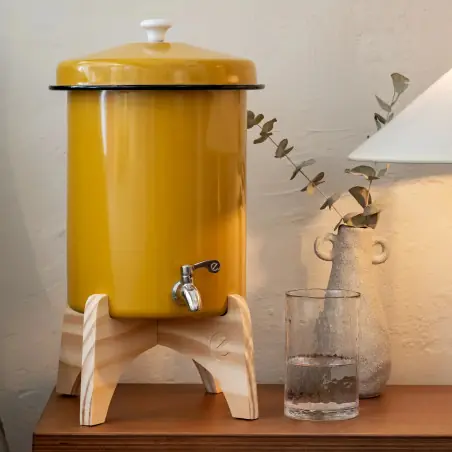
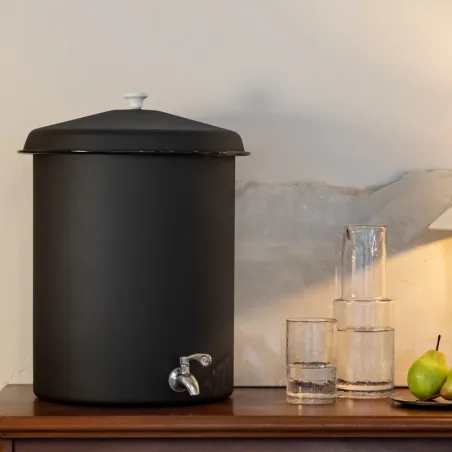
The Ecofiltro ceramic filter: the Biovie solution
With Aurélie, we spent a long time searching for the best solution to naturally purify tap water on a daily basis. We tested filter pitchers (disappointing results, especially on PFAS), reverse osmosis systems (effective but expensive, bulky, and water-intensive), and then we discovered Ecofiltro. And clearly, it is the solution that convinced us the most.
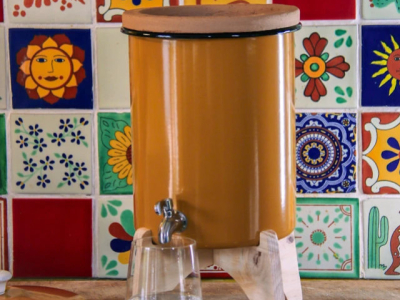
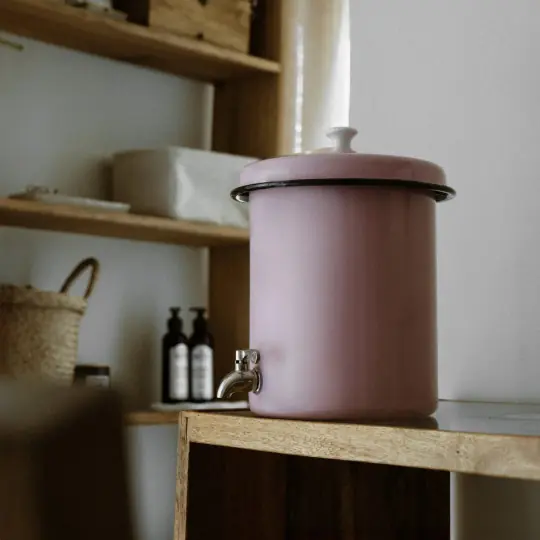
The Ecofiltro is a gravity ceramic filter. No need for electricity, no need for plumbing connections, no complicated installation. You place the filter, pour in tap water, and gravity does the work. The principle is simple: the water passes through a ceramic cartridge that retains contaminants.
Concretely, this tap water filter against PFAS eliminates 99.9% of chemical contaminants, including PFAS, heavy metals, pesticides, chlorine, and its by-products. The cartridge has a lifespan of 12 months, which amounts to about €0.02 per liter of filtered water. Compare that to the €0.30 per liter of bottled water...
One of our clients, Claire from Toulouse, shared her experience with us: since her family of four started using the Ecofiltro, they have reduced their plastic bottle consumption to zero. She tells us that the water has a neutral taste, without chlorine, and that they save about €60 per month. These are concrete results, and we are hearing more and more about them.
What I really like about this device, beyond its efficiency, is that it aligns with our Biovie philosophy: low tech, ecological, autonomous. No disposable plastic filter to change every 4 weeks, no electricity consumption, no water waste. It's a simple and sustainable filtration system. Exactly what we need.
→ Eliminate 99.9% of contaminants with Ecofiltro — no electricity, no complex installation. Discover the Ecofiltro filter
Other home filtration options
To be complete, there are other solutions for filtering tap water:
- Filtered pitchers (Brita type): they filter chlorine and improve taste, but they are not very effective against PFAS, heavy metals, and pesticides. The plastic cartridges need to be changed frequently, which generates waste.
- Activated carbon faucet filters : good intermediate efficiency, they eliminate chlorine and certain organic pollutants. Less effective than ceramics on PFAS.
- Reverse osmosis systems : very effective, they filter almost everything, including useful minerals. They are expensive, bulky, require a connection, consume electricity, and waste about 3 liters of water for 1 liter filtered.
The choice depends on your priorities. If you are looking for the best system to filter tap water with maximum efficiency on PFAS and chemical pollutants, minimal environmental impact, and a controlled budget, the Ecofiltro-type gravity ceramic filter remains our recommendation.
If you are interested in the topic of water purification, we have written a Complete guide on how to filter tap water on the blog. And for those who are wondering about the shower and bath water, we also have a Article dedicated to shower water filtration. We also wrote an article on the benefits of hydrogenated water for those who want to go even further.
Direct answers to your questions
Can you drink tap water in France without risk ?
Yes, in 98% of cases, French tap water is microbiologically compliant and safe for consumption. However, 13% of municipalities exceed chemical standards (nitrates, pesticides, PFAS). Check the quality of your water on the Ministry of Health's website, and if necessary, additional filtration like Ecofiltro offers complete protection.
What is the best tap water in France ?
The cities with the purest water in 2026 are mainly located in mountainous areas where the water comes from protected sources: Grenoble, Annecy, Chambéry, Pau, and some Breton municipalities benefit from water that is minimally treated and free of detectable PFAS. The quality depends on the source (groundwater vs. river) and the local environment.
Are there PFAS in tap water ?
Yes, PFAS have been detected in the water of more than 3,000 French municipalities, mainly in the North, the Ardennes, and certain industrial areas. Since January 2026, the analysis of 20 types of PFAS is mandatory, with a European threshold set at 0.5 µg/L. Ceramic filters like Ecofiltro are effective in removing these "forever chemicals."
How to check the quality of tap water in my city ?
Visit the official website www.eaupotable.sante.gouv.fr, enter your postal code and check the analysis results. The data is updated monthly. You can also request a detailed report from your town hall or contact the Regional Health Agency (ARS) in your area.
Tap water or bottled water: which is better ?
Tap water is generally preferable: 100 times cheaper (€0.003/L vs €0.30/L), 3,500 times less polluting, and subject to stricter controls. Plastic bottles release microplastics. If your water tastes like chlorine or contains pollutants, a ceramic filter like the Ecofiltro offers the best quality-economy-ecology compromise.
How to filter PFAS from tap water ?
The most effective filters against PFAS are granular activated carbon filters, reverse osmosis membranes, and high-quality ceramic filters like Ecofiltro. Avoid basic filter pitchers that do not retain PFAS. Ensure your filter is NSF/ANSI 53 certified or equivalent, and replace the cartridges according to the manufacturer's recommendations.
Which cities have the worst tap water in France ?
The municipalities with the highest rates of chemical non-compliance are often located in intensive agricultural areas (Beauce, Champagne, Brittany) due to nitrates and pesticides, and in industrial areas (North, Ardennes) due to PFAS. Even in these areas, the water remains microbiologically safe. Health authorities issue restrictions only in cases of critical exceedance.
In conclusion
There you go, I think you now have a clear view of the situation. The quality of tap water in France is generally good, and that should be acknowledged. But "generally" doesn't mean "everywhere" or "for everyone." PFAS, pesticides, chlorine... these are realities we can no longer ignore in 2026, especially with the new data that the European directive is finally providing us.
What I like about this approach is that it empowers us to take action. We are no longer in the dark. You can check the water quality in your community in three clicks, understand what is happening with your water, and make an informed decision. This is exactly the approach we have been advocating at Biovie since 2007: providing people with the tools to take back control of their health.
If you decide to go for filtration — and frankly, for just a few cents per liter, why not? — the Ecofiltro is the solution we have adopted and recommend. No electricity, no plastic, no water waste. Just pure, neutral-tasting water, straight from your tap.
→ Protect your family with pure water, without plastic bottles. Discover the Ecofiltro filter
And if you want to learn more about the topic of water, feel free to check out our articles on hydrogenated water and on hydration in summer. We still have plenty of things to share with you !