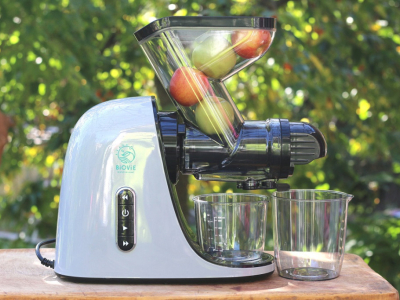
The screw juicer better preserves enzymes, vitamins, and antioxidants than the centrifugal juicer, thanks to cold extraction at a very low speed (30 to 120 rpm compared to 3,000 to 10,000 rpm for a centrifugal juicer). If the nutritional quality of your fresh juices is your priority, the juicer is clearly the best choice. This comprehensive comparison helps you decide based on your actual needs.
Centrifuge vs juicer: what is the real difference ?
Frankly, this question deserves a direct - and quantified - answer. Because the difference between the two devices is primarily mechanical.
The centrifuge is the most common juicing device. It finely grates the food and then uses centrifugal force to separate the juice from the fibers, at a speed of 3,000 to 10,000 revolutions per minute (according to the manufacturer's specifications). This high speed generates heat through friction and incorporates a lot of air into the juice - which accelerates its oxidation, sometimes within the first few minutes after extraction.
TheScrew juicer operates on a radically different principle: a worm screw rotates at 30 to 120 revolutions per minute, reproducing the chewing motion. A centrifuge spins on average 100 times faster than a low-speed extractor. This slowness is precisely its strength: it preserves the cellular structures of fruits and vegetables, limits oxidation, and helps retain the heat-sensitive enzymes and vitamins in the juice produced.
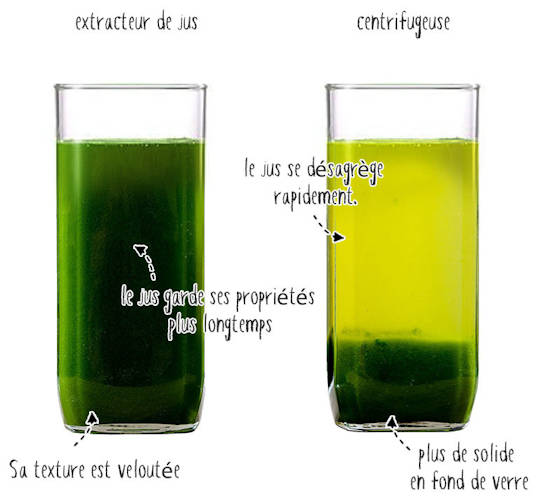
A simple test illustrates this difference. Make the same juice with both devices, place the two glasses side by side, and let them settle for a few minutes. You will quickly observe a phase separation in the juice obtained with the centrifuge - a sign of an unstable structure and oxidation already underway. The juice from the extractor, on the other hand, remains homogeneous.
Why does the juicer better preserve nutrients ?
At high speed, the centrifuge damages the cell walls of fruits and vegetables. The cells are broken and directly exposed to oxygen, which causes immediate oxidation and accelerated degradation of the enzymes and their role in digestion. These oxidized juices do not keep and must be consumed very quickly - hence the industrial use of antioxidants in commercial juices, by the way. The juicer also does not allow for the extraction of juices from fresh herbs.
A Juice extractor In contrast, the screw press respects the cell walls. Cold extraction helps to preserve a maximum of nutrients, vitamins, and enzymes. The juice obtained is more stable and can be stored for up to 24 hours in the refrigerator, ideally under vacuum. Of course, the best option is to consume it immediately after production.
The nutritional database Ciqual of ANSES emphasizes the importance of preserving vitamins and minerals during the processing of plants - something that cold extraction allows better than methods involving heat. Specifically, water-soluble vitamins (vitamin C, B vitamins) and heat-sensitive enzymes are particularly sensitive to heat and oxidation. It is precisely these that the low-speed extractor helps to preserve.
Which is better, a juicer or a centrifugal juicer ?
The choice depends on your priorities. But let's be clear: if the nutritional quality of your juices matters to you, the extractor wins hands down.
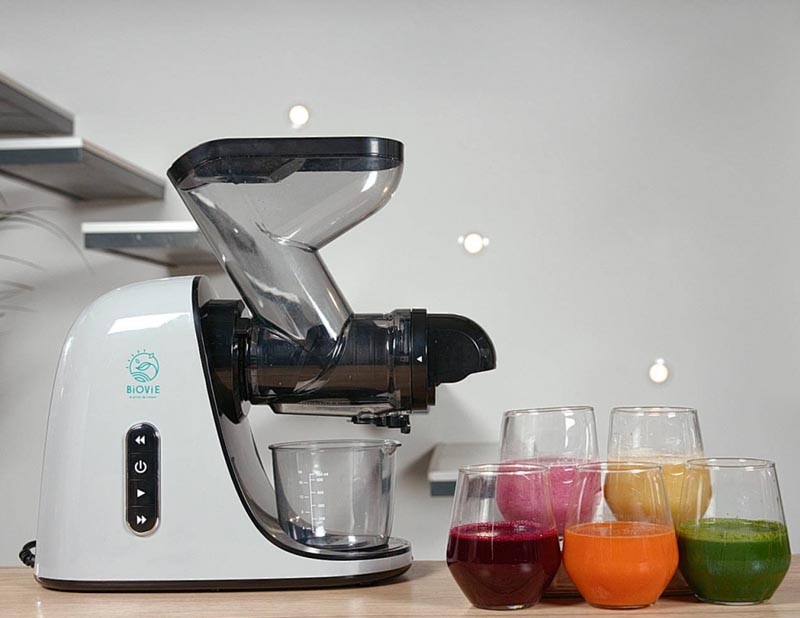
The extractor uses the rotation of a slow-speed auger-mimicking chewing-to crush the food and extract the juice cold. The fibers come out on one side, the juice on the other. The cell walls remain intact, the nutrients are preserved, and it is noticeable in the taste. The screw extractor is more expensive to purchase, but it produces a much higher quality juice - and its superior yield quickly offsets the price difference.
Incorporating fresh vegetable and fruit juices into one's daily routine is a habit that is gradually becoming part of a living diet. The juicer then becomes a central tool. However, if speed and budget are priorities, the centrifugal juicer remains a valid option for simple fruit juices - without any particular claims on nutrient retention.
"Super satisfied with the juicer! Easily crushes food... Easy and quick cleaning with a tap jet and by hand. Thank you for this efficient and inexpensive tool compared to the competition." - Frédéric S., Biovie customer ★★★★★
Our 2026 selection: the Hurom E30ST, the ideal juicer to get started right
After six months of real-world testing at Biovie, we have selected the Hurom E30ST as a reference juicer. Here's why it stands out as one of the best choices in 2026 - by far.
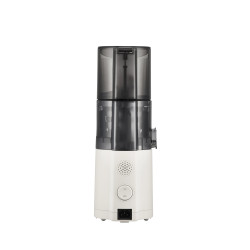
The Hurom E30ST belongs to the Pure Press range of the Korean brand Hurom, a pioneer in slow-rotating juicers since 1974. Its strengths:
Ultra-low speed: 43 to 50 RPM - guaranteed cold extraction, no temperature increase
Powerful and durable engine: 100 W, 10-year warranty
Compact and vertical: Compact size, fits into all kitchens
0.8 L pre-cut bowl: no need to meticulously cut your fruits and vegetables before putting them in
Two interchangeable sieves: fine sieve for clear juices (celery, beetroot), coarse sieve for smooth nectars (pear, banana)
Quick cleaning: approximately 3 minutes thanks to the integrated rotating brush
Versatile: Fruit juices, vegetable juices, fresh herb juices, homemade plant-based milks
The Hurom E30ST was awarded the Kitchen Innovation Award 2025 at the Ambiente fair in Frankfurt, in four categories: functionality, consumer convenience, product excellence, and quality. This is Hurom's 8th consecutive award in this category - a rare signal of consistency in this sector.
"I have received the device, practical and good juice yield. THANK YOU." - Lydia D., Biovie customer ★★★★
The 5 advantages of the juicer
The juicer is not to be forgotten, however. It has its advantages - concrete and recognized:
Speed: Thanks to high-speed rotation, fruits and vegetables are crushed and the juice is extracted in just a few seconds. Unbeatable for quickly preparing a glass on a busy morning.
Ease of use: Easy to use - simply place the food in the hopper and turn on the device. No special culinary skills required.
Large feed chute: Most models accept large pieces, which reduces the time needed to prepare the ingredients.
Often easy cleaning: Some models have removable dishwasher-safe parts.
Affordable entry price: Entry-level centrifuges are significantly cheaper than quality extractors - an important point if the budget is tight.
The 5 disadvantages of the juicer
But here's what they don't always tell you:
Nutrient loss: The heat from friction and the high speed degrade some of the heat-sensitive vitamins and enzymes. This is the main criticism that can be made of this device.
Rapid oxidation: The juice foams, incorporates air, and oxidizes immediately - it must be consumed without delay, within 15 to 30 minutes maximum.
Lower yield: The pulp retains more juice than with a juicer. With large volumes of fruits or vegetables, the difference becomes economically significant.
High noise level: High-speed rotation generates significant noise. It is not well-suited for quiet mornings, especially with neighbors or children who are still sleeping.
Unsuitable for herbs and foliage: Kale, basil, parsley, or wheatgrass cannot be effectively processed in a centrifugal juicer. This is a real obstacle if you want to make green juices.
The 4 advantages of a masticating juicer
For my part, it is on these four points that the extractor really makes a difference on a daily basis:
Maximum nutrient conservation: Cold slow extraction helps preserve the enzymes, vitamins, and antioxidants present in fruits and vegetables. As part of a varied and balanced diet, it offers a real nutritional advantage.
Best performance: The extractor extracts more juice from the same amount of ingredients - especially with leafy greens and fresh herbs.
Superior taste quality: The juices are thicker, more colorful, more flavorful. Without foam, without visible oxidation. The difference is truly noticeable during tasting.
Versatility: Fruit juices, vegetable juices, fresh herbs, homemade plant-based milks, and even sorbets depending on the model. A single device for a wide range of preparations.
"Their juicer is also very practical, for an extremely reasonable price." - Vanessa B., Biovie customer ★★★★★
The 4 disadvantages of a juicer
Let's be honest - the extractor isn't perfect either:
Slightly longer preparation time: Slow extraction is more meticulous. Allow for a few extra minutes compared to a centrifugal juicer-especially with older models that require cutting the food into small pieces.
More complex cleaning on older models: Traditional juicers have several parts to disassemble. Recent models like the Hurom E30ST have significantly simplified this step (cleaning in about 3 minutes). The reputation for complexity is a thing of the past.
Higher initial investment: A high-quality juicer represents a larger budget than an entry-level centrifugal juicer. However, the durability (10-year warranty on the motor for the Hurom), better yield, and quality of the juices quickly make up for this difference. If you are looking for a cheap juicer, our entry-level models offer excellent value for money.
Clutter: Extractors are generally larger than a compact centrifuge. However, recent vertical models like the Hurom E30ST have significantly reduced this drawback.
What is the preparation time according to the chosen device ?
In practice, the time difference between the two devices is less dramatic than is often believed.
The juicer is quick at extraction: just a few minutes are enough for grinding and separation. However, it requires minimal cutting of the food (depending on the chute) and careful cleaning after each use - which somewhat diminishes the speed advantage.
The juicer takes a bit more time for extraction - it's inherent to its principle. But the Hurom E30ST stands out with its 0.8 L pre-cutting bowl, which eliminates the need to cut food into small pieces with a knife. A real time saver. And the cleaning? About 3 minutes thanks to its integrated rotating brush and few parts. Discover our selection criteria for an extractor to further your thinking before making a purchase.
Which fruits and vegetables to use (or avoid) in a juicer ?
Not all foods are suitable for the juicer. Here is the essential information you need to know.
To avoid in a juicer: Bananas, mangoes, avocados, apricots, and peaches - too fibrous and rich in starch, they will yield better results in a blender. Grapes with seeds should also be avoided: pressed seeds release undesirable substances. Hard stone fruits (cherry, plum) should be pitted before use.
To prioritize in an extractor: Juicing apples (Gala, Granny Smith, Pink Lady, Fuji), carrots, beetroot, celery, cucumber, ginger, fennel, citrus fruits (without the white pith), fresh herbs (basil, parsley, wheatgrass). Mix with vegetables - systematically - to limit the intake of fast sugars in the body.
Frequently Asked Questions: Juicer or Juice Extractor ?
What is the main difference between a juicer and a juice extractor ?
The juicer spins at very high speeds (3,000 to 10,000 rpm) and uses centrifugal force to separate the juice from the fibers. The masticating juicer operates at very low speeds (30 to 120 rpm), mimicking chewing. This difference in speed has a direct impact on the quality of the juice: the masticating juicer helps to better preserve enzymes, vitamins, and antioxidants because it does not heat the food.
Which device best preserves the nutrients in the juice ?
The screw juicer significantly better preserves nutrients compared to the centrifugal juicer. Cold extraction helps to preserve heat-sensitive enzymes and limits the oxidation of the juice. The centrifugal juicer, on the other hand, generates heat through friction and incorporates air into the juice, which accelerates the degradation of vitamins and enzymes right from production. In the context of a varied and balanced diet, this point makes a real difference in daily life.
How long does juice made with a juicer last ?
A juice made with a masticating juicer can be stored for up to 24 hours in the refrigerator, ideally in an airtight or vacuum-sealed container. Juices produced with a centrifugal juicer oxidize very quickly and should be consumed immediately after preparation - or within 15 to 30 minutes of being made. Ideally, any fresh juice should be consumed immediately after preparation, whether made with a juicer or not.
Is the juicer really slower than the centrifugal juicer ?
The extractor takes a little more time than the juicer, but the difference is minimal on a daily basis. Modern models like the Hurom E30ST are equipped with a pre-cutting bowl that eliminates the need to cut food into small pieces before extraction. Cleaning a recent extractor takes about 3 minutes - comparable to a classic juicer. The argument "it's too long" now belongs to another era.
Which fruits and vegetables cannot be put in a juicer ?
Fruits that are too fibrous or rich in starch-banana, mango, avocado, apricot, peach-are not suitable for extraction and will yield better results in a blender. Grapes with seeds should also be avoided, as pressed seeds release bitter compounds. Stone fruits (cherry, plum) must be pitted before use in the extractor.
What is the best juicer for beginners in 2026 ?
To start, we recommend the Hurom E30ST : compact, easy to use, cleans in 3 minutes, and comes with a 10-year motor warranty. It operates at 43-50 rpm for optimal cold extraction. Awarded the Kitchen Innovation Award 2025 at the Ambiente fair in Frankfurt, it represents the best balance of quality-price-simplicity for daily use. Also check our complete guide to the best juicer 2026 to compare the models.
Warning: The information presented in this article is provided for informational purposes only and does not constitute medical advice. Consult a qualified healthcare professional before making any changes to your diet or supplementation. As part of a varied and balanced diet and a healthy lifestyle.