


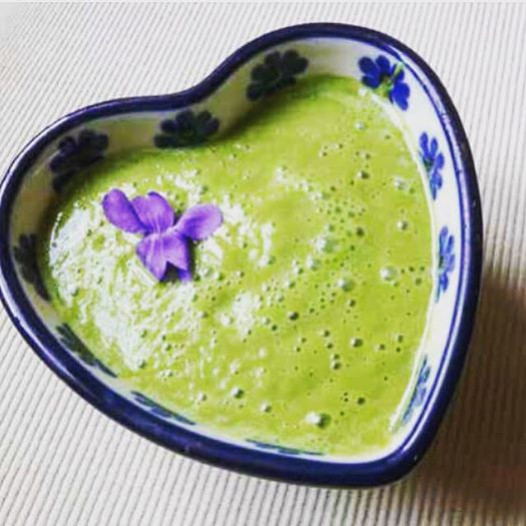

The raw lettuce soup is prepared in 5 minutes using a blender, without cooking, and retains 100% of the vitamins and enzymes of the fresh vegetable. With only 15 calories per 100 g and a water content of 95%, lettuce is one of the most suitable vegetables for this type of preparation — and frankly, once you've tasted this raw version with avocado and miso, it's hard to go back to the classic boiled soups with potatoes.
Why prepare a raw lettuce soup?
Type “lettuce soup” into any search engine and you'll find dozens of cooked recipes: lettuce + potatoes + onion + broth, all simmered for 30 minutes. At Biovie, we've been doing things differently since 2007. Our approach is the living soup — blended in a blender, raw, ready in a few minutes.
The idea is simple. Lettuce contains 95% water. It doesn't need cooking to become fluid and silky — just blend it. And by staying below 42°C, we preserve all its vitamins, enzymes, and antioxidants. In practice, it's a bowl of concentrated vitality. It's one of the basic principles of living food that we practice daily with Aurélie.
What are the nutritional benefits of lettuce?
Lettuce is often considered just a “salad accompaniment.” Wrongly so. The data from the Ciqual table (ANSES) shows a much more interesting nutritional profile than one might imagine. For 100 g of raw lettuce:
- Vitamin B9 (folates): 43.5 µg — more than 20% of the recommended daily intake. Vitamin B9 contributes to maternal tissue growth during pregnancy and participates in normal blood formation.
- Vitamin C: 11.8 mg — vitamin C helps protect cells against oxidative stress.
- Vitamin K1: 123 µg, or 164% of the reference nutritional values — vitamin K contributes to normal blood clotting and the maintenance of normal bones.
- Potassium: 200 mg — potassium contributes to the normal functioning of the nervous system and the maintenance of normal blood pressure.
- Beta-carotene (provitamin A): Romaine lettuce can cover up to 75% of vitamin A needs, which contributes to the maintenance of normal vision.
And then there's an aspect we often forget: lactucarium. It's the slightly bitter substance present in the sap of lettuce. Korean researchers (Kim et al., 2017) have shown in animal models that the lactucins and lactucopicrins in lettuce interact with the GABAA receptors in the brain — the same receptors targeted by some sleep aids. The effect is modest in humans, of course, but the tradition of using lettuce to promote relaxation and sleep is based on real grounds.
Its PRAL index of -4.3 makes it an alkalizing food, interesting as part of a varied and balanced diet. According to the sheet published by Aprifel, lettuce also has interesting properties thanks to its bioactive compounds — particularly phenolic acids and flavonoids.
All for 15 calories per 100 g. It's hard to get lighter than that.
The Raw Lettuce Soup Recipe with Avocado and Miso
Ingredients (for 2 people)
- 1 washed lettuce (preferably romaine or oak leaf — more nutritious)
- 1 ripe avocado
- 1 tsp of unpasteurized miso
- 1 tbsp of extra virgin olive oil
- 1 tsp of organic apple cider vinegar
- 250 ml of filtered water
Preparation (5 minutes flat)
- Carefully wash the lettuce leaf by leaf and spin dry.
- Cut the avocado in half, remove the pit, scoop out the flesh.
- Place everything in your blender: lettuce, avocado, miso, olive oil, apple cider vinegar, water.
- Blend for 30 to 60 seconds — until you get a smooth and homogeneous texture.
- Taste. Adjust if needed: a pinch of salt, a dash of lemon.
- Serve immediately in bowls, with some sprouted seeds or a drizzle of olive oil on top.
Tip: Prefer a warm soup? Blend a little longer. The friction from the blender naturally heats the preparation — without ever exceeding 42°C. The enzymes and vitamins remain intact. It's our solution for those in-between season evenings when you want something comforting without sacrificing nutritional quality.
Variations and Gourmet Ideas
This basic recipe, Aurélie and I adapt it throughout the seasons. Here are the variations we prefer:
- Energizing Green Version: Add a teaspoon of organic spirulina (about 3 g) or barley grass juice powder for an extra nutritional boost.
- Creamy Version: Replace the water with coconut milk to get a creamy and comforting lettuce velouté.
- Spicy Version: A piece of fresh ginger and a pinch of turmeric completely transform the flavor profile.
- Ultra-Light Version: Replace the avocado with a raw zucchini. Less caloric, equally pleasant texture — ideal for a dietary balance.
For more raw soup inspirations, take a look at our raw pumpkin soup (perfect in autumn) or our raw spinach velouté.
Why Choose Raw Soup Over Cooked?
I know what some might think: "But soup is cooked!" Yes, you can make a classic lettuce velouté with potatoes and broth — there are dozens of Italian lettuce soup recipes that work well that way. But here's what you lose with cooking.
Water-soluble vitamins — B9 and C in particular — degrade quickly with heat. Researchers have documented losses of up to 50% of vitamin C in just one week at room temperature after harvest. And flavonoids? Some lettuce varieties lose up to 94% of their flavonoids after cutting and prolonged exposure to light.
By preparing your raw lettuce soup, you preserve:
- The naturally present digestive enzymes — destroyed above 42°C
- The entirety of water-soluble vitamins (B9, C)
- The antioxidant compounds in their entirety — flavonoids, carotenoids
This is the whole point of living food: consuming foods as close to their natural state as possible. To learn more about this topic, I recommend our article on the benefits of raw foods and the one that debunks the five misconceptions about living food.
Which Lettuce to Choose for Your Soup?
Not all lettuces are created equal. Far from it.
- Romaine lettuce: this is our top choice. It is the richest in vitamin A, antioxidants, and it gives a strong flavor to the soup.
- Red oak leaf: rich in polyphenols, it also adds a lovely pink color to the mix.
- Batavia: a good compromise between crunchiness and nutritional density.
- Iceberg: honestly, to be avoided. It is the poorest in vitamins and minerals of all varieties. Lots of water, few nutrients.
Favor organic seasonal lettuces and consume them quickly after purchase — nutrients degrade quickly after harvest.
Precautions and contraindications
Lettuce is very well tolerated by the vast majority of people, but a few points deserve attention:
- Anticoagulant treatment: with 164% of the NRV in vitamin K per 100 g, lettuce can interact with anticoagulant medications. If this concerns you, talk to your doctor to adjust your consumption.
- Thorough washing: essential to eliminate soil residues and potential pesticides — even organic, wash it!
- Digestive sensitivity: the fibers in raw lettuce may be poorly tolerated by some people with sensitive intestines. In this case, start with small amounts.
Frequently asked questions about lettuce soup
Is it good to eat lettuce in the evening?
Yes, lettuce is an excellent choice for dinner. Very light (15 kcal/100 g), easy to digest, it contains lactucarium — a substance with slightly sedative properties that can contribute to relaxation and quality sleep. A study by Kim et al. (2017) conducted on an animal model showed that lettuce extracts increase sleep duration by acting on GABAA receptors. A raw lettuce soup is therefore a particularly suitable light dinner, as part of a varied and balanced diet.
Can lettuce be used to make soup?
Absolutely. Lettuce, composed of 95% water, blends very easily into a smooth and silky texture. It can be prepared as a cooked soup (classic lettuce velouté with potatoes) or raw in a blender to preserve all its nutrients and enzymes. Our raw recipe with avocado and miso takes only 5 minutes to prepare.
What are the benefits of lettuce soup?
Lettuce soup is hydrating, a source of vitamins B9 and C, rich in potassium and vitamin K, and very low in calories (about 15 kcal/100 g of lettuce). The raw version also preserves the enzymes and antioxidants that are degraded by cooking. The lactucarium it contains gives it properties traditionally associated with relaxation. All this as part of a varied and balanced diet and a healthy lifestyle.
What to do with a lot of lettuce?
Beyond the classic salad, lettuce can be transformed into raw soup in a blender (like this recipe), green juice with an extractor, wraps to replace tortillas, or green pesto mixed with cashews and basil. Raw soup remains one of the quickest and most nutritious ways to consume an entire lettuce at once.
Why not reheat lettuce?
Lettuce naturally contains nitrates. When reheated after cooking, these nitrates can turn into nitrites, which can be potentially harmful to the body. This is an additional argument in favor of raw consumption: in cold soup or warmed in a blender without exceeding 42°C, this issue is completely avoided while benefiting from all the nutrients.
Does lettuce soup help with weight loss?
Lettuce is one of the least caloric foods that exist — 15 kcal per 100 g. Combined with avocado in this recipe, the soup remains light while providing satiating monounsaturated fatty acids. It can definitely be part of a dietary rebalancing program as a starter or as a light evening meal. To try it is to adopt it!
References
- ANSES. "Ciqual Nutritional Composition Table" — Nutritional data for raw lettuce.
- Aprifel. "Lettuce Nutritional Sheet" — Nutritional data and bioactive compounds.
- Kim, H.D., Hong, K.B., Noh, D.O., Suh, H.J. (2017). "Sleep-inducing effect of lettuce (Lactuca sativa) varieties on pentobarbital-induced sleep". Food Science and Biotechnology, 26(3), 807-814. (Animal model study)
- Kim, H.W., Suh, H.J., Choi, H.S., Hong, K.B., Jo, K. (2019). "Effectiveness of the Sleep Enhancement by Green Romaine Lettuce (Lactuca sativa) in a Rodent Model". Biological and Pharmaceutical Bulletin, 42(10), 1726-1732. (Animal model study)
- Wesołowska, A., Nikiforuk, A., Michalska, K., Kisiel, W., Chojnacka-Wójcik, E. (2006). "Analgesic and sedative activities of lactucin and some lactucin-like guaianolides in mice". Journal of Ethnopharmacology, 107(2), 254-258. (Animal model study)
Update: April 2026. Article validated by Éric Viard, founder of Biovie and engineer at ISTOM, co-author of “Algues au quotidien” (Gallimard, 2024) — Best Cookbook in the World, Gourmand Cookbook Awards 2025, and Best Cookbook in France, National Culinary Academy 2025.
Disclaimer: The information presented in this article is provided for informational purposes only and does not constitute medical advice. Consult a qualified healthcare professional before making any changes to your diet or supplementation. As part of a varied and balanced diet and a healthy lifestyle.