Raw sauerkraut with pineapple: the tropical fermented recipe
What if you added a tropical touch to your homemade sauerkraut? This recipe for raw sauerkraut with pineapple combines the power of natural probiotics from lacto-fermentation with the sweet softness of fresh pineapple. The result: an original variant, rich in enzymes and lactic bacteria, that will delight both fermentation enthusiasts and those curious for new flavors.
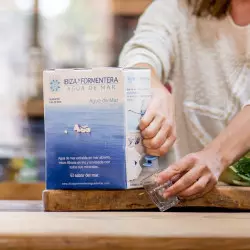
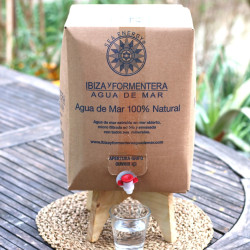
At Biovie, we add a special touch: marine plasma, which partially replaces salt and enriches the preparation with minerals and trace elements. An exclusivity that makes all the difference.
Why add pineapple to your raw sauerkraut?
Classic raw sauerkraut - lacto-fermented cabbage - is already a concentrate of benefits. But by adding fresh pineapple juice, you achieve a remarkable synergy between two families of active compounds.
On one hand, lactic fermentation transforms the sugars in the cabbage into lactic acid thanks to the Lactobacillus and Leuconostoc bacteria naturally present on the leaves. On the other hand, pineapple provides bromelain, a proteolytic enzyme that aids in protein digestion and has documented anti-inflammatory properties.
Pineapple juice also adds natural sugars that feed the lactic bacteria and can slightly accelerate the fermentation process. The final taste is a surprising balance between the characteristic acidity of sauerkraut and a subtle tropical sweetness.
The health benefits of lacto-fermented sauerkraut
Raw sauerkraut is much more than a culinary side dish. It is a true functional food whose benefits are supported by scientific research.
An exceptional source of natural probiotics: one gram of artisanal raw sauerkraut contains between 1 and 10 billion live probiotic bacteria. A study published in Food Microbiology (2022) identified 28 strains of Lactobacillus and 7 strains of Leuconostoc in artisanal sauerkraut - a diversity superior to that of most commercial probiotic supplements, which contain only 2 to 10 strains.
Support for intestinal flora: according to a review published in Nutrients (PMC9003261), regular consumption of fermented foods positively alters the composition of the gut microbiota. Lactic bacteria pre-digest the cellulosic fibers of cabbage, making them gentler on the intestine.
Vitamins synthesized during fermentation: the lacto-fermentation process generates B group vitamins (B1, B6, B9, B12) as well as vitamin K2, which contributes to calcium fixation on bones. These nutrients are not present in fresh, non-fermented cabbage.
Short-chain fatty acids: a study from the University of Cambridge (Gut Microbiome journal) showed that regular consumption of lacto-fermented vegetables increases the diversity and concentration of short-chain fatty acids in the gut, compounds essential for the health of the intestinal mucosa.
Pineapple not only adds flavor to this sauerkraut recipe. It contains bromelain, an enzymatic complex that aids in the digestion of proteins by breaking them down into peptides and amino acids that are more easily assimilated.
Studies show that bromelain helps reduce bloating, flatulence, and heartburn. It also has anti-inflammatory and fibrinolytic properties. Combined with the probiotics in sauerkraut, it creates a particularly interesting digestive synergy.
€47.90
EXPECTED TO BE BACK IN STOCK AROUND OCTOBER 20
Biovie Tip: for optimal quality pineapple, you can use our freeze-dried pineapple from Thailand rehydrated, whose enzymes are preserved thanks to the low-temperature freeze-drying process.
Wash the cabbage and remove the first outer leaves (keep one or two to cover the jar). Slice the cabbage into thin strips using a mandoline or a sharp knife. Place the strips in a large bowl, add the sea salt, and massage vigorously for 5 to 10 minutes. The cabbage should become soft and start to release its water.
Let it rest for 15 to 30 minutes so the salt continues to extract the juice.
2. Adding Pineapple Juice and Marine Plasma
Prepare the fresh pineapple juice with a juicer. Mix it with the filtered water and the 10 ml of marine plasma. Pour this mixture over the salted cabbage and mix thoroughly by hand. The brine should take on a beautiful golden hue.
3. Jar Filling and Fermentation
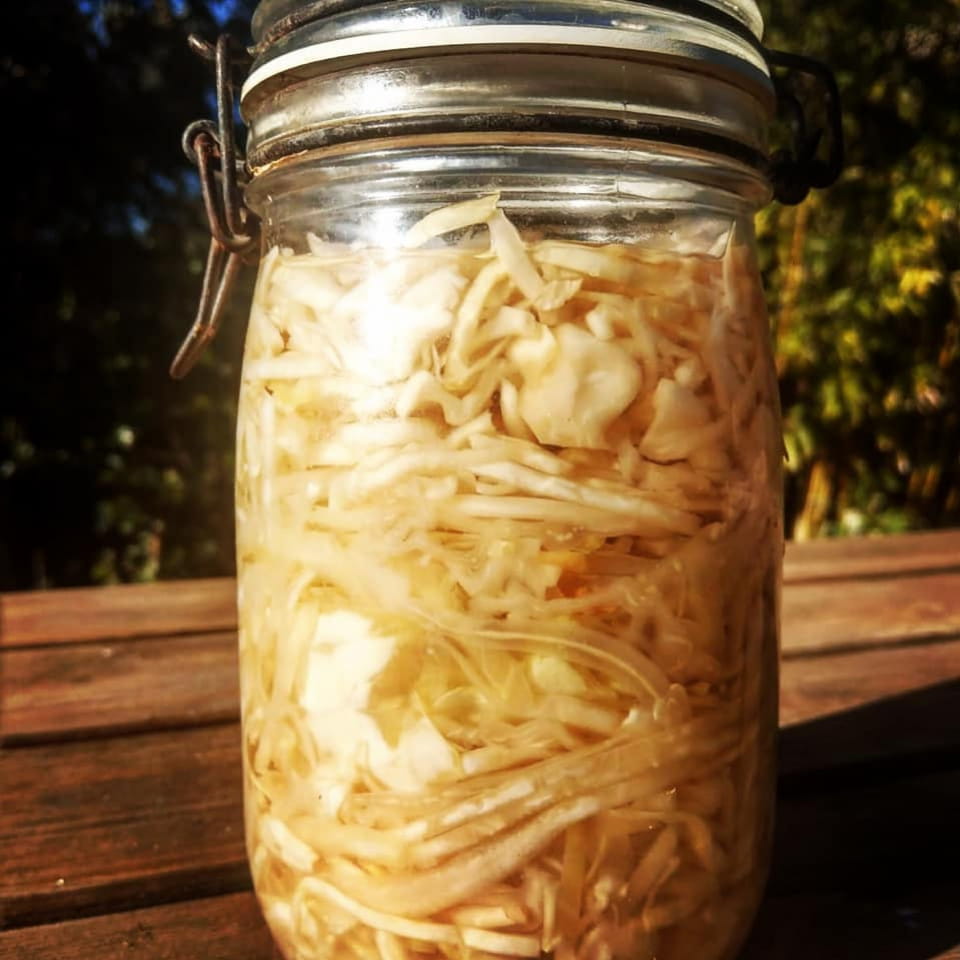
Pack the mixture firmly into a clean glass jar (like a Le Parfait or Mason jar). The cabbage must be completely submerged in the liquid - this is the key to successful fermentation. Place a whole cabbage leaf on top to keep the strips under the brine, then a weight (clean stone, small glass bowl).
Close the jar without screwing it completely (fermentation produces CO2 that must be able to escape). Place it on a plate (there may be overflow in the first few days).
4. Duration and Storage
Let it ferment at room temperature, ideally between 15 and 22 °C, away from direct sunlight. The fermentation duration varies:
Minimum 2 weeks: light fermentation, mild and fruity taste
3 to 4 weeks: optimal fermentation, good balance of acidity and tropical sweetness
Beyond 4 weeks: more pronounced and acidic taste, softer texture
Taste regularly starting from the 2nd week to adjust according to your preferences. Once satisfied with the taste, seal tightly and store in the refrigerator. Sauerkraut can be kept this way for several months.
Home fermentation is a safe process when done correctly, but some precautions are necessary:
Strict Hygiene: thoroughly wash your hands, utensils, and jars before starting. A previously boiled jar reduces the risk of contamination.
Warning Signs: if you notice colored molds (pink, black, green), an unpleasant smell (putrid rather than acidic), or an abnormal slimy appearance, do not consume the product. A slight white film on the surface (Kahm yeast) is harmless and can be removed.
Gradual Introduction: if you are not used to fermented foods, start with 1 to 2 tablespoons per day. Live probiotics can cause temporary bloating as your gut flora adjusts.
Bromelain and Medications: pineapple contains bromelain which can interact with blood thinners and some antibiotics. Consult your doctor if you are on medication.
FAQ - Raw Pineapple Sauerkraut
How long does it take to ferment pineapple sauerkraut?
Pineapple sauerkraut requires 2 to 4 weeks of fermentation at room temperature (15-22 °C). The pineapple juice provides additional sugars that can slightly speed up the process. Taste regularly starting from the 2nd week to adjust the acidity to your preference.
What are the health benefits of raw sauerkraut?
Raw sauerkraut contains 1 to 10 billion probiotic bacteria per gram, more than most dietary supplements. It strengthens the intestinal flora, improves digestion, boosts the immune system, and provides B and K2 vitamins synthesized during fermentation. Also, check out our article on natural probiotics to boost immunity.
Can marine plasma be used for lacto-fermentation?
Yes, marine plasma (Quinton water) is an excellent partial substitute for salt in lacto-fermentation. It provides minerals and trace elements that enrich the sauerkraut while providing the necessary salinity for the fermentation process. Use about 10 ml per one-liter jar.
Should raw sauerkraut be rinsed before consumption?
It is not recommended to rinse raw sauerkraut as this would remove a large portion of the beneficial probiotics. If the taste seems too acidic, start with small portions and gradually increase. Sauerkraut is consumed as is, at room temperature or slightly chilled, to enjoy all its benefits.
Why add pineapple to fermented sauerkraut?
Pineapple provides bromelain, an enzyme that aids in protein digestion and has anti-inflammatory properties. Combined with the probiotics from lactic fermentation, it creates a unique digestive synergy. Pineapple juice also adds a tropical sweetness that balances the acidity of the fermented cabbage, making this sauerkraut enjoyable even for those who find the classic version too acidic.
What is marine plasma ?
So-called hypertonic marine plasma is simply seawater harvested and filtered under very specific conditions.
Our supplier Ibiza Agua de Mar collects sea water from a depth of 25 meters off the coast of Ibiza in a UNESCO listed area.
Concerning the harvest, here are the different physico-chemical parameters measured during the search for an optimal place for the harvest of hypertonic marine plasma, first on the radar with reading of the currents and according to the marine weather (wind, swell, rain. ..) and then by local measurement of these different parameters: taste of seawater, dissolved O2 level, PH level, redox level (ORP), salinity level (TDS), conductivity level ( PSU), alkalimetric title (TA), Pressure. It is the empirical practice of the harvesters and the reading of the various measuring instruments that makes it possible to decide on the best complex combination of these measures together to decide whether the harvest is triggered on the site or whether another location is sought.
Where does marine plasma come from ?
The marine plasma is collected in the high seas, off the coast of Ibiza, in a specific area classified as UNESCO with high planktonic activity and with a presence of tens of square kilometers of Posidonia. It is indeed in this specific area that lives the largest living organism listed on Earth, a posidonia herbarium of 80,000 to 200,000 years extending over 15 kilometers in length.
Source: Sophie Arnaud-Haond, Carlos M. Duarte, Elena Diaz-Almela, Núria Marbà, Tomas Sintes, Ester A. Serrão: Implications of Extreme Life Span in Clonal Organisms: Millenary Clones in Meadows of the Threatened Seagrass Posidonia oceanica
When is it best to take marine plasma ?
The ideal is to consume marine plasma, which contains, let's remember, all the elements that make up Mendeleev's periodic table, in the morning when you get up, on an empty stomach. take 1/4 of hypertonic marine plasma to mix 3/4 of spring water or filtered water.
What are the benefits of marine plasma ?
Minerals are the "fuel" used primarily by our body, which is necessary for our cells to perform their functions optimally. They are also essential for the absorption of vitamins and are responsible for enzymatic processes in cells. Cells perform all their functions with maximum vitality and the precise capacity for organic, bioavailable, alkaline cellular nutrition. Thus, sea water becomes the best mineral drink since it contains all the elements of Mendeleev's periodic table.
Another of the great benefits of seawater is its pH. As Otto Warbürg, father of cellular respiration and two-time Nobel laureate, said, “all diseases are acidic and where there is oxygen and alkalinity there can be no disease”. Due to the quality of our raw material, the hyper-oxygenated waters of Posidonia meadows (recognized by UNESCO as a World Heritage Site in 1999) and sea currents providing purity and clarity: Ibiza and Formentera Agua de Mar have an alkaline pH , between 8.1 and 8.4, which will help the body maintain a neutral pH through homeostasis. The ingestion of sea water is advised to control and maintain our PH, as well as an exceptional supplement for alkaline diets.
The antioxidant and anti-acidity power produced by seawater is due to the alkalinity provided by the minerals.
Drinking filtered seawater in a direct and controlled way is very beneficial for your health, because seawater is an excellent nutrient, containing most of the minerals of the periodic table and all of them dissolved in the best universal solvent available: l 'water.
Seawater contains all the minerals of the periodic table of elements in a bioavailable way. It is thanks to this that foods cooked in seawater are rehydrated and remineralized to make foods with high nutritional power. The problem today is that our intake of minerals through food has dropped dramatically and what is causing this? The answer is very simple: pollution, soil depletion due to intensive agricultural production and our stressful pace of life have considerably reduced the quality of food and its mineral intake, drastically reducing the minimum contribution necessary for the proper functioning of the body.
Seawater also helps us stay young, for a simple reason: the body regularly and cyclically regenerates all its cells, because their lifespan is limited in time. As we age, one of the first faculties the cell loses is the ability to hydrate. We know that the older we get, the less we drink, so drinking and ingesting seawater can help us "wake up" this ability to hydrate ourselves., 4
products
"Pineapple sauerkraut is one of those recipes I particularly love because it perfectly illustrates the philosophy of living foods: raw, fermented foods rich in enzymes and natural probiotics. The marine plasma we add brings a mineral dimension that you won't find in any other sauerkraut recipe. With Aurélie, we have been exploring these combinations of traditional fermentation and tropical ingredients for years - our book Algae for Everyday, awarded by the Gourmand World Cookbook Award and the National Academy of Cuisine Prize, testifies to this passion for culinary innovation in the service of health." - Eric Viard, founder of Biovie.
Disclaimer: The information presented in this article is provided for informational purposes only and does not constitute medical advice. Consult a qualified healthcare professional before making any significant changes to your diet or supplementation. As part of a varied and balanced diet and a healthy lifestyle.