



Raw tabbouleh is a great classic of theliving food. Easy to prepare, colorful, and full of energy, it offers an original alternative to the traditional semolina-based tabbouleh. Here, it is the vegetables themselves-finely blended or grated-that make up the base. The result: a dish that is both light, nourishing, and extremely rich in bioavailable nutrients.
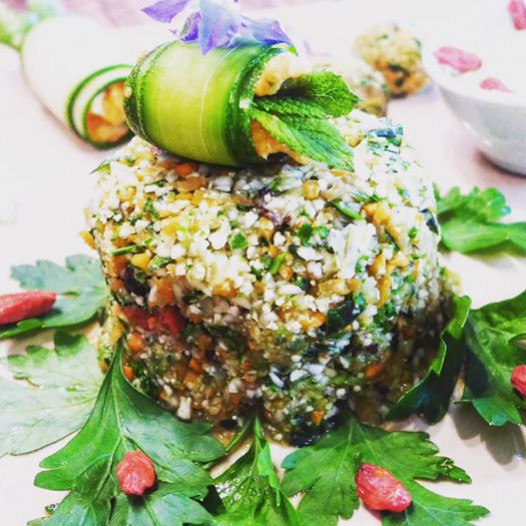
Raw tabbouleh with broccoli or cauliflower
Share this article
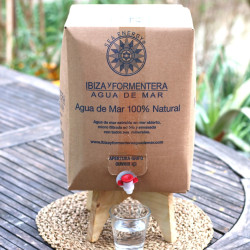
15L Microfiltered seawater
€47.90 EXPECTED TO BE BACK IN STOCK AROUND OCTOBER 20
Why choose a raw tabbouleh ?
Preparing a raw tabbouleh is much more than just a matter of taste: it's a genuine health approach.
Unlike cooking, cold preparation allows for preserve the vitamins, minerals, and enzymes naturally present in vegetables. These fragile nutrients are often destroyed at just 42°C. In this recipe, everything remains intact, ready to nourish your cells and revitalize your body.
Broccoli or cauliflower, used here as a base, provide a grainy texture reminiscent of couscous, but without gluten and without starch. These are two cruciferous vegetables with recognized detoxifying properties, rich in Sulforaphane, a compound that helps the liver eliminate toxins.
Ingredients for 4 people
- 1 broccoli (or 1 small cauliflower depending on the season)
- 1 bunch of flat-leaf parsley very fresh
- 1 shallot
- 1 zucchini cut into small cubes
- 1 carrot cut into small cubes
- 5 sun-dried tomatoes, rehydrated for 1 hour
- 1 tablespoon of raisins, soaked in water for 2 hours
- The juice of half a lemon
- 2 tablespoons of olive oil first cold pressing
- Sea salt or marine plasma
- Black pepper freshly ground
Step-by-step preparation
1. The green base
In a food processor, coarsely blend the broccoli (cauliflower), the parsley and theShallot.
The idea is not to obtain a puree, but a fine, light, and airy texture, similar to semolina.
This step is essential: it is what will give the tabbouleh its typical texture and its fresh, slightly tangy taste.
2. The crunchy vegetables
Then cut the zucchini and the carrot into small regular cubes. You can also grate them if you prefer a more homogeneous texture.
These two vegetables bring color and crunch, but also a richness in beta-carotene (provitamin A), valuable for the skin and eyes.
3. The Sunny Flavors
Add the rehydrated sun-dried tomatoes, finely chopped, and the Raisins drained.
The contrast between the saltiness of the tomato and the sweetness of the grape creates a perfect taste balance, while promoting satiety due to the richness in natural fibers.
4. The seasoning
In a large bowl, mix all the ingredients and add:
- lemon juice,
- olive oil,
- salt or marine plasma,
- and a turn of the pepper mill.
Mix well, then let marinate for about twenty minutes before serving. This step allows the flavors to blend and the vegetables to slightly soften.
Focus Nutrition: a Concentrate of Micronutrients
Broccoli
The broccoli is one of the vegetables richest in Vitamin C, in Vitamin K and in Sulforaphane. These antioxidant compounds support immune defenses and promote liver detoxification.
Consuming it raw maximizes its enzymatic potential.
Zucchini
Light, hydrating, and rich in silica, The zucchini supports connective tissues and the skin. Its mildness balances the stronger flavors of cauliflower or broccoli.
The carrot
Source of carotenoids, it naturally colors the dish and protects cells from oxidative stress. Its slightly sweet taste adds roundness to the recipe.
Parsley
Often considered a simple herb, parsley is actually a true bomb of chlorophyll. It helps to oxygenate the blood, remineralizes the body, and acts as a general tonic.
The lemon
Alkalizing and rich in Vitamin C, it facilitates the digestion and enhances the absorption of plant-based iron.
Sun-dried tomatoes
Rich in lycopene, a powerful antioxidant, they add depth to the dish while enhancing its anti-inflammatory properties.
Tips and variations
Vary the flavors
- Replace the raisins with dried cranberries for a tangy touch.
- Add some black olives or diced red bell pepper for a more Mediterranean version.
- Integrate some sprouted seeds (alfalfa, radish, fenugreek) to further boost the vitality of the dish.
For an even more complete tabbouleh
Add:
- a tablespoon of hemp seeds shelled for omega-3s,
- a fillet ofSesame oil for an oriental touch,
- or a few soaked nuts chopped for a thicker texture.
In a sweet and savory version
You can also introduce some apple dice or of mango for a surprising fruity touch that pairs perfectly with lemon and olive oil.
When and how to enjoy this raw tabbouleh ?
This tabbouleh is just as welcome:
- At noon, for a light and energizing lunch,
- as a side to a plant-based main course,
- or during a picnic summer.
It keeps very well in the refrigerator for 24 to 36 hours, provided it is stored in an airtight container.
Even better, it gains in flavor after a few hours of rest, allowing the aromas to develop.
A sustainable and zero-waste recipe
This recipe is part of an approach to living and sustainable cuisine :
- broccoli and cauliflower are often partially discarded: here, even the tender stems can be used ;
- sun-dried tomatoes can come from homemade dehydration, to reduce packaging ;
- Soaking raisins promotes better digestion and allows their soaking water to be reused in a vinaigrette.
Focus on raw vitality
This tabbouleh perfectly illustrates the philosophy of living food: eating foods in their most natural form possible, to nourish both the body and the mind.
The combination of colors, textures, and flavors makes it a dish that appeals as much to the taste buds as to cellular vitality.
The full range Marine Plasma
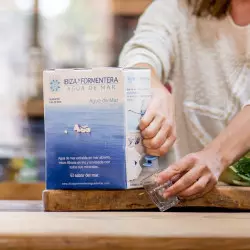
What is marine plasma ? So-called hypertonic marine plasma is simply seawater harvested and filtered under very specific conditions. Our supplier Ibiza Agua de Mar collects sea water from a depth of 25 meters off the coast of Ibiza in a UNESCO listed area. Concerning the harvest, here are the different physico-chemical parameters measured during the search for an optimal place for the harvest of hypertonic marine plasma, first on the radar with reading of the currents and according to the marine weather (wind, swell, rain. ..) and then by local measurement of these different parameters: taste of seawater, dissolved O2 level, PH level, redox level (ORP), salinity level (TDS), conductivity level ( PSU), alkalimetric title (TA), Pressure. It is the empirical practice of the harvesters and the reading of the various measuring instruments that makes it possible to decide on the best complex combination of these measures together to decide whether the harvest is triggered on the site or whether another location is sought. Where does marine plasma come from ? The marine plasma is collected in the high seas, off the coast of Ibiza, in a specific area classified as UNESCO with high planktonic activity and with a presence of tens of square kilometers of Posidonia. It is indeed in this specific area that lives the largest living organism listed on Earth, a posidonia herbarium of 80,000 to 200,000 years extending over 15 kilometers in length. Source: Sophie Arnaud-Haond, Carlos M. Duarte, Elena Diaz-Almela, Núria Marbà, Tomas Sintes, Ester A. Serrão: Implications of Extreme Life Span in Clonal Organisms: Millenary Clones in Meadows of the Threatened Seagrass Posidonia oceanica When is it best to take marine plasma ? The ideal is to consume marine plasma, which contains, let's remember, all the elements that make up Mendeleev's periodic table, in the morning when you get up, on an empty stomach. take 1/4 of hypertonic marine plasma to mix 3/4 of spring water or filtered water. What are the benefits of marine plasma ? Minerals are the "fuel" used primarily by our body, which is necessary for our cells to perform their functions optimally. They are also essential for the absorption of vitamins and are responsible for enzymatic processes in cells. Cells perform all their functions with maximum vitality and the precise capacity for organic, bioavailable, alkaline cellular nutrition. Thus, sea water becomes the best mineral drink since it contains all the elements of Mendeleev's periodic table. Another of the great benefits of seawater is its pH. As Otto Warbürg, father of cellular respiration and two-time Nobel laureate, said, “all diseases are acidic and where there is oxygen and alkalinity there can be no disease”. Due to the quality of our raw material, the hyper-oxygenated waters of Posidonia meadows (recognized by UNESCO as a World Heritage Site in 1999) and sea currents providing purity and clarity: Ibiza and Formentera Agua de Mar have an alkaline pH , between 8.1 and 8.4, which will help the body maintain a neutral pH through homeostasis. The ingestion of sea water is advised to control and maintain our PH, as well as an exceptional supplement for alkaline diets. The antioxidant and anti-acidity power produced by seawater is due to the alkalinity provided by the minerals. Drinking filtered seawater in a direct and controlled way is very beneficial for your health, because seawater is an excellent nutrient, containing most of the minerals of the periodic table and all of them dissolved in the best universal solvent available: l 'water. Seawater contains all the minerals of the periodic table of elements in a bioavailable way. It is thanks to this that foods cooked in seawater are rehydrated and remineralized to make foods with high nutritional power. The problem today is that our intake of minerals through food has dropped dramatically and what is causing this? The answer is very simple: pollution, soil depletion due to intensive agricultural production and our stressful pace of life have considerably reduced the quality of food and its mineral intake, drastically reducing the minimum contribution necessary for the proper functioning of the body. Seawater also helps us stay young, for a simple reason: the body regularly and cyclically regenerates all its cells, because their lifespan is limited in time. As we age, one of the first faculties the cell loses is the ability to hydrate. We know that the older we get, the less we drink, so drinking and ingesting seawater can help us "wake up" this ability to hydrate ourselves., 4 products
Discover the full range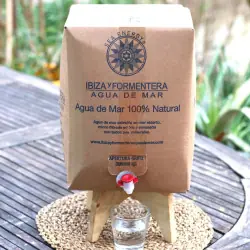

Conclusion
Raw tabbouleh with broccoli or cauliflower is a simple, fresh, and complete dish that proves it's not necessary to cook to enjoy a delicious meal. It combines pleasure, health, and creativity - a perfect reflection of vibrant cuisine.
Try it once, and you'll see: this tabbouleh might just become a indispensable for your summer (and beyond!)
Share this article